
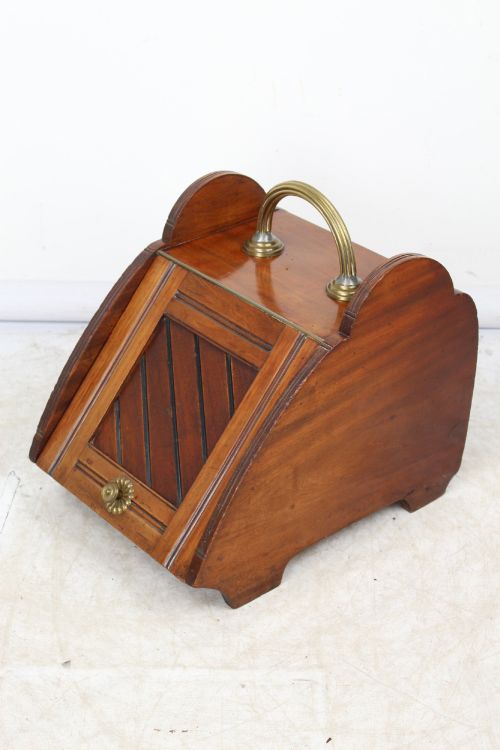
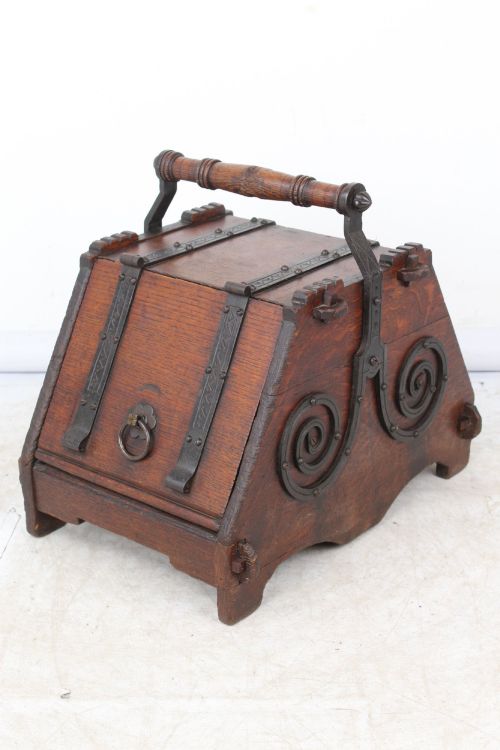
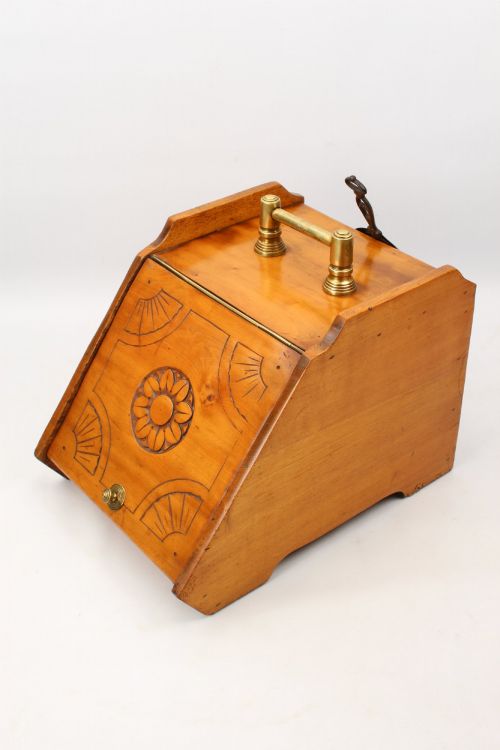


Victorian Carved Coal Scuttle
A victorian carved coal scuttle brings nineteenth-century fireside utility into a modern room with timber, brass, and genuine domestic history.
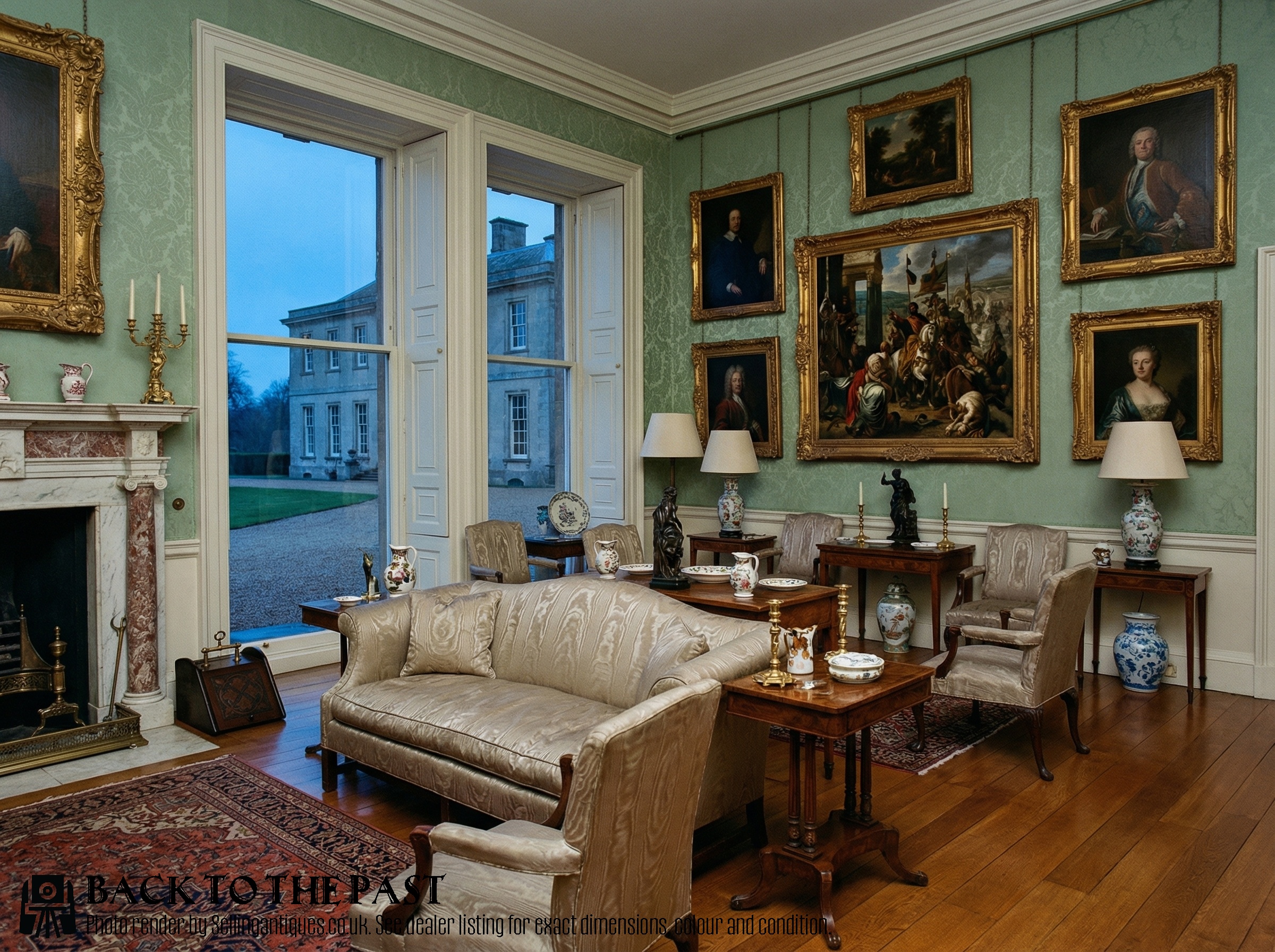
Victorian Carved Coal Scuttle
When you search for a victorian carved coal scuttle, you encounter functional fireside containers designed to hold fuel near an open hearth. These domestic objects span the Victorian and Edwardian periods, appearing in forms such as coal boxes, purdoniums, and scuttles alongside shovels and liners.
The most common examples on this page are constructed from oak, mahogany, or walnut, often featuring carved wooden fronts and brass mounts. Alongside standard scuttles, the selections include drop front cabinets, peat buckets, and purdoniums that reflect nineteenth-century heating customs.
Materials and construction
Cabinetmakers utilised hardwoods like oak, mahogany, and walnut to build the main bodies of these fireside boxes, frequently applying carved decoration to the drop fronts or lids. Metal components such as brass handles, hinges, liners, and shovels were incorporated to handle the weight of coal and peat.
Techniques varied from straightforward wooden joinery to elaborate Gothic Revival and Louis XV styling, combining structural timber with durable interior metal elements designed to withstand daily domestic use.
The listings on this page span the Victorian and Edwardian eras, utilising oak, mahogany, walnut, brass, and iron across various fireside forms.
Distinctions in quality
The degree of craftsmanship in the woodwork establishes the distinction between standard utilitarian boxes and finer artistic examples. Crisp relief carving on solid timber indicates superior workshop production compared to plain panel construction.
The survival of original internal metal liners and matching shovels alters the integrity of a piece. Substantial brass mounts and thoughtful proportions elevate an ordinary fuel container into a significant fireside furnishing.
The Victorian Carved Coal Scuttle Glossary
- Coal scuttle
- A container designed for carrying and storing coal beside a fireplace. It typically includes a handle and sometimes a matching shovel.
- Purdonium
- A specific type of coal box featuring a sloping drop front designed to make shovelling fuel more efficient. These often incorporate a metal interior liner.
- Gothic Revival
- An architectural and decorative style drawing on medieval forms, frequently seen in Victorian pieces through pointed arches and heavy carved ornamentation.
- Louis XV Revival
- A decorative style popular in the nineteenth century characterised by asymmetric curves, naturalistic ornamentation, and ornate brass or gilt mounts.
- Pollard oak
- Timber taken from oak trees that have been pollarded, producing a highly figured grain highly prized for decorative cabinet fronts.
Victorian Carved Coal Scuttle: Frequently Asked Questions
What is a coal purdonium?
A coal purdonium is an enclosed wooden box with a sloping drop-front door designed to hold domestic coal near a fireplace. It usually contains a removable metal liner to catch dust and small debris.
These pieces were developed in the Victorian era to keep fuel stores tidy and hidden within parlours and drawing rooms, combining furniture craftsmanship with fireside utility.
How do I use one today?
These boxes function well beside modern wood-burning stoves or open fireplaces to store kindling, logs, or coal briquettes out of sight. They also serve as decorative storage bins in living spaces for blankets or magazines.
Retaining the original metal liner allows you to load fuel directly without damaging the historic timber interior.
Are original shovels usually included?
Some surviving examples retain their matching brass or iron shovels, often housed in specialised side compartments or brackets designed specifically for them. Many pieces, however, have lost their original shovels over decades of use.
Finding a scuttle with both its original metal liner and shovel adds completeness to the piece.