


Victorian Carriage Timepiece
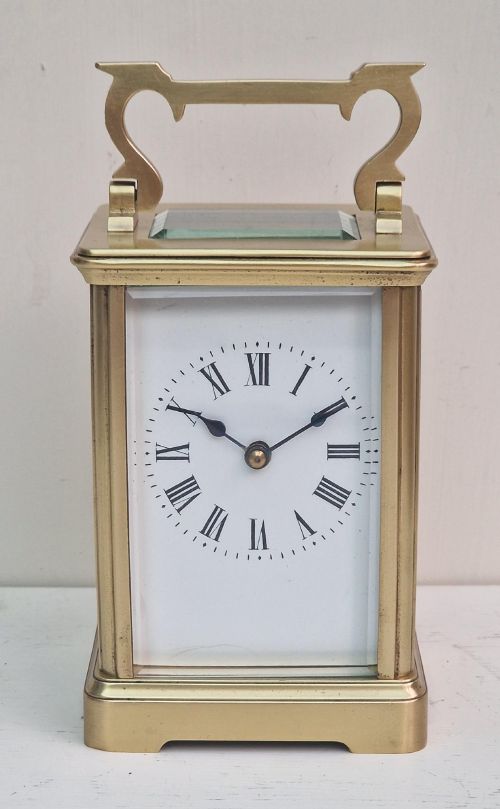
A victorian carriage timepiece is a portable mechanical clock designed for travel, combining heavy brass framing with bevelled glass panels.
Victorian Carriage Timepiece
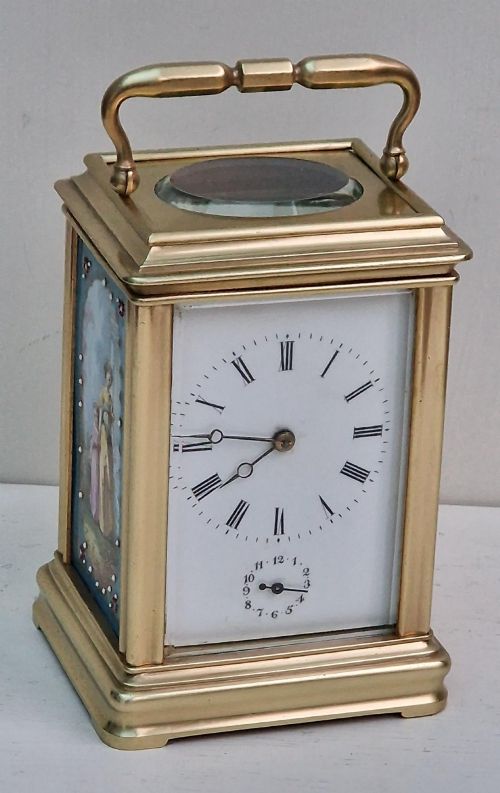
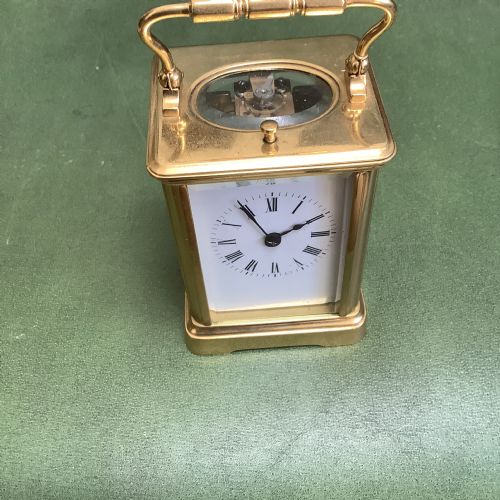
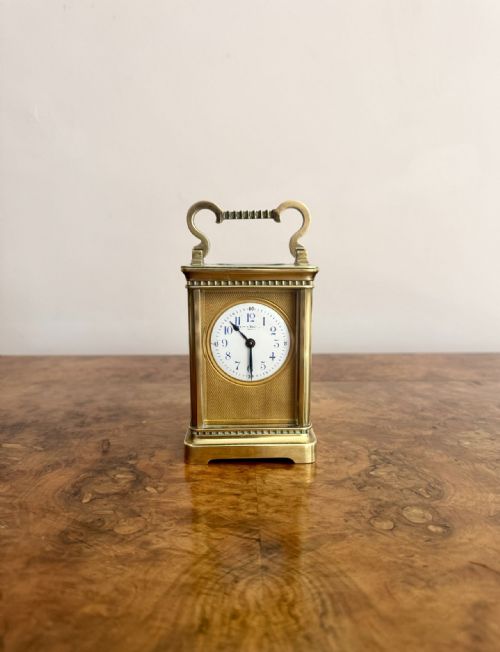
When you search for a victorian carriage timepiece, you encounter portable mechanical clocks built for travel during the nineteenth century. These objects typically combine heavy brass framing with bevelled glass panels to protect the delicate movement inside.
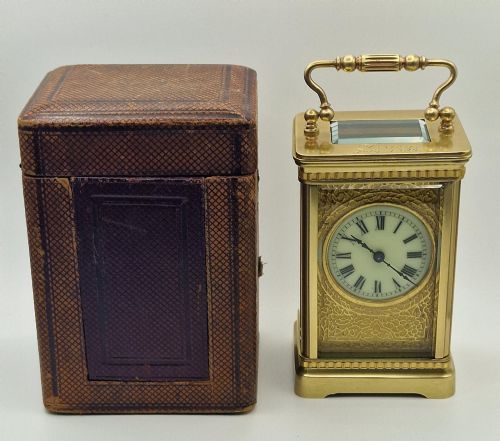
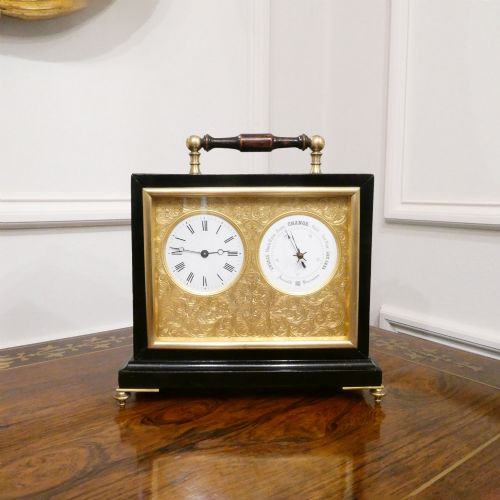
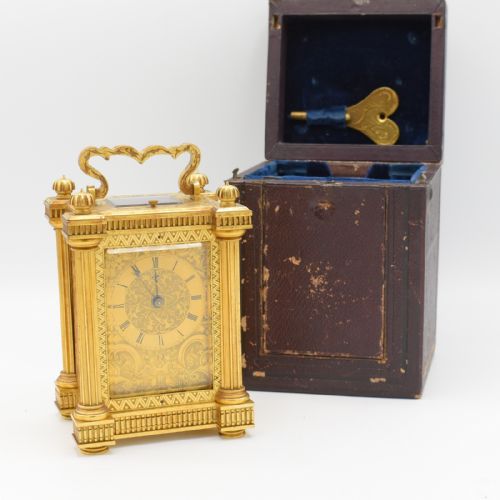
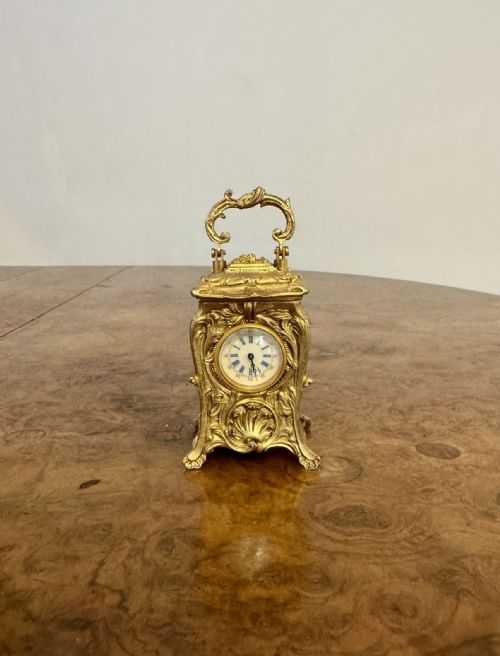
The pieces listed on this page originate from the Victorian and Edwardian eras, with many examples imported from French workshops. Forms range from standard models to miniature sizes and specialised designs fitted with leather travel cases.
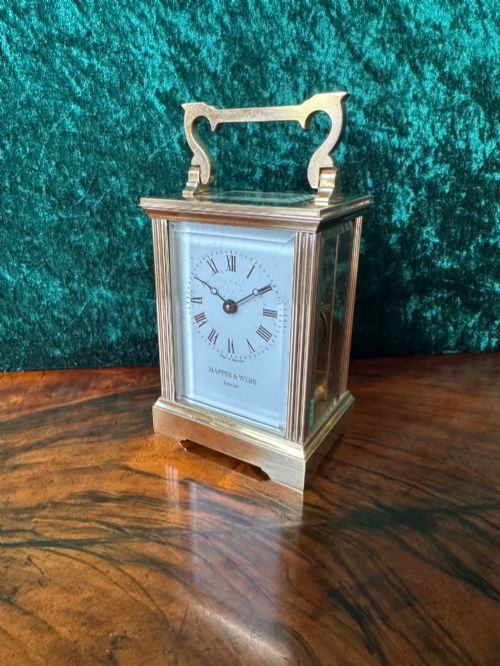
Makers such as Henri Jacot and Drocourt feature alongside retailers like Howell & James and Mappin and Webb. These timepieces served domestic interiors and journeys alike, reflecting the precise engineering demands of the period.
How they were made
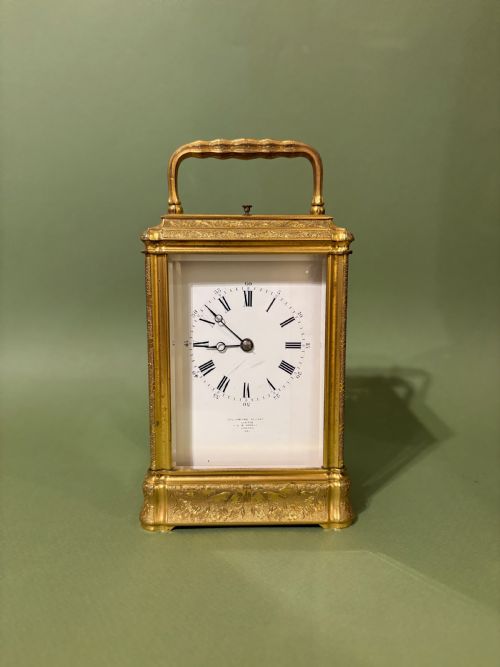
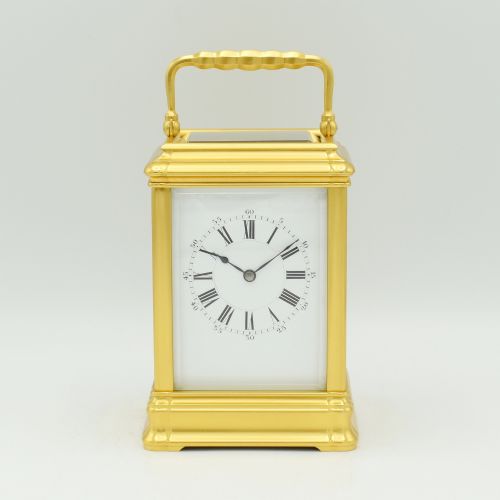
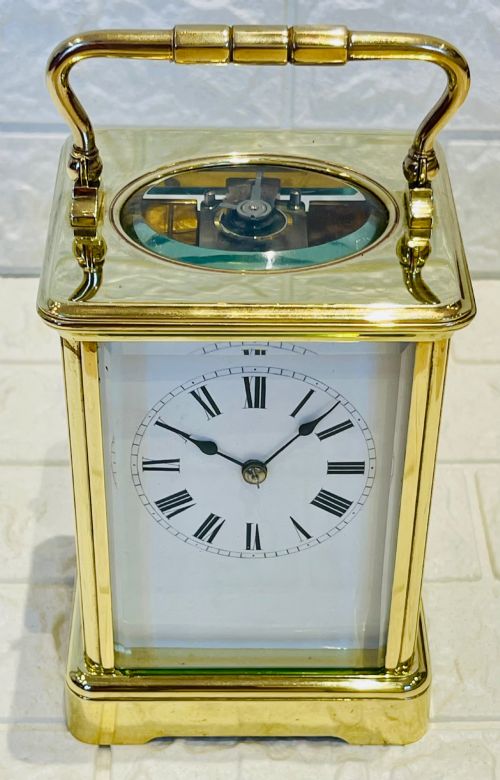
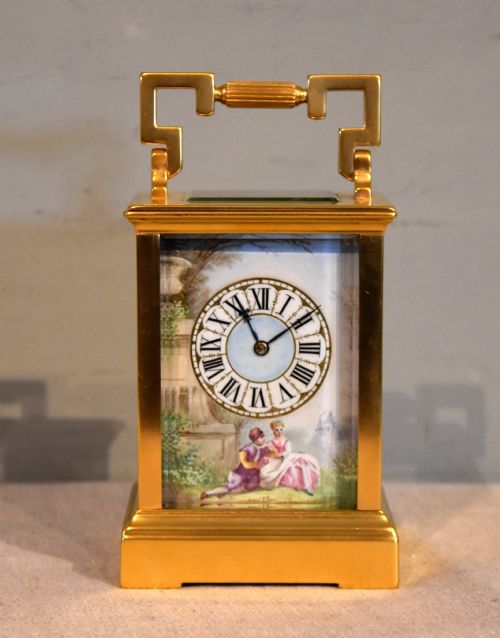
Makers constructed these clocks using substantial brass and gilt brass frames housing spring-driven movements. Bevelled glass panels inserted into the top, sides and door allowed light into the mechanism while containing dust.
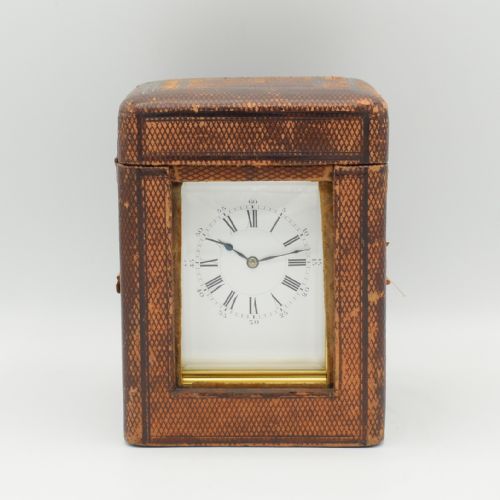
Dials utilised white enamel with painted Roman numerals, occasionally accompanied by hand-painted porcelain panels or intricate engraved brass masks. Leather protective cases accompanied many pieces for secure transportation during travel.
Movements operate via eight-day spring drives housed within gorge and corniche brass cases.
What varies in quality
Quality rests in the weight of the brass casting and the crispness of the engraving on the gorge or corniche case. Heavy, fully gilded frames demonstrate superior initial manufacture compared to lighter brass structures.
The complexity of the internal movement dictates distinction, ranging from a standard time-only mechanism to striking trains, alarms and repeating functions. Intricate enamel work on dials or inserted panels also elevates the standard of the piece.
Henri Jacot·Drocourt Paris·Howell & James London·Mappin and Webb·Antoine Redier of Paris·Duverdrey & Bloquel·Pickford of London·T. Martin & Co·C. Detouche Paris
The Victorian Carriage Timepiece Glossary
- Gorge case
- A distinct rectangular brass case style with stepped mouldings at the top and base. This form represents a standard French export design from the nineteenth century.
- Repeater
- A mechanism that chimes the hours and quarters upon pressing a button on the case. This complex addition allowed owners to check the time in darkness.
- Escapement
- The internal mechanism regulating the release of power from the mainspring. Platform escapements placed on top of the movement are characteristic of these clocks.
- Grand Sonnerie
- A striking system that sounds both the hours and the quarters automatically as each quarter hour passes. It stands among the most sophisticated complications found in portable clocks.
- Corniche case
- A traditional rectangular brass framing style featuring simple rounded or architectural columns at the corners. It provides a clean profile for viewing the internal movement.
Victorian Carriage Timepiece: Frequently Asked Questions
How do I wind a carriage timepiece?
Wind the mainspring using a matching key inserted into the arbour on the underside or backplate of the movement. Turn the key gently until resistance signals full tension.
Avoid overwinding the spring, as this risks internal damage. Ensure the platform escapement remains undisturbed during the process.
Why does the clock need a leather case?
Leather travel cases protected the exterior brass and glass from knocks during nineteenth-century transit. They cushioned the heavy metal frame inside luggage or carriages.
Original cases add historical context to the piece. Surviving outer cases remain uncommon due to the wear of travel.
How do striking and repeating work?
Striking mechanisms sound the hours automatically using an internal bell or gong. Repeating mechanisms allow the user to trigger the chimes manually on demand.
These functions required precise gear trains. They mark higher-tier mechanical output from period workshops.
How do I date a Victorian timepiece?
Examine the movement backplate for maker stamps, serial numbers and registration marks. Stylistic shifts in escapement types and case casting also indicate specific decades.
French makers often punched serial numbers that help narrow down production years. English retail signatures provide further chronological clues.