


Victorian Carolean Chairs
Victorian carolean chairs bring seventeenth-century revival drama to nineteenth-century rooms through carved timber and high backs.
Victorian Carolean Chairs
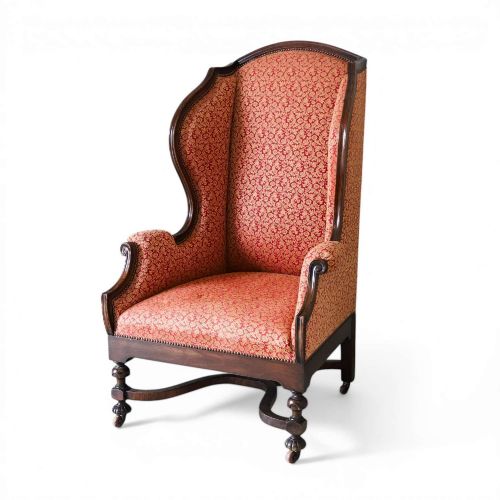
Victorian carolean chairs are nineteenth-century revival seating pieces that draw upon earlier seventeenth-century motifs, merging baroque ornamentation with Victorian scale. When you search for victorian carolean chairs, you encounter furniture built during the nineteenth century, spanning dining sets, pairs of hall chairs, and large throne armchairs.
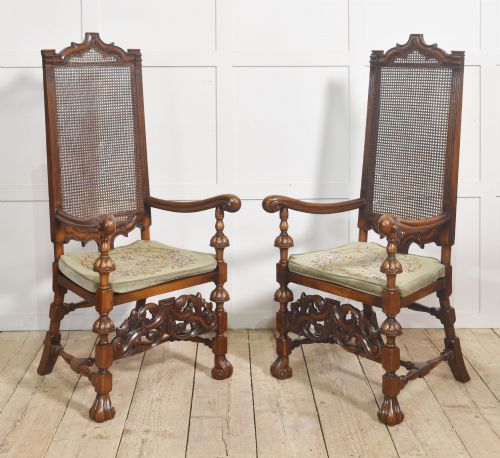
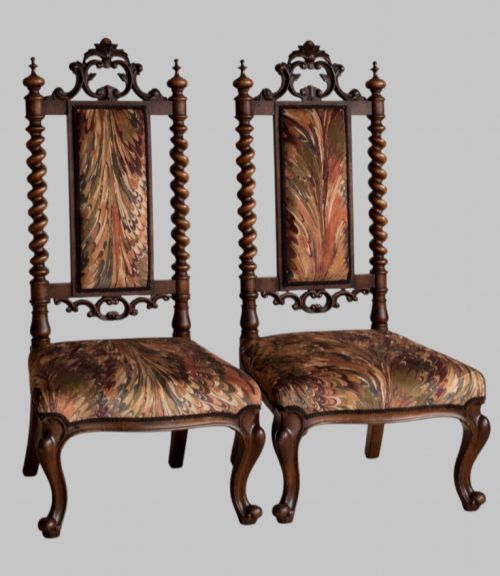
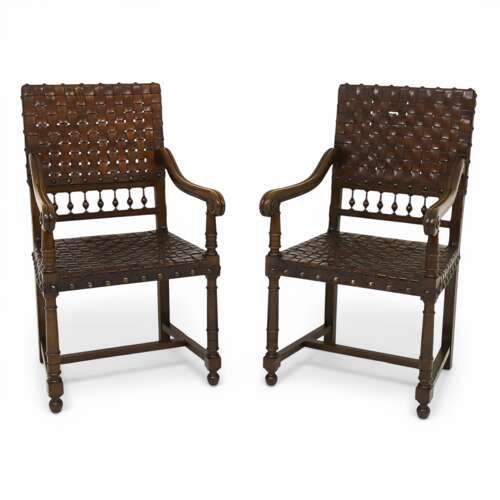
The versions most commonly met on this page include walnut and oak armchairs, side chairs, and sets of dining chairs dating from the mid-nineteenth century onwards. Makers of this period utilised robust timber frames, incorporating high carved backs, barley twist supports, and upholstered seats in leather, fabric, cane, or velvet.
What varies in quality
The standard of carving sets apart the top of the range, distinguishing crisp, deep relief work from shallow or mechanical surface decoration. Walnut and oak framing show differing degrees of selection, with superior pieces displaying finely figured grain and substantial structural heft.
Proportion and scale also determine quality, particularly in large throne chairs and sets of dining chairs where balanced symmetry supports the elaborate revival styling. The integrity of the original joints and the retention of period upholstery materials influence the overall execution.
One chair frame is dated to seventeen hundred, reminding us that carolean design casts a very long shadow.
The Victorian Carolean Chairs Glossary
- Carolean Style
- A seventeenth-century revival aesthetic characterised by rich carving, scrolling foliage, and high vertical backs. This style reappeared frequently in nineteenth-century Victorian furniture production.
- Barley Twist
- A turned wood support carved in a spiral resembling a twisted rope. It appears commonly on the legs and stretchers of Victorian revival seating.
- Throne Chair
- A large, imposing armchair with an elevated back and substantial arms. These pieces often served as hall or ceremonial seating.
- Cane
- Woven rattan material used for chair seats and backs. It provides a lightweight, textured panel within solid wood frames.
- Side Chair
- An upright chair without arms, designed primarily for dining or placement against a wall. These often survive in matched sets.
Victorian Carolean Chairs: Frequently Asked Questions
What defines a carolean chair?
A carolean chair draws inspiration from the late seventeenth-century restoration period, featuring ornate carved woodwork, scrolling motifs, and high backs. Victorian interpretations scale up these elements using oak or walnut.
These revival pieces adapt historical design for nineteenth-century interiors, often appearing as dining sets, hall chairs, or large armchairs.
Were these chairs used for dining?
Yes, many nineteenth-century examples were produced as sets of dining chairs to accompany large tables. They provided formal seating with carved backs and upholstered or cane seats.
Individual side chairs and larger carver chairs were also placed in halls, libraries, and reception rooms.
How do I place a throne chair?
A large throne chair requires ample floor space and a solid wall or corner to balance its visual weight. It functions well as a focal point in a hallway, study, or drawing room.
Pairing the chair with simpler surrounding furniture allows the carved woodwork and high back to remain prominent.
What timber was used?
Oak and walnut are the primary timbers found in these nineteenth-century revival pieces. Walnut allowed for sharp, detailed carving on frames and arms.
Oak provided robust structural support for heavy throne chairs, hall chairs, and farmhouse dining sets.