

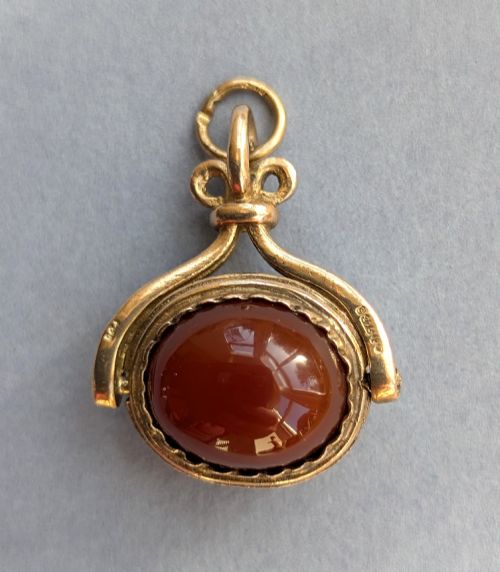


Victorian Carnelian Fob
These Victorian carnelian fob pieces are handsome pocket watch accessories and seals that anchor a chain with colour and weight.
Victorian Carnelian Fob
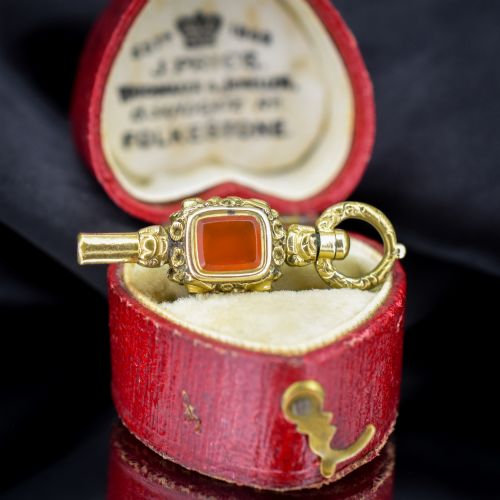
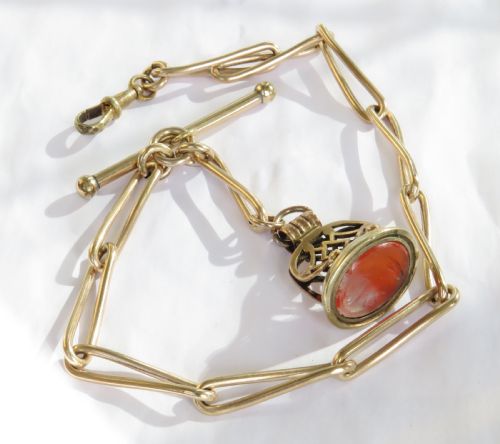
A Victorian carnelian fob is a small pendant designed to hang from a pocket watch chain, albert chain, or charm bracelet. These pieces serve as decorative counters or practical seals for wax correspondence.
Buyers searching for a Victorian carnelian fob will mostly encounter gold mounts, including nine carat yellow and rose gold alongside rolled gold and silver settings. The stones themselves appear plain, engraved with Greek figures, Roman emperors, or personal inscriptions such as Ann.
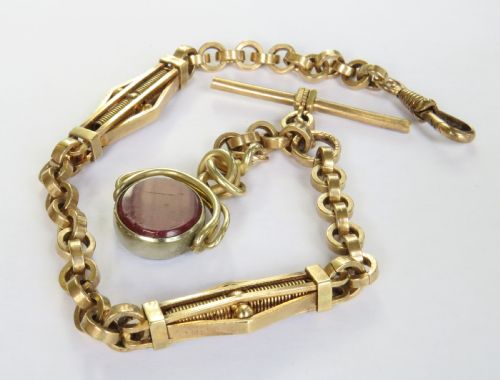
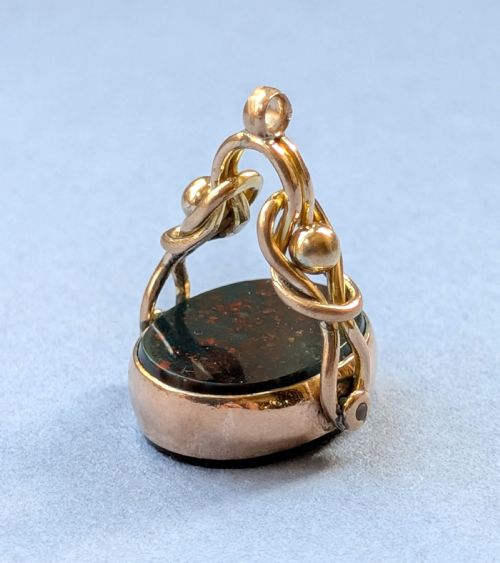
The forms range from simple spinning fobs and swivel seals to larger pendant charms and seals fitted with bloodstone or agate alongside the carnelian. Origins span the Georgian, Victorian, Edwardian, and early twentieth century periods.
Materials and construction
Makers set polished carnelian and cornelian stones into mounts of nine carat gold, rose gold, silver, and rolled gold. Many examples utilise swivel mechanisms to allow the stone to rotate within its metal frame.
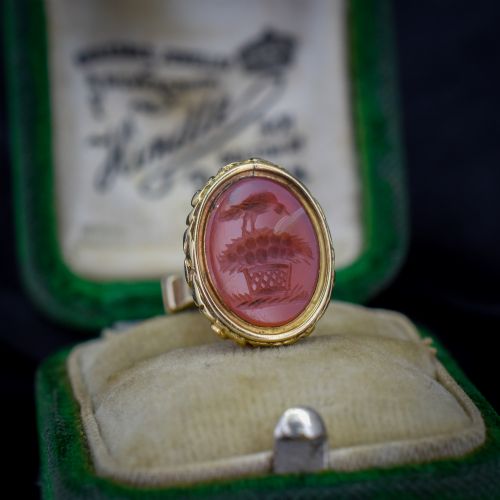
Engravers carved intaglio designs directly into the stone face, depicting classical figures and Roman emperors for wax sealing. Other pieces feature smooth polished surfaces or hand-engraved gold frames with integrated jump rings and t-bars.
Victorian Carnelian Fob Retail Price Guide 2026
Typical asking prices for victorian carnelian fob among the pieces listed under this phrase on Sellingantiques today, from the lower quarter to the upper quarter. They describe what is for sale here now, not the wider market.
Listings span the Georgian, Victorian, and Edwardian periods, utilising carnelian, bloodstone, and agate set in nine carat gold and silver.
Separating the grades
Quality rests upon the crispness of the intaglio carving and the weight of the gold mount rather than the presence of hallmarks alone. Deeper, sharper cuts on the carnelian surface indicate superior craftsmanship.
The integrity of the swivel mechanism and the thickness of the metal casing determine durability. Solid nine carat gold settings outlast rolled gold or gilt metal alternatives through regular daily wear.
The Victorian Carnelian Fob Glossary
- Carnelian
- A reddish-orange variety of chalcedony quartz used widely in signet rings and seals. It takes a high polish and resists wax adherence.
- Fob seal
- A small pendant featuring an engraved stone base intended for pressing into hot sealing wax. They hung from pocket watch chains in the nineteenth century.
- Swivel fob
- A design where the stone spins on a central axis within the metal frame. This allows the user to display two different faces or switch between a seal and a plain stone.
- Intaglio
- A technique where the design is incised into the surface of the stone so that the impression in wax appears in relief. Roman and Greek figures frequently appear in this manner.
- Albert chain
- A type of pocket watch chain designed to span a waistcoat buttonhole. Fobs and charms attach to the centre drop.
Victorian Carnelian Fob: Frequently Asked Questions
How do you use a fob seal?
Warm sealing wax is dropped onto paper, and the engraved carnelian face of the fob is pressed firmly into the molten pool. This leaves a raised impression of the intaglio design.
Historically, these seals authenticated letters and documents while suspended from a watch chain.
What is the difference between carnelian and cornelian?
Both terms describe the exact same reddish-orange chalcedony stone. Cornelian is simply an older spelling found in historical records and descriptions.
Jewellery makers and gemmologists use the two words interchangeably across nineteenth-century and modern pieces.
Can I wear a fob on a chain?
These pieces attach easily to modern neck chains or traditional watch albert chains using the existing jump ring or swivel clip. Their compact size makes them suitable for daily necklace wear.
Ensure the suspension loop remains secure before hanging heavier gold seals around the neck.
How do I date a gold fob?
Dating relies upon stylistic markers, mount construction, and any accompanying hallmarks stamped into the metal. Georgian and Victorian pieces often feature hand-carved details and specific gold purities.
Edwardian and later twentieth-century examples display lighter construction methods and machine engraving.