


Gold Swivel Fob
A gold swivel fob is a spinning pocket watch accessory, and these pieces offer interchangeable hardstone faces on a pivoting mount.

Gold Swivel Fob
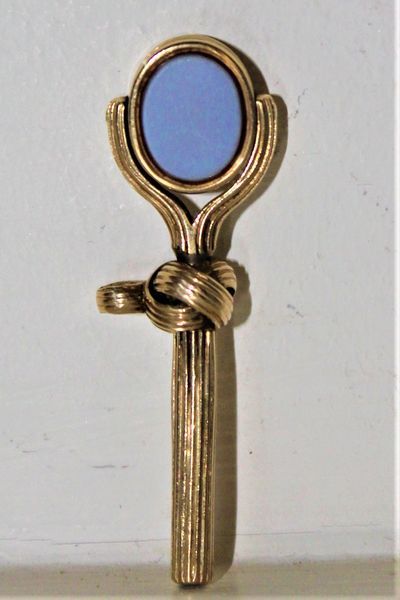
A gold swivel fob is a classic pocket watch accessory designed to pivot on a central axis so the wearer can display alternate hardstone faces. These pieces span from the Georgian period through to the 1930s, encompassing Victorian, Edwardian, and later iterations.
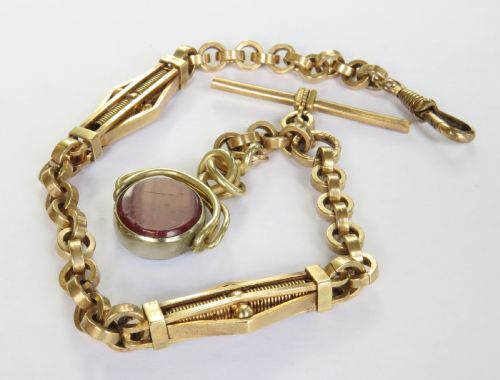
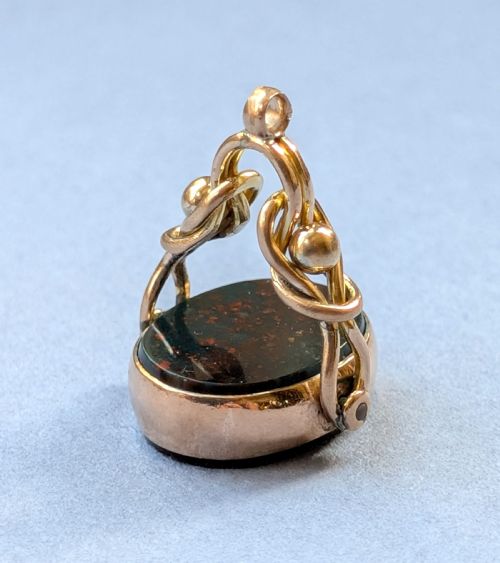
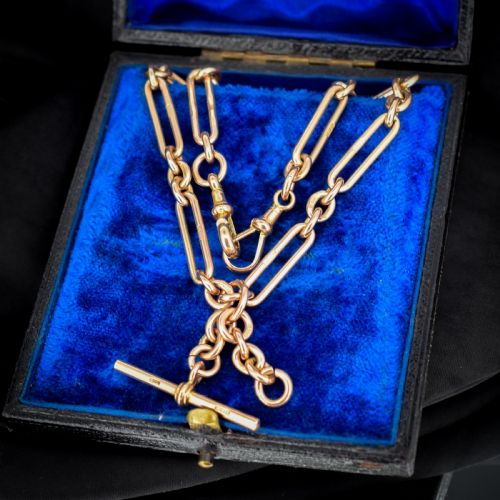
The version most commonly met on this page is the Victorian or Edwardian spinning pendant, often rendered in nine-carat yellow or rose gold. They frequently appear alongside watch chains, pocket watch albert chains, and related chatelaine accessories.
Makers designed these items to hang from waistcoats and watch chains, serving both a practical function for sealing documents and a decorative purpose. Surviving examples demonstrate considerable variation in scale, from large chunky spinner fobs to smaller pendant mounts.
Materials and Construction
Metals used across these items include solid nine-carat gold, eighteen-carat yellow gold, and rolled gold or gold plate over a base metal core. Goldsmiths shaped the metal mounts to securely hold rotating bezels that house paired hardstones.
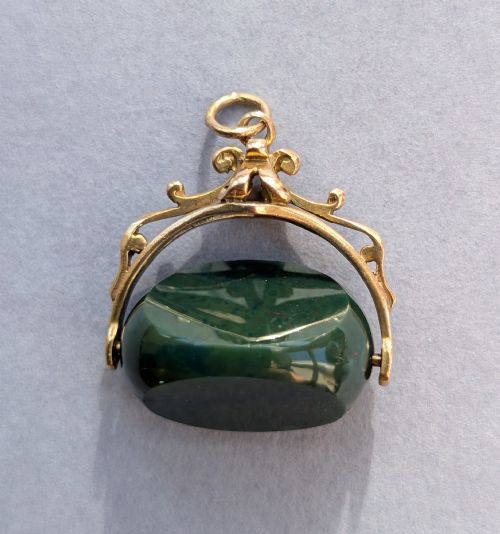
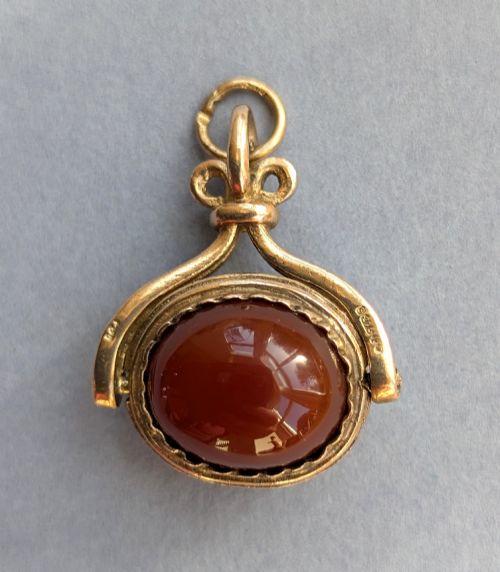
The inset stones typically feature bloodstone, carnelian, sardonyx, agate, or faceted citrine. Artisans cut and polished these mineral stones to fit precisely within the swiveling frames, allowing them to turn smoothly on their pins.
Materials documented in these items include nine-carat rose gold, bloodstone, carnelian, rolled gold, and faceted citrine.
Factors of Quality
The quality of a gold swivel fob rests upon the weight of the gold and the precision of the rotating mechanism. Finer pieces maintain a tight pivot without excessive wobble while allowing the stone carriage to spin freely.
Stone selection and lapidary work further distinguish the range, as deeply saturated bloodstone and well-polished carnelian elevate the piece. Superior examples display crisp chasing on the gold mount and unblemished mineral faces.
The Gold Swivel Fob Glossary
- Swivel fob
- A watch accessory with a pivoting centre that rotates to display two different faces. This allows the wearer to alternate which stone is visible.
- Bloodstone
- A dark green chalcedony quartz flecked with red jasper spots. It was a popular choice for the hardstone faces of nineteenth-century fobs.
- Carnelian
- A brownish-red variety of silica mineral quartz used for its warm colour. It frequently pairs with bloodstone in spinning pendants.
- Rolled gold
- A material made by mechanically bonding a thin sheet of gold to a base metal core. It provided a durable finish at a lower cost than solid gold.
- Albert chain
- A type of pocket watch chain named after Prince Albert, designed to attach to a waistcoat buttonhole. Fobs and pendants typically hang from the centre drop of these chains.
Gold Swivel Fob: Frequently Asked Questions
What is a gold swivel fob used for?
These pieces functioned primarily as decorative pendants attached to pocket watch chains and watch albert chains worn on waistcoats. Many featured hardstone seals carved with crests or initials for stamping hot wax on correspondence.
Over time, their role shifted toward pure ornamentation, showcasing the varied colours of carnelian, bloodstone, and citrine. Today, collectors typically wear them suspended from modern neck chains or integrated into traditional watch chains.
How can I date a swivel fob?
Dating relies on stylistic clues, gold purity hallmarks, and the specific types of stones used in the rotating mount. Georgian examples tend to feature heavier yellow gold gilt mounts and large carnelian stones, while Victorian pieces frequently incorporate rose gold and bloodstone combinations.
Edwardian and later iterations from the nineteen-twenties and thirties often show refined proportions or faceted citrine quartz. Hallmarks stamped directly onto the metal loop can provide specific assay office marks and date letters where present.
Are these fobs made of solid gold?
Materials vary across the inventory, encompassing solid nine-carat yellow gold, nine-carat rose gold, and eighteen-carat gold alongside rolled gold options. Rolled gold pieces utilise a bonded layer of gold over a base metal core to replicate the appearance of solid metal.
Examining the piece for official hallmarks or stamps helps clarify the metal composition. Solid gold examples typically carry clear assay marks indicating their exact gold fineness.