



Victorian Caricatures
These Victorian caricatures capture social types and public figures with sharp wit, offering an entertaining window into nineteenth-century life.
Victorian Caricatures
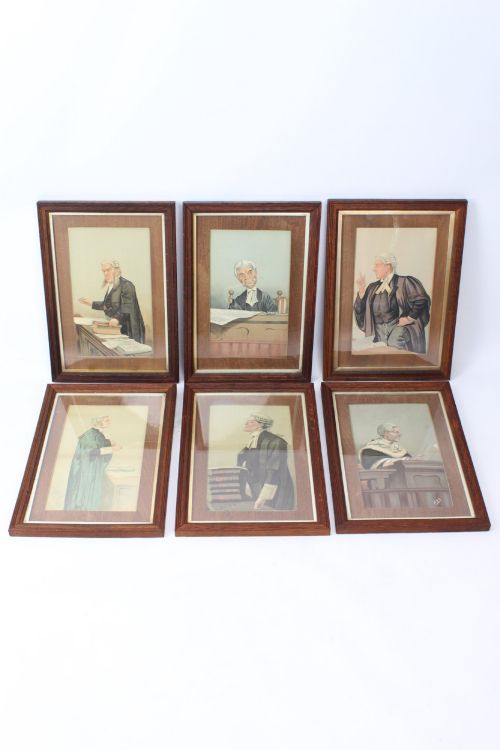
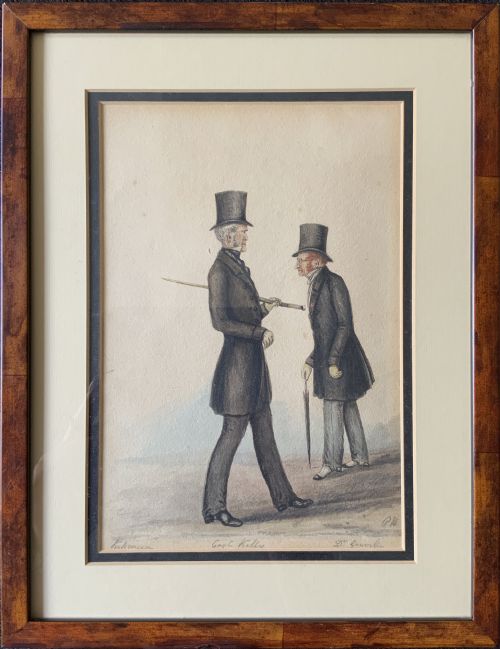
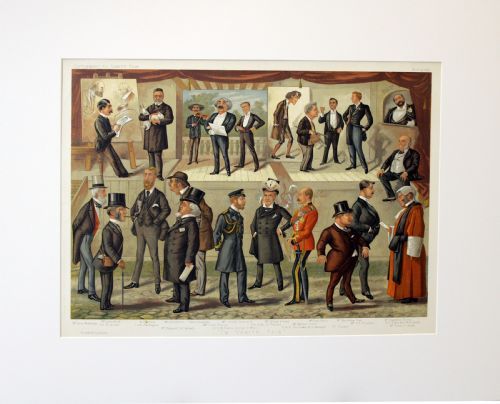
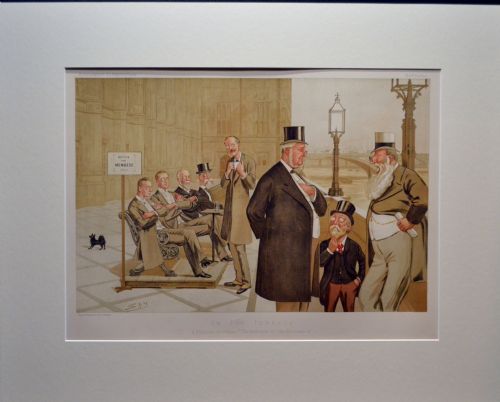
Victorian caricatures on this page predominantly take the form of chromolithographs and prints originating from the magazine Vanity Fair, alongside original watercolours and oil paintings. Buyers frequently encounter framed series depicting politicians, military figures, and sportsmen from the late nineteenth and early Edwardian periods.
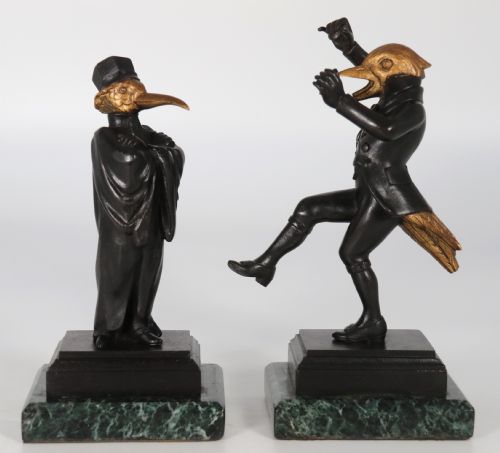
The selection also includes sculptural works, such as bronze caricature figures of theatrical birds, and folk art items like carved sticks. These pieces span periods from the mid nineteenth century through to the nineteen twenties.
Materials and technique
Printed works rely on ink applied to paper, card, and mount board, often utilising the chromolithographic process to achieve rich multi-coloured images. Watercolours and oil paintings employ traditional liquid pigments on paper or canvas surfaces.
Three-dimensional pieces utilise cast bronze or carved wood, combining metallic finishing or folk art hand-crafting techniques to render exaggerated bodily proportions and humorous expressions.
Among the satirical portraits sit bronze theatrical birds and a folk art swagger stick, proving Victorians loved mocking both politicians and poultry.
Judging quality
Quality rests upon the crispness of the printing impression or the expressive vigour of the brushwork, distinguishing confident draughtsmanship from weaker hands. Original watercolours and oil paintings achieve greater distinction through the artist's handling of pigment and personality.
The preservation of the paper surface and the retention of vibrant ink colour without excessive fading or toning elevates the standing of printed plates.
The Victorian Caricatures Glossary
- Chromolithograph
- A colour lithographic print produced from multiple stones or plates, one for each colour used. This technique creates vibrant hues common in periodical illustrations.
- Spy
- The pseudonym of artist Leslie Ward, whose satirical portraiture defined the visual style of Vanity Fair for decades. His caricatures formed the backbone of nineteenth-century satirical portraiture.
- Folk art
- Utilitarian or decorative objects created by self-taught or amateur makers outside academic traditions. These items reflect local vernacular styles and materials.
- Mount board
- Heavyweight cardboard used in framing to support and separate artwork from the glass. It provides structural stability for works on paper.
Victorian Caricatures: Frequently Asked Questions
What are Vanity Fair prints?
Vanity Fair prints are satirical portrait illustrations published in the British weekly magazine from the late nineteenth century onwards. They famously skewered prominent statesmen, royals, and sportsmen of the era.
Artists such as Spy captured the distinctive posture and personality of each subject with affectionate exaggeration. Today these sheets survive as popular framed wall art.
How were caricature bronzes made?
Caricature bronzes were produced using traditional casting methods, often portraying theatrical or animal subjects with human expressions. Artisans then hand-finished the metal surfaces to highlight satirical details.
These sculptures served as tabletop ornaments for Victorian and Edwardian drawing rooms.
Where should I hang these prints?
These framed prints suit studies, hallways, or living rooms, particularly when grouped in sets by theme such as law or racing. Keeping them away from direct sunlight protects the delicate paper and ink from fading.
Matching the frame style to the period of the print helps maintain a cohesive historical display.
How do I date these artworks?
Dating relies on publication dates printed on magazine plates, costume details, or associated maker marks. Catalogues and historical records often confirm the exact year a portrait first appeared.
Stylistic cues such as Edwardian fashion or Victorian military uniforms also narrow down the creation period.