



Framed Hunting Lithographs
Framed hunting lithographs capture equestrian pursuits and field sports on paper, bringing traditional sporting art straight onto the wall.
Framed Hunting Lithographs
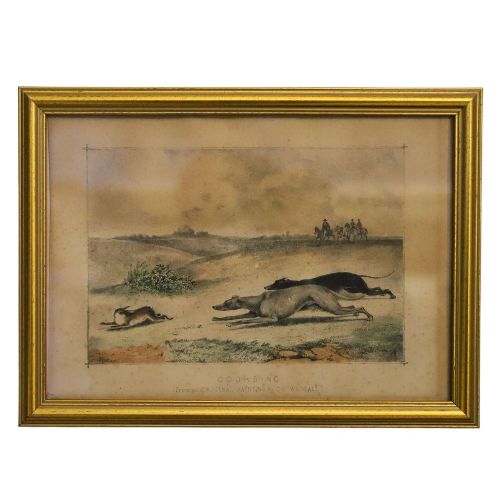
When you search for framed hunting lithographs, you encounter works on paper depicting field sports, hare coursing, and equestrian scenes from various historical periods. These pieces include Victorian and Edwardian portrayals of hounds, riders, and rural sporting life preserved behind glass.
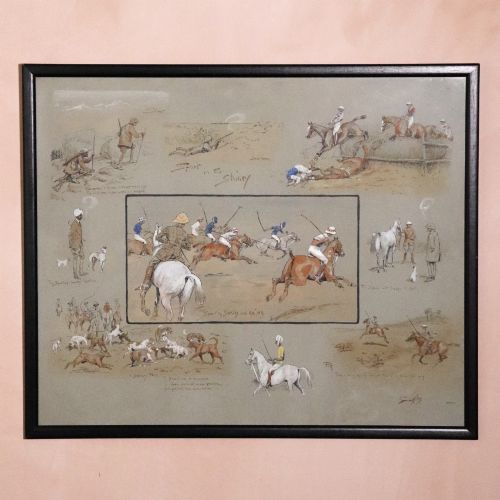
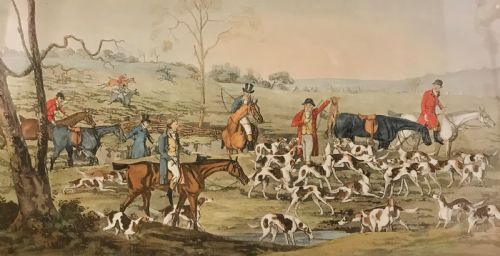
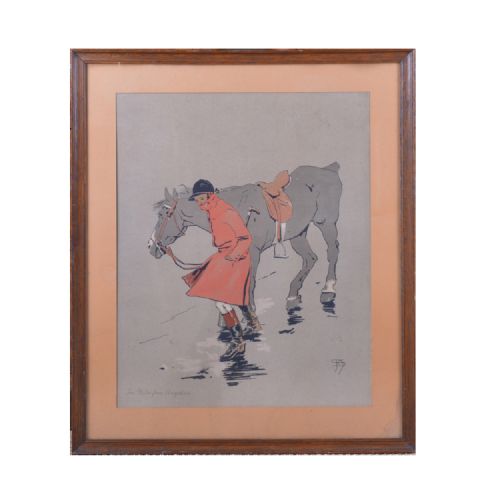
The selections available here span from nineteenth century publications to twentieth century chromolithographs and prints. Works by notable artists such as Snaffles and H. Alken frequently appear alongside Vanity Fair double prints and Georgian subjects.
Most examples arrive ready to hang, set within traditional wooden frames featuring gesso, gilt wood, or gold leaf finishes. They serve as historical records of British field sports and country house aesthetics.
How they were made
These works rely on ink applied to paper or cardboard through lithographic and chromolithographic printing techniques. Publishers utilised prepared stones or plates to reproduce detailed illustrations of horses, hounds, and riders with fine tonal gradations.
Printers often added hand-colouring or published multi-plate chromolithographs to achieve rich hues for military uniforms, hunting pinks, and rural landscapes. The resulting prints were subsequently mounted and housed beneath glass.
Enclosing frames utilise wood, gesso, and gold leaf moulding to protect the delicate paper surface. Backings of cardboard and paper tape secure the print within its protective housing.
Listings feature paper works dated from the nineteenth and twentieth centuries, spanning Victorian, Edwardian, and Georgian sporting styles.
What varies in quality
Quality rests upon the clarity of the printed line and the vibrancy of the ink or applied colour. Early nineteenth century impressions show sharper detail than later reproductions, while skilled hand-colouring elevates the visual depth of a subject.
The framing materials also distinguish pieces, with period gilt wood and gesso mouldings offering superior craftsmanship compared to standard modern replacements. Original glazing and well-preserved paper without excessive foxing represent the higher tier of these works.
C. H. Weigall·Snaffles·H. Alken·Frank Algernon Stewart·Frank Dadd
The Framed Hunting Lithographs Glossary
- Chromolithograph
- A colour lithograph produced using multiple stones, one for each colour applied. This technique allowed for rich and varied hues without requiring individual hand-colouring.
- Lithograph
- A planographic print made from a flat stone or metal plate treated to repel ink except where desired. Artists drew directly onto the surface to capture fine illustrative details.
- Gesso
- A plaster-like mixture applied to wooden frames before gilding or painting. It provides a smooth base for intricate moulded decorations.
- Vanity Fair Double Print
- A caricature or portrait published in the Victorian magazine Vanity Fair. These prints often featured notable sporting figures and military men of the era.
- Gilt Wood
- Wood treated with a thin layer of gold leaf or metallic paint. It gives frames a bright, reflective finish typical of period presentation.
Framed Hunting Lithographs: Frequently Asked Questions
How do I care for framed lithographs?
Keep prints away from direct sunlight to prevent the ink and paper from fading over time. Maintain stable indoor humidity levels to protect both the paper and the wooden frame.
Dust the glass gently with a soft cloth and avoid using liquid cleaners directly on the surface. Ensure the hanging wire and wall fixings remain secure.
Are these prints original?
The listings include original nineteenth and twentieth-century print runs published during the active periods of the respective artists. Descriptions note specific publishing dates and printing methods where recorded.
Examine the paper texture and ink application to verify the vintage character of the piece. Many retain their period framing materials.
What subjects do these prints feature?
The works depict traditional British field sports including hare coursing, point-to-point racing, and mounted hunting parties. Scenes also incorporate military subjects and rural country house life.
Characters range from anonymous riders to specific historical sporting personalities captured by artists like Snaffles.
How can I date a hunting lithograph?
Publishing dates are often printed directly onto the margin or documented in the title alongside the artist. Stylistic clues in the attire of the riders and the framing materials also offer chronological markers.
Nineteenth-century examples frequently display distinct typography and paper ageing compared to Edwardian or later twentieth-century printings.