


Victorian Captains Cabinet
These Victorian captains cabinet selections offer compact writing furniture built for officers at sea and refined for domestic studies.
Victorian Captains Cabinet
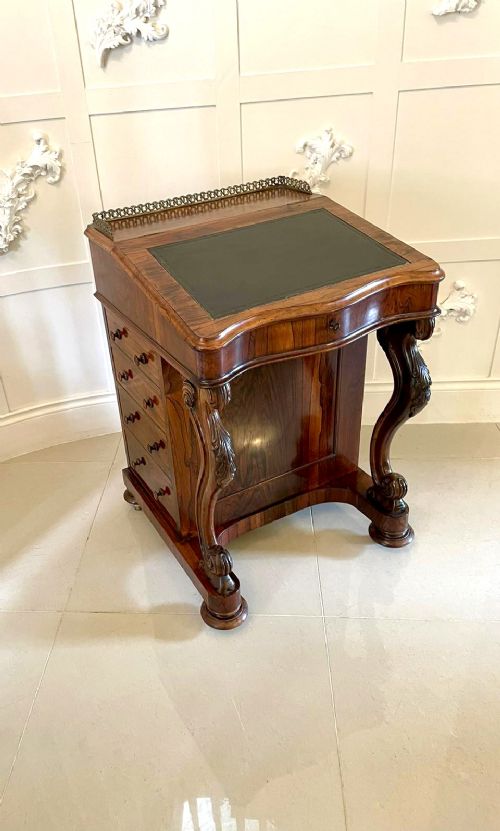
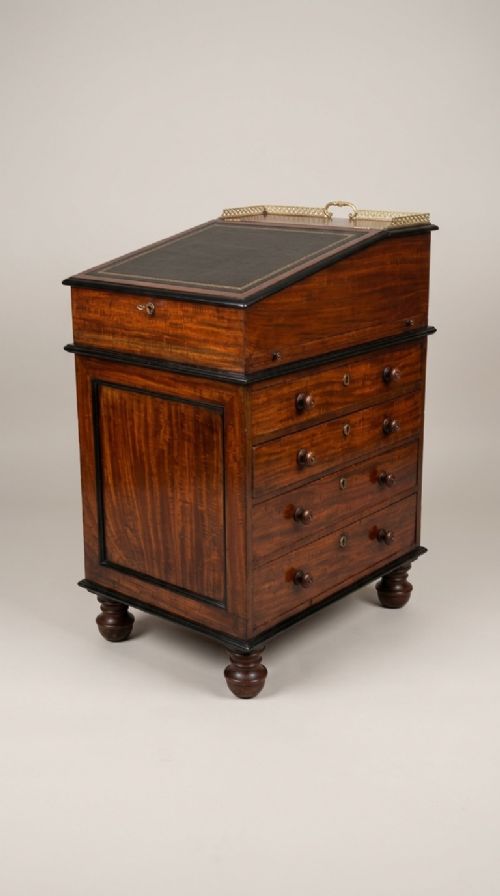
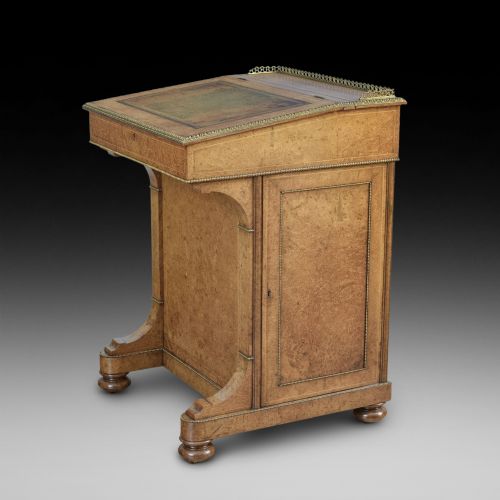
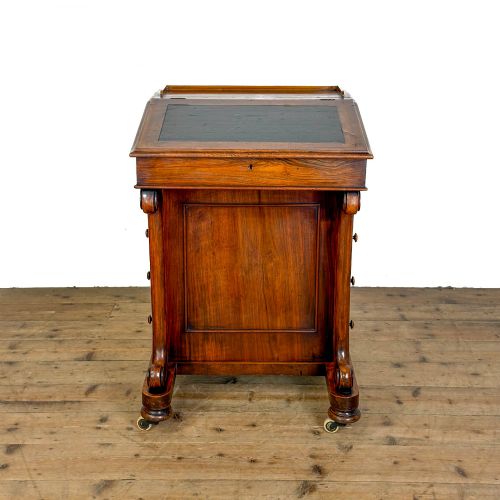
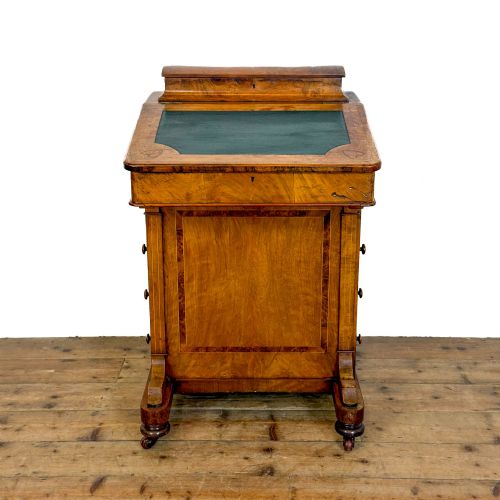
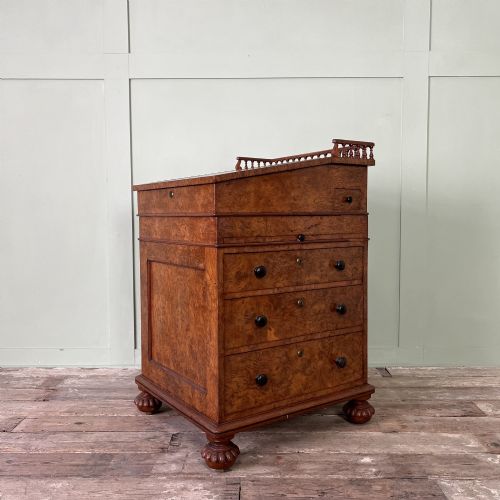
A victorian captains cabinet typically presents as a compact writing desk or Davenport incorporating hidden drawers, stationary compartments, and secure locking mechanisms. The forms seen span freestanding campaign pieces, pop-up variants, and slant-front writing boxes designed for efficient use of limited space.
Most examples encountered on this page date from the nineteenth century, displaying period characteristics such as internal pen trays, side-opening drawers, and sloping leather-lined writing surfaces.
Originating as practical shipboard furniture for naval officers, these pieces evolved into sophisticated household desks favoured for drawing rooms and gentlemen's studies.
Materials and Construction
Cabinetmakers constructed these pieces using dense hardwoods like mahogany, rosewood, and walnut, frequently enhancing the surfaces with burr veneer panels and contrasting crossbanding. Amboyna and ebonised wood appear in finer examples to provide visual depth and texture.
Brass fittings, including flush handles, corner mounts, and locking rods, secure the moving parts and protect the edges from knocks during transit or daily use. Leather inserts line the writing slopes, providing a durable and smooth surface for correspondence.
Some desks include hidden compartments originally designed to store secret maps, confidential ship orders, or private inkwells.
Assessing Quality
Quality rests in the precision of the joinery and the selection of figured wood veneers, such as burr walnut or pollard oak. Superior pieces display seamless integration of secret compartments and smooth mechanical action in sliding tops or pop-up stationary boxes.
The degree of hand-carved detail, the presence of original brass hardware, and documented maker attribution separate standard utility furniture from exceptional cabinet work.
Gillows of Lancaster·Gillow and Co
The Victorian Captains Cabinet Glossary
- Davenport
- A compact pedestal desk featuring a sloping, desk-box top hinged over a set of drawers opening to the side. This form dominates the selection.
- Crossbanding
- A border of veneer laid around the perimeter of a furniture panel with the grain running at a right angle to the centre. It frames the primary wood figure.
- Pop-Up
- A mechanical mechanism within a desk that raises an internal stationary compartment when the main writing lid is opened.
- Campaign
- Furniture designed to dismantle or fold easily for military or naval transport, typically fitted with recessed brass handles and protective corners.
Victorian Captains Cabinet: Frequently Asked Questions
What is a captains cabinet?
A captains cabinet is a portable or compact piece of furniture historically used by naval officers at sea. These items combined storage for writing materials and documents within a sturdy, space-saving footprint.
Over time, the design transitioned from shipboard quarters to domestic rooms, retaining its clever internal compartments and secure locking systems.
How do you use a Davenport desk?
The user sits before the sloping leather-lined lid, which lifts to reveal storage for paper and ink. Drawers typically slide out to the side rather than the front, allowing access even when seated closely.
Pop-up versions raise additional stationary tiers automatically when the main writing surface is pushed back or opened.
How do I date a Victorian desk?
Dating relies on secondary wood types, construction methods, and prevailing stylistic revivals recorded in the piece. Mid nineteenth-century examples often employ solid mahogany or rosewood frames before burr walnut gained popularity in later decades.
Hardware styles and the integration of mechanical pop-up compartments also help narrow the period of manufacture.
Where were these cabinets placed?
In the nineteenth century, these compact desks suited ship cabins, intimate drawing rooms, and gentleman's studies where floor space was restricted. Their finished backs allowed them to stand freely in the centre of a room rather than against a wall.
Today, they function well as writing tables or decorative statement pieces in home offices and living areas.