

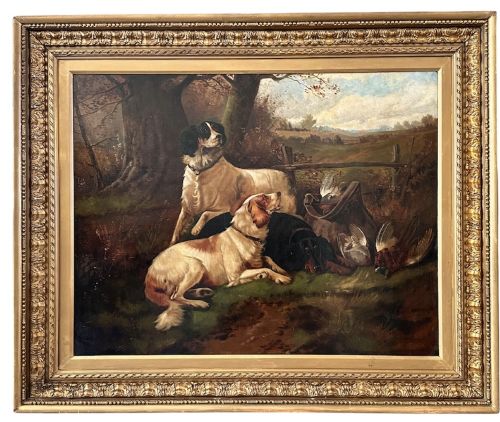


Victorian Canine Oil Painting
A victorian canine oil painting brings nineteenth-century sporting life and prized pets directly into a room through rich brushwork.
Victorian Canine Oil Painting
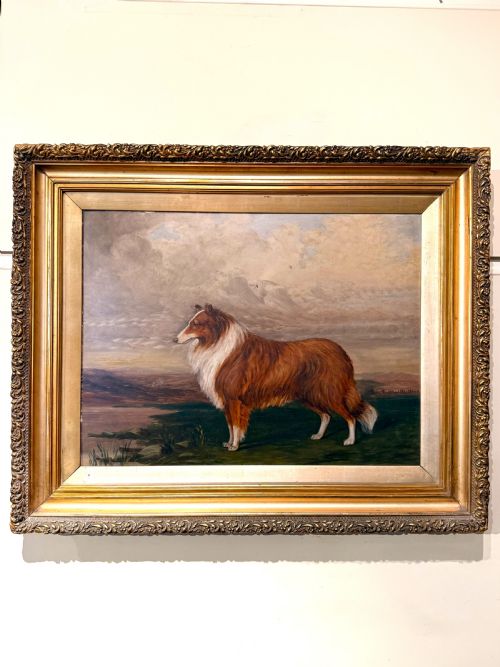
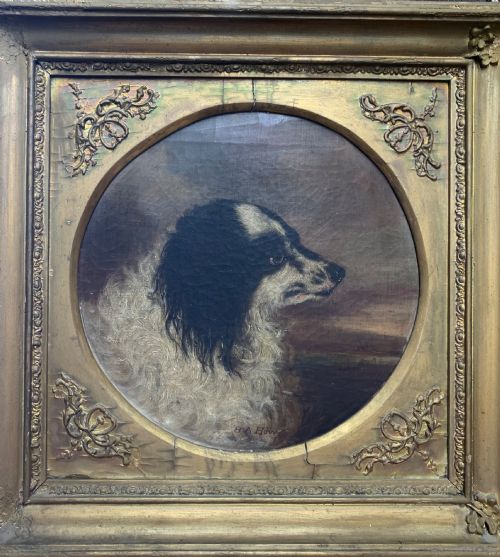
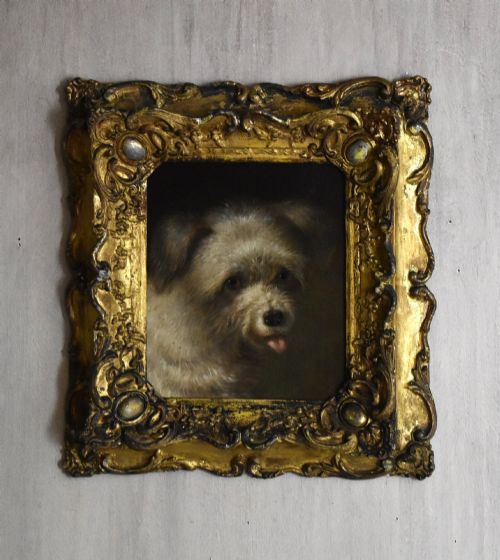
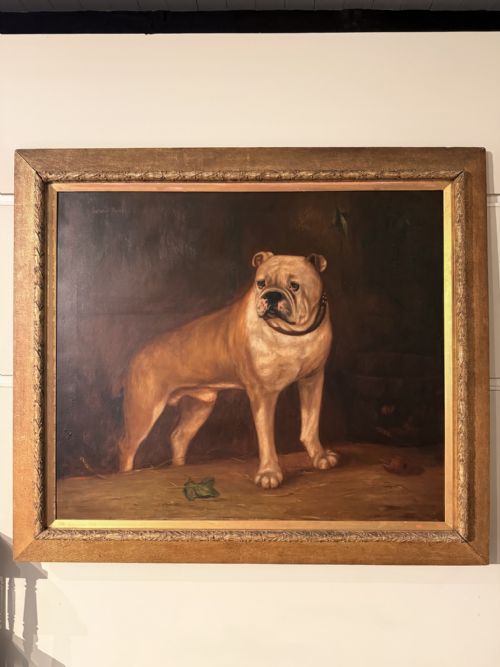
A victorian canine oil painting records individual dogs, spaniels, terriers, and gun dogs across the nineteenth century and into the early twentieth century. These canvases and panels capture hounds in landscapes, beside country houses, or resting indoors.
Most examples originate from British artists working in realist or sporting traditions, depicting named champions, working dogs, and family pets. The works range from intimate studies to large framed compositions.
Subjects include collies, setters, bloodhounds, and terriers, often shown guarding, hunting, or posing quietly by the fire.
Quality and Execution
Quality rests in the anatomical accuracy of the dog, the expressiveness of the eyes, and the handling of fur texture. Superior hands render bone structure and muscular movement with conviction.
The background setting plays a role, with accomplished artists integrating landscape elements and lighting that ground the animal in a coherent space rather than a flat backdrop.
Several canvases record working terriers caught mid-mischief guarding traps against very stubborn rats.
Valentine T. Garland·Martin Theodore Ward·John Emms·John Frederick Herring Senior·William Barraud·Sir Edwin Landseer·Colin Graeme Roe·John Trivett Nettleship·George Earl·Philip Eustace Stretton
The Victorian Canine Oil Painting Glossary
- Canvas
- A heavy woven fabric stretched across a wooden frame to serve as a support for oil paint. It provides a flexible yet durable surface for textured brushstrokes.
- Giltwood
- Wood carved and coated with gold leaf or metallic paint to create an ornate frame. This material was widely utilised for framing nineteenth-century fine art.
- Board
- A rigid flat panel made of wood or thick paperboard used as an alternative to canvas. It offers a firm, stable base for panel paintings.
- Sporting Art
- A genre of painting dedicated to field sports, hunting dogs, horses, and rural pursuits. It flourished during the Victorian period.
- Realism
- An artistic movement focused on depicting subjects truthfully without artificiality. In dog painting, this means accurate rendering of breed characteristics.
Victorian Canine Oil Painting: Frequently Asked Questions
How do I identify the breed in a painting?
Artists often recorded specific working traits, ear sets, and coat lengths characteristic of nineteenth-century breeds.
Comparing the depicted animal to historical breed standards helps reveal whether it represents a spaniel, terrier, or hound.
Are these paintings usually signed?
Signatures appear on many canvases, though some works remain attributed through style, archival records, or inscriptions on the reverse.
Unsigned pieces frequently emerge from regional schools or followers of prominent animal painters.
Where should I hang an oil painting?
Keep canvases away from direct sunlight and fluctuating heat sources to protect the oil pigments and wooden stretcher frames.
Allow enough wall space to let the gilt frame complement the surrounding room without crowding.
What frames belong on these works?
Period frames are typically constructed from wood with decorative gilt or gold leaf finishes matching the nineteenth-century aesthetic.
Original frames often show age-appropriate wear that mirrors the history of the canvas inside.