




Nineteenth Century Dog Art
Nineteenth century dog art captures canine companions in oil, charcoal, and watercolour across Victorian and Georgian eras.
Nineteenth Century Dog Art
Nineteenth century dog art encompasses paintings, drawings, and framed artwork depicting hounds, spaniels, and terriers in various settings. These pieces range from formal portraits of named pets to lively scenes of hunting and domestic life.
Buyers encountering this category will find works created in Britain and France during the Victorian period and earlier nineteenth century. Mediums span oil on canvas, oil on panel, charcoal, and watercolour, often housed in period frames.
Portraits frequently record specific animals, such as Lord Methuen’s dogs or the mastiff Odin, while other works show working terriers and hunting groups. The selection includes both provincial British school pieces and French romantic works.
Materials and technique
Works in this group rely primarily on oil on canvas or oil on panel, alongside charcoal and watercolour on paper. Artists built up these compositions using traditional layering techniques suited to capturing animal coats and expressions.
Framing forms an integral part of the physical object, utilising wood, glass, and giltwood or gilt finishes. Many pieces retain maple frames or period gilt surrounds that complement the artwork.
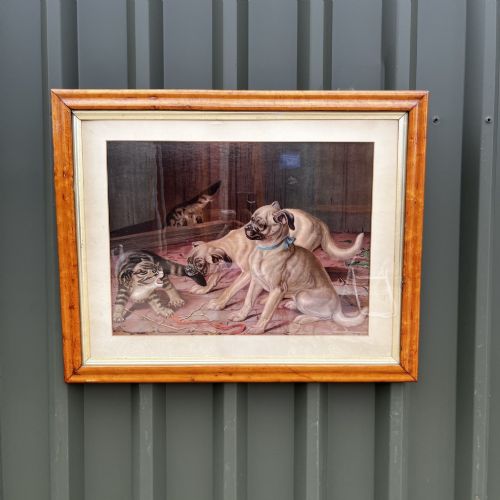
Pugs and cats share the frame in a chromolithograph titled 'Carlins et chats'.
Assessing quality
Quality in these canine works rests upon the artist's ability to render the anatomy, texture, and individual character of the animal. Finer examples display precise brushwork in the fur and realistic light within the landscape or interior setting.
The sophistication of the composition and the prestige of the maker or school influence the standing of a piece. Works linked to documented artists or established regional schools demonstrate greater technical execution than provincial sketches.
George Armfield·Horatio Henry Couldrey·William Barraud·Sir Edwin Landseer·Jules Chardigny
The Nineteenth Century Dog Art Glossary
- Chromolithograph
- A multicolour planographic printing technique used to produce reproductions of original artworks. This process built up rich colour through successive stone plates.
- Giltwood
- Wood that has been treated with a thin layer of gold leaf or powder. It frequently appears on nineteenth century picture frames.
- Oil on panel
- A painting executed on a wooden board rather than stretched canvas. This rigid support was common for smaller works of the period.
- Silhouette
- A solid dark image of a subject's profile, typically cut from paper or painted. These pictures often recorded family groups and pets in early nineteenth century interiors.
Nineteenth Century Dog Art: Frequently Asked Questions
What subjects appear in nineteenth century dog art?
These works depict named pets, hunting dogs, and working terriers in landscapes, courtyards, and domestic interiors.
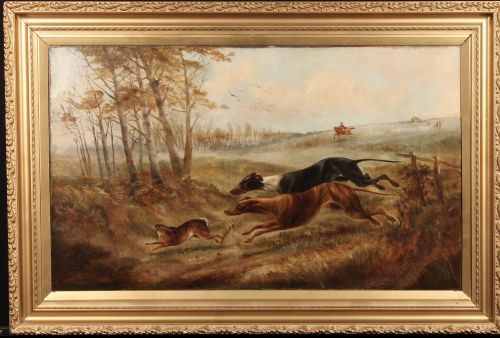
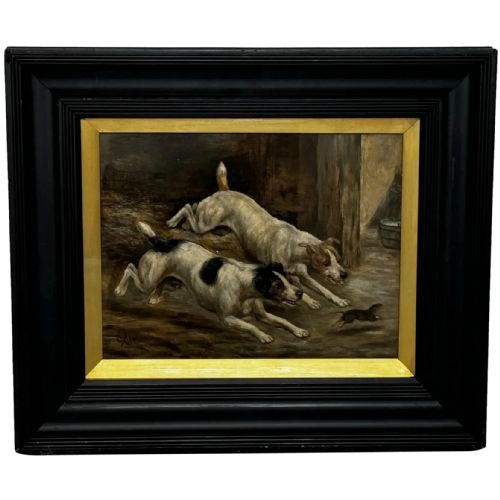
Many pieces record specific animals belonging to prominent owners or illustrate sporting pursuits like hare coursing and rat chasing.
Which materials were used for these artworks?
Artists employed oil on canvas, oil on panel, charcoal, and watercolour to create these canine portraits and scenes.
Framing materials typically include wood, glass, and giltwood, with many pieces preserved in period surrounds.
How do I care for an antique dog painting?
Protect the artwork from direct sunlight and maintain stable indoor humidity to preserve the canvas, panel, and pigments.
Keep framed pieces away from excessive moisture and dust the giltwood surrounds gently with a dry, soft cloth.
How are different periods identified in these works?
Dating relies on stylistic markers, framing techniques, and signatures or inscriptions relating to the Victorian and Georgian eras.
Documentation on the reverse, subject dress, and recorded exhibition histories also help establish the date of creation.