




Victorian Canine Art
When you search for Victorian canine art, you enter a world of oil paintings and etchings that capture the character of nineteenth-century dogs.
Victorian Canine Art
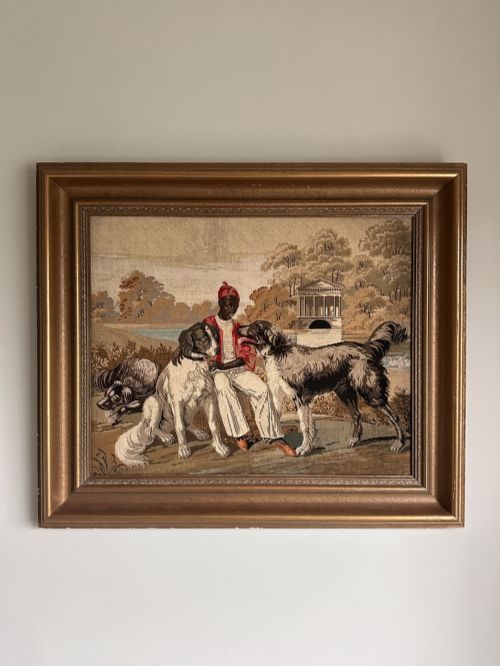
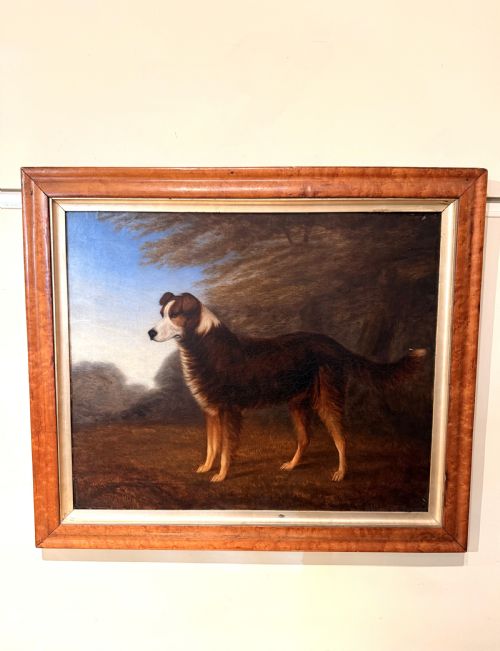
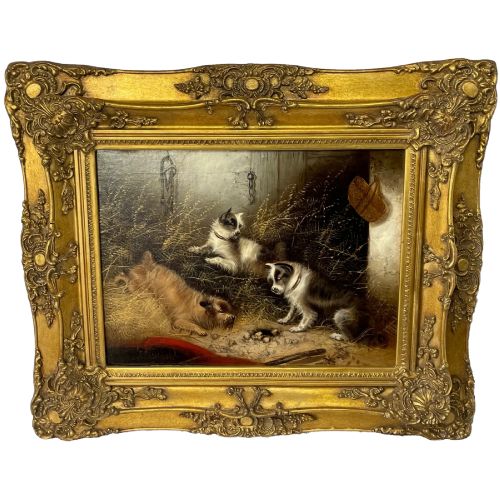
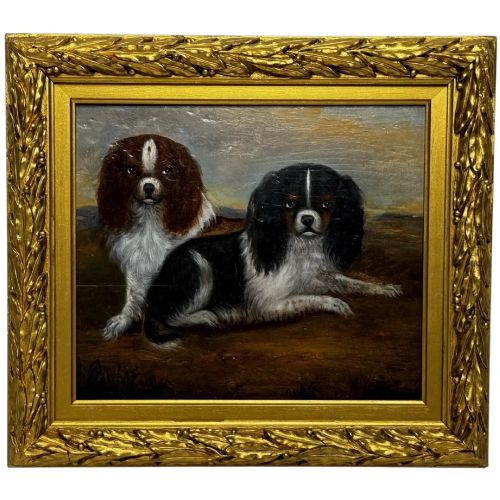
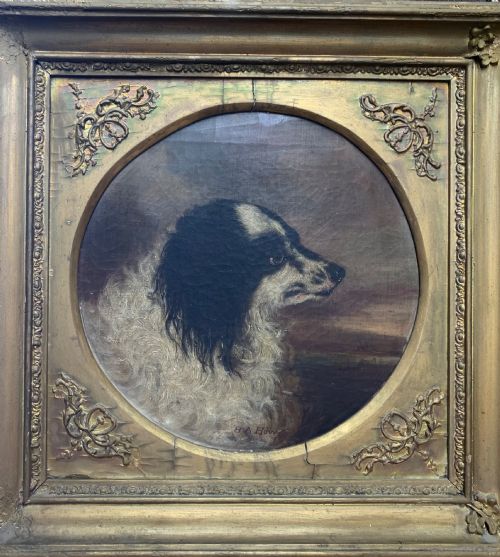
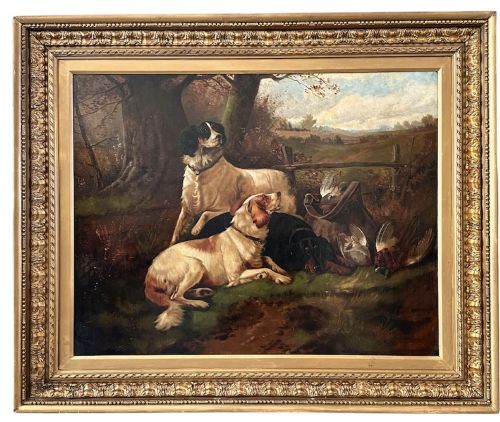
Victorian canine art encompasses oil paintings, watercolours, etchings, and drawings depicting spaniels, terriers, hounds, and sporting dogs in various landscapes. Buyers seeking this phrase encounter works ranging from intimate individual portraits to dynamic sporting scenes set in the nineteenth and early twentieth centuries.
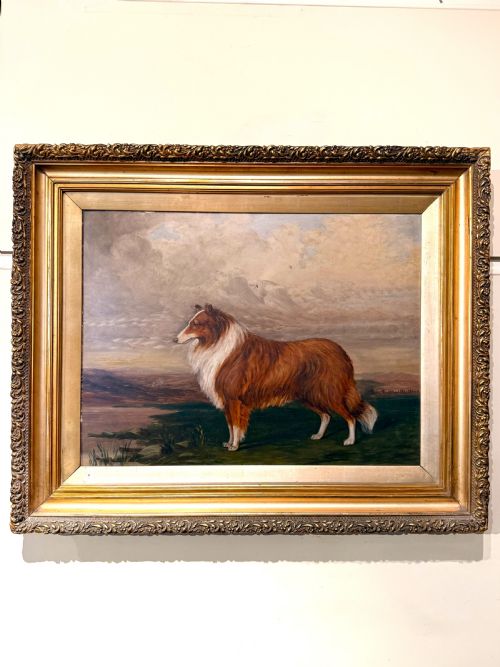
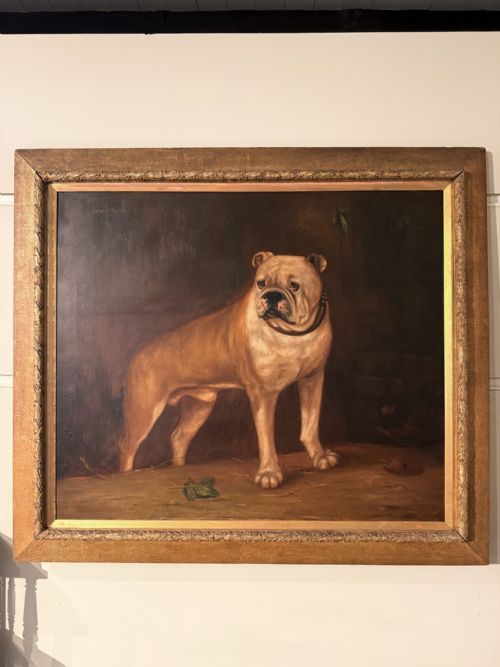
The pieces on this page lean heavily towards oil on canvas and oil on board, frequently framed in giltwood. These works document the deep affection owners held for their pets and the cultural importance of hunting and working dogs during the period.
Materials and Technique
Artists of this era worked primarily with oil paint on canvas or wooden boards, applying rich pigments to build depth in the fur and expressions of the animals. Gilding and gold leaf often feature on the heavy wooden frames that complete these works, providing a distinct contrast to the darker tones of the canvas.
Printmakers utilised etching and drypoint techniques on paper to produce detailed monochrome or tinted images. Draftsmen also employed charcoal, pencil, and silhouette cutting to capture the likeness of specific breeds with remarkable precision.
Victorian Canine Art Retail Price Guide 2026
Typical asking prices for victorian canine art among the pieces listed under this phrase on Sellingantiques today, from the lower quarter to the upper quarter. They describe what is for sale here now, not the wider market.
Several canvases capture dogs actively interrupting human business, from guarding caged rats to staring down the day's hunting bag.
Evaluating Quality
The distinction between standard works and exceptional pieces lies in the anatomical accuracy of the animal and the expressiveness of its eyes and posture. Master painters command finer brushwork that renders individual hairs and musculature convincingly, whereas lesser works remain stiff and formulaic.
Provenance and attribution strongly influence the standing of a piece, as works by documented practitioners carry greater weight than anonymous copies or naive school pieces. The integrity of the original gilt frame and the preservation of the canvas also dictate the overall standing of the artwork.
Edward Armfield·Valentine T. Garland·John Sargent Noble·John Emms·John Frederick Herring Senior·Arthur Wardle·Herbert Dicksee·William Barraud·Augustin Edouart·Sir Edwin Landseer·Colin Graeme Roe·John Trivett Nettleship·Jules Chardigny·Alfred Duke
The Victorian Canine Art Glossary
- Etching
- A printmaking technique where lines are bitten into a metal plate with acid before being inked and pressed onto paper. This method allows for fine, intricate lines well suited to detailing animal fur.
- Drypoint
- A printmaking process where an artist scratches directly into a metal plate with a sharp needle, producing a velvety line from the displaced metal burr. It yields softer, atmospheric impressions.
- Giltwood
- Wood that has been treated with a thin layer of gold leaf or metallic powder, commonly found on nineteenth-century picture frames. It adds a warm, reflective border to oil paintings.
- Sporting art
- Artwork depicting field sports, hunting, shooting, and the animals associated with them. Canine subjects in this genre typically include hounds, pointers, and setters in active rural settings.
Victorian Canine Art: Frequently Asked Questions
What breeds appear most often?
Spaniels, terriers, collies, and various sporting hounds dominate these historical canine portraits.
Artists frequently painted working dogs, gun dogs, and prized racing champions alongside their human companions.
How do I care for these paintings?
Keep oil paintings away from direct sunlight and dramatic shifts in temperature to protect the canvas and paint.
Dust giltwood frames gently with a dry cloth and avoid using liquid cleaners on the delicate surfaces.
Are these works original pieces?
Many listings feature original nineteenth-century oil paintings, watercolours, and period etchings created by named artists.
Some pieces are historical copies or prints after well-known painters like Sir Edwin Landseer.
How are the works typically framed?
Most oil paintings arrive in their period wooden frames, often finished with gold leaf or gilt.
Etchings and drawings are generally mounted behind glass within traditional wooden or gilt borders.