


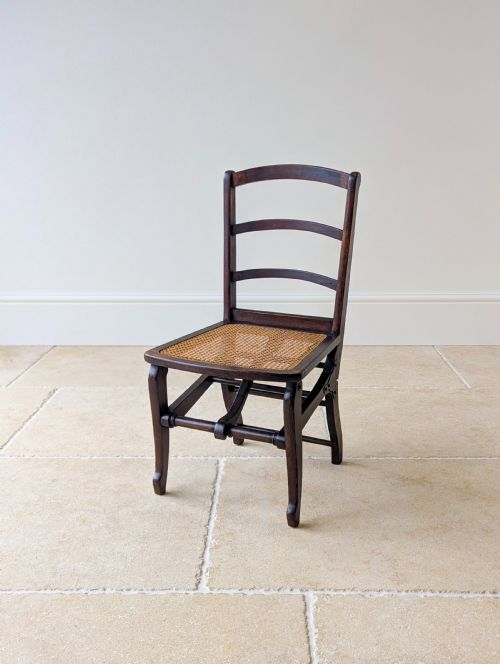

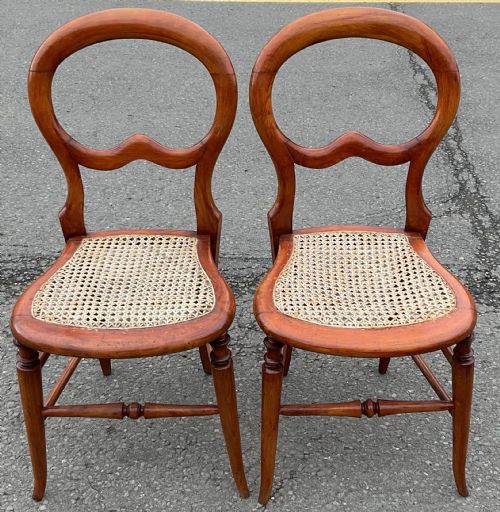


Victorian Caned Side Chair
These Victorian caned side chair examples bring woven texture and sturdy timber frames into domestic spaces with quiet utility.
Victorian Caned Side Chair
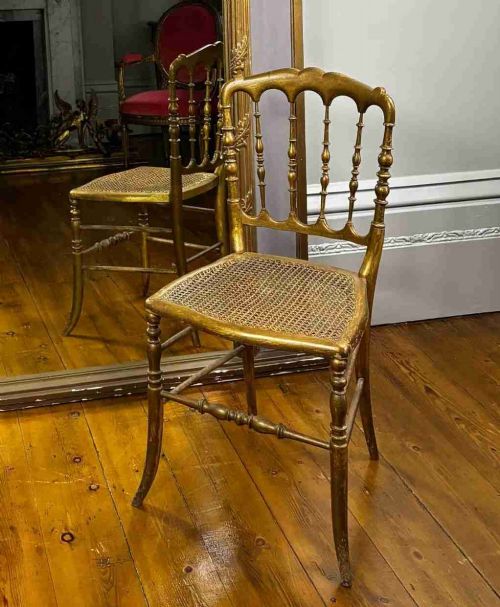
A victorian caned side chair is a lightweight seating form designed primarily for bedrooms, parlours, and dining spaces during the nineteenth century. These pieces rely on woven cane panels for seats and occasionally backs, offering a resilient surface that remains cool and supportive.
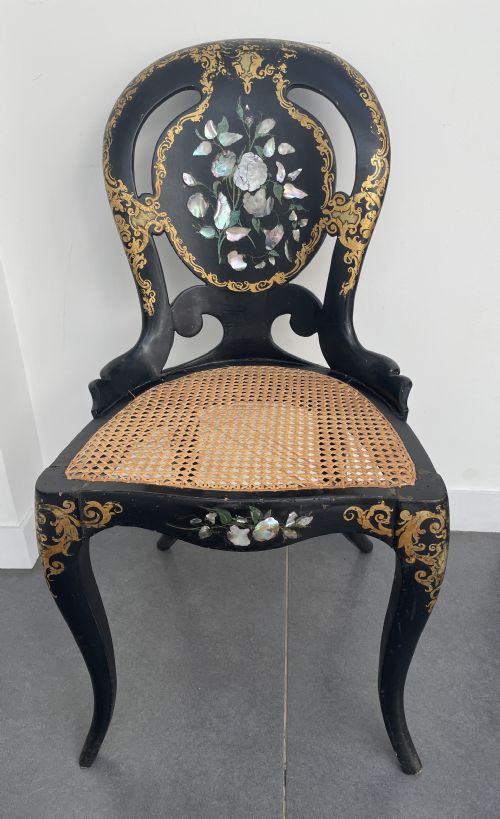
The selection ranges from simple occasional chairs in mahogany or oak to more ornate pieces finished in papier mâché, lacquer, or paint. Regional variations also appear, including pieces influenced by Anglo-Indian and Oriental styles utilising rosewood or satinwood.
Most entries belong broadly to the nineteenth century, spanning decades from the 1850s through to the 1890s, with occasional echoes of earlier Regency or later revival tastes. Buyers encounter both single chairs and matched pairs or larger dining sets.
Materials and construction methods
Makers utilised a variety of hardwoods such as mahogany, walnut, oak, and rosewood for the structural frames, often shaping the timber through turning or carving. Softer woods like beech and satinwood also appear alongside painted finishes, scumble paint, and mother-of-pearl inlay.
The characteristic cane or rattan seating panels were hand-woven through drilled holes along the seat rails, creating a flexible grid that distributes weight evenly. Additional decorative elements include brass details, giltwood, and faux bamboo turning.
Listings feature woods including mahogany, oak, walnut, satinwood, and rosewood alongside cane, brass, and paint.
Judging the standard of manufacture
Quality rests in the precision of the timber joinery and the tightness of the cane weave. Finer examples display crisp carving, well-chosen cabinet woods like rosewood or mahogany, and structural stability in the joints.
Secondary variants often employ simpler turned timbers, beech frames, or applied paint finishes rather than elaborate carving. The crispness of inlaid mother-of-pearl or the execution of specialist painting further separates standard utility seating from decorative salon pieces.
E W Godwin·Gillows
The Victorian Caned Side Chair Glossary
- Bergère
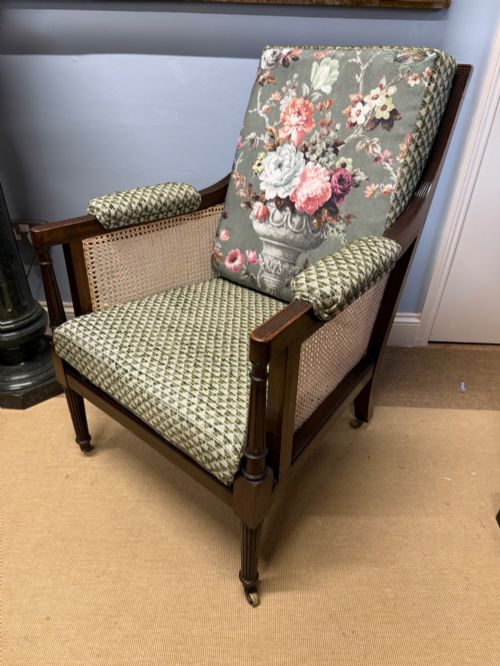
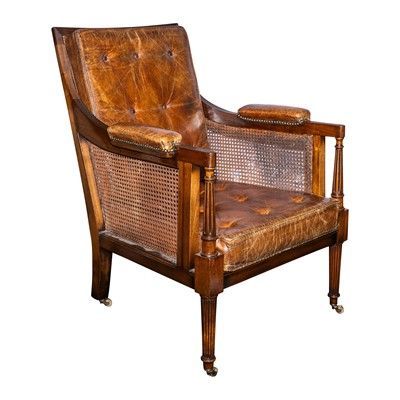
- An enclosed upholstered armchair with wooden or caned sides, often featuring a cane back and seat. It provides a more substantial profile than a typical side chair.
- Cane
- Strips of rattan or similar plant material woven into a patterned mesh for seats and backs. This technique offers flexibility and breathable comfort.
- Scumble paint
- A decorative surface treatment applied over a base coat to imitate the grain of more expensive timbers or create textured visual depth. It was frequently used on nineteenth-century vernacular furniture.
- Papier mâché
- A composite material made from paper pulp or layers of paper bound with glue, pressed into moulds and dried. It accepted hard lacquer and mother-of-pearl inlay for decorative parlour furniture.
- Faux bamboo
- Turned woodwork carved and painted to imitate natural bamboo stalks. This style gained popularity during the nineteenth century under Oriental and Aesthetic movement influences.
Victorian Caned Side Chair: Frequently Asked Questions
Where should I put a cane chair?
These chairs suit bedrooms, hallways, and drawing rooms where their lighter visual weight keeps the floor plan open.
They function well as occasional seating rather than primary lounge chairs, fitting comfortably beside desks or dressing tables.
Are cane seats durable for daily use?
The woven cane grid distributes weight flexibly and withstands normal daily sitting when kept in stable indoor conditions.
Overly dry environments can make the material brittle, so avoiding direct heat sources helps preserve the weave.
How do I date these chairs?
Dating relies on timber choices, turning styles, and decorative motifs such as mother-of-pearl inlay or faux bamboo finishing.
Nineteenth-century examples often exhibit specific stylistic shifts from early Regency bamboo turns through to late Victorian aesthetic ebonising.
Can I mix different wood tones?
Mixing mahogany, walnut, and oak seating pieces works effectively within a room by introducing varied grain and colour.
Common design periods share enough proportion and craftsmanship to sit comfortably together without matching precisely.