

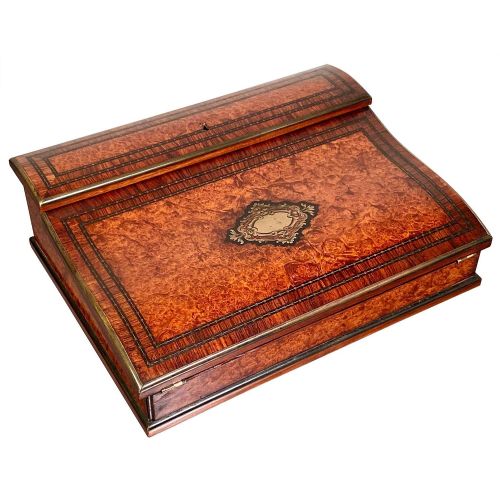


Victorian Campaign Slope
A victorian campaign slope is a portable writing desk designed for travel, offering brass-bound durability and clever folding compartments that collectors value for both utility and period craftsmanship.
Victorian Campaign Slope
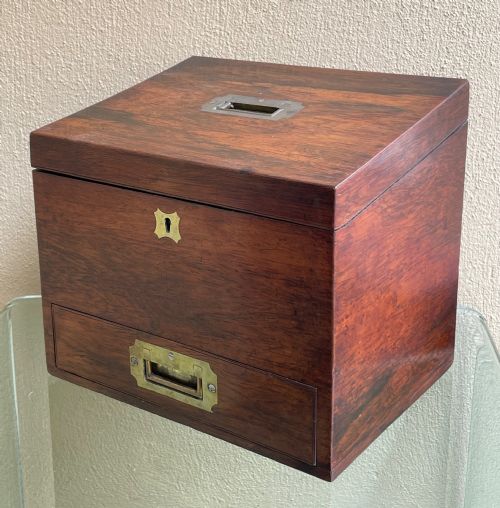
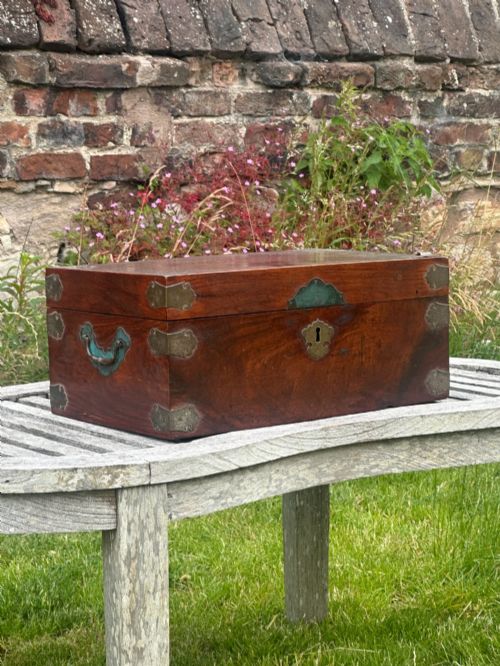
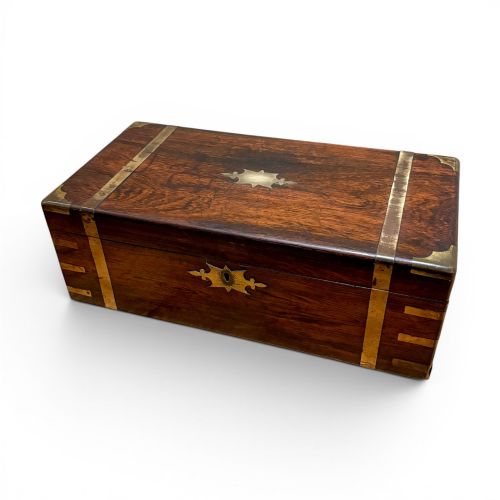
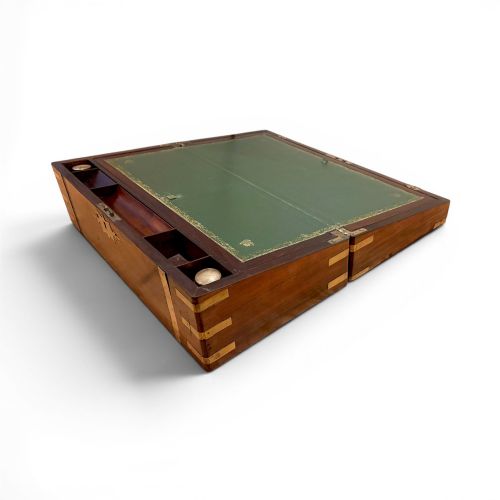
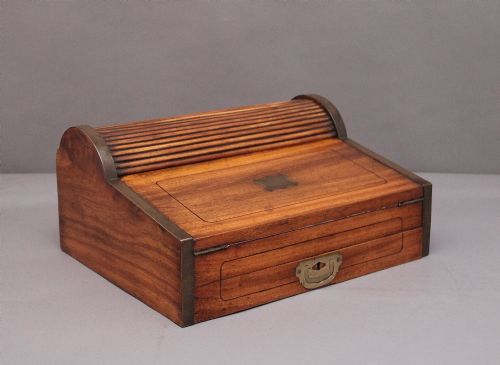
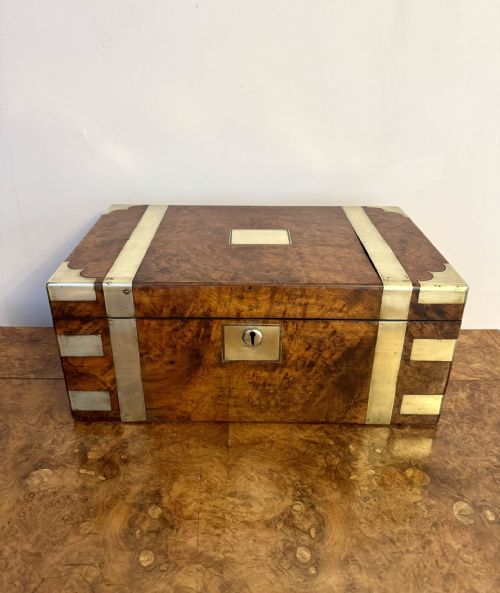
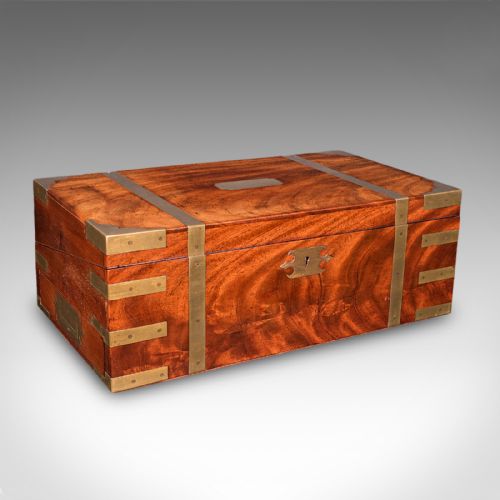
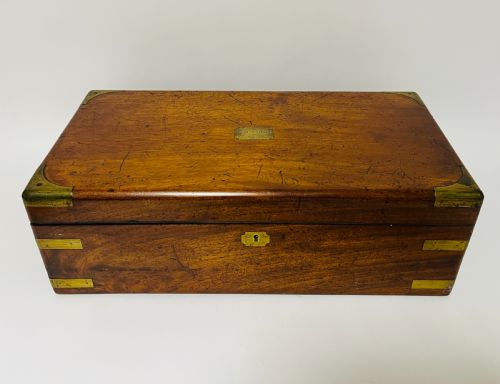
A victorian campaign slope is a portable box that unfolds to reveal a sloping writing surface, originally built for officers and travellers on the move. These pieces span the nineteenth century, with mahogany, walnut, and rosewood examples appearing most frequently.
The form ranges from simple lap desks to substantial correspondence boxes equipped with secret drawers and candle sconces. Many retain fitted leather interiors designed to hold writing instruments, stationery, and important documents safely during transit.
How they were made
Cabinetmakers constructed these boxes using dense timbers such as mahogany, rosewood, and camphor wood, which resisted warping in harsh climates. Brass binding and flush-fitting handles reinforced the corners and edges to withstand rough journeys.
Internal compartments often featured secret drawers concealed behind dummy panels, demonstrating precise woodworking joints. Locks by makers like Bramah secured the contents, while leather inserts provided a durable surface for writing.
What varies in quality
The standard of timber selection and brass work defines the tier of a piece, from plain utilitarian boxes to elaborately figured burr walnut and coromandel examples. Heavier brass mounts, corner braces, and detailed inlay indicate superior workshop output.
Internal complexity also separates standard slopes from exceptional ones, particularly those featuring metamorphic designs, candle sconces, or specialised compartments for sovereign storage and stationery organisation.
Mappin & Webb
The Victorian Campaign Slope Glossary
- Bramah lock
- A high-security cylinder lock patented by Joseph Bramah, commonly found on superior nineteenth-century boxes. These mechanisms were renowned for their complexity and reliability.
- Secret drawers
- Concealed compartments hidden behind removable panels or false bottoms within the box. They were used to store valuables, currency, and confidential papers.
- Brass bound
- Edges and corners reinforced with inset brass straps and corner plates. This construction prevented the timber from splitting during rough transport.
- Lap desk
- A smaller portable writing box designed to rest directly on the user's knees. It provides a compact writing surface without requiring a table.
Victorian Campaign Slope: Frequently Asked Questions
How do you use a campaign slope?
The box opens to form a slanted writing surface covered in leather, while the upper section holds inkwells and pens. Internal partitions keep stationery secure when the lid is closed and latched for travel.
Many examples include folding mechanisms or removable panels that transform the compact box into an organised workstation suitable for a desk or lap.
What are secret drawers used for?
Secret drawers concealed valuables, private correspondence, and currency away from casual view. Cabinetmakers built these hidden compartments behind false dividers or removable interior blocks.
Discovering them often requires sliding panels or lifting specific sections within the stationary well of the box.
How do you date a campaign slope?
Dating relies on timber choices, brass mount styles, and lock types characteristic of the nineteenth century. Earlier Georgian and early Victorian pieces often feature simpler mahogany construction with flush brass handles, while later decades introduced exotic veneers like coromandel and burr walnut.
Makers' marks, when present, provide a direct link to specific workshops operating during the period.
Why are some boxes called camphor wood?
Camphor wood was utilised for boxes destined for colonial service, particularly in Anglo-Indian contexts, because the aromatic timber naturally repelled insects and resisted moisture. This made it ideal for officers stationed in tropical climates.
These pieces often display a distinct grain and fragrance that survives after centuries of use.