




Victorian Cake Display
These pieces for victorian cake display bring nineteenth-century presentation to the table, offering tiers and stands that turn everyday treats into a centrepiece.
Victorian Cake Display
When you search for victorian cake display, you encounter a variety of multi-tiered stands, folding frames, and circular servers designed to elevate sweet provisions. The examples on this page span the nineteenth century into the early twentieth century, taking forms such as tripod pedestals, etageres, and revolving or folding frameworks.
Mahogany and walnut predominate among the woods, often paired with glass domes or porcelain platters to create height and separation on the dining or tea table. Alongside traditional British timber stands, the selection includes ceramic dessert services and occasional tables adapted for presentation.
Most pieces date from the Victorian era proper, though items stretch from Georgian roots into Edwardian production. Buyers typically find tiered wooden folding stands and circular mahogany cake or cheese stands ready for modern use.
How they were made
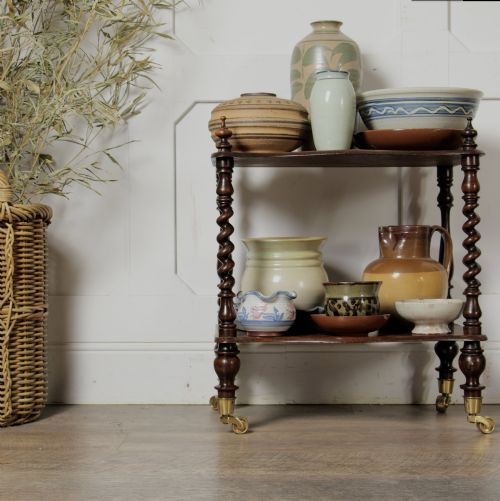
Joiners and cabinet makers utilised dense hardwoods like mahogany, walnut, and oak to construct stable multi-tiered frames and folding mechanisms. Turning lathe work produced barley twist stems and tapered legs, while brass fittings and hinges enabled collapsible designs.
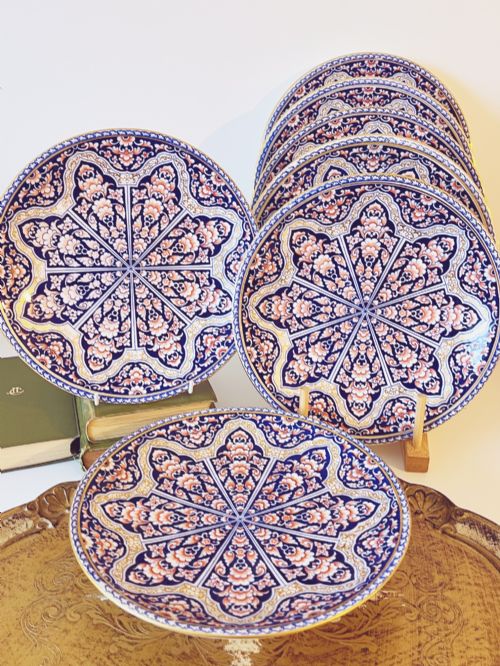
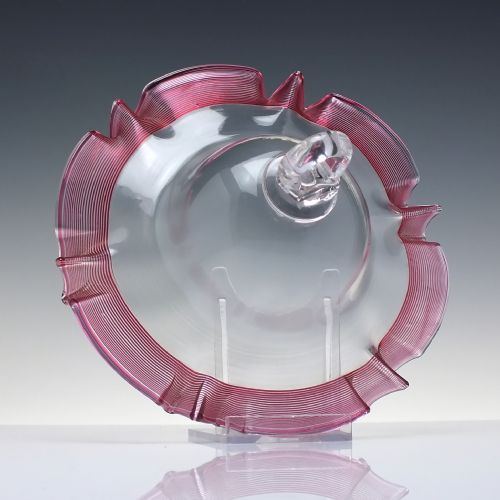
Ceramic components involved bone china bodies painted by hand, exemplified by makers such as John Ridgway and Royal Crown Derby. Glass domes were blown to cover displays, and occasional decorative touches included gold leaf, enamel, and inlaid wood.
Listings feature mahogany, walnut, and oak alongside bone china and glass domes, spanning the Victorian and Edwardian periods.
What varies in quality
The distinction between standard utility items and finer pieces rests upon timber selection and the precision of the joinery. Mahogany with rich grain patterns and sturdy tripod or pedestal bases commands greater attention than plain softwood carcasses.
On the ceramic and glass side, hand-painted details, crisp date marks, and heavy blown glass domes separate mass-produced wares from superior dessert services. Mechanism smoothness in folding stands also marks the level of initial craftsmanship.
Royal Crown Derby·John Ridgway
The Victorian Cake Display Glossary
- Comport
- A shallow dish or bowl raised on a stem, used for serving fruit or cakes as part of a dessert service. They sit centrally on the table to provide height.
- Etagere
- A piece of furniture consisting of a set of open shelves for displaying small objects. In the context of display, these serve multi-tiered functions.
- Barley twist
- A type of turning that resembles a spiralling rope or barley sugar stick. It appears frequently on the stems and uprights of nineteenth-century stands.
- Bone china
- A type of soft-paste porcelain containing bone ash, known for its high strength and milk-white body. It forms the base of fine nineteenth-century dessert plates.
- Dumb waiter
- A piece of tiered furniture designed to hold food and tableware without the need for servants. These often feature revolving trays or stacked circular shelves.
Victorian Cake Display: Frequently Asked Questions
How do I clean a wooden cake stand?
Wipe timber surfaces with a damp cloth and dry them immediately to protect the polish. Avoid soaking antique wood or exposing it to excess moisture.
Condition the wood periodically with a suitable wax to maintain the finish without harming the grain.
Can I use these stands for modern food?
Many wooden and ceramic pieces remain sturdy enough for serving cakes, pastries, and afternoon tea. Ensure that unglazed surfaces or older finishes do not come into direct contact with greasy foods.
Lining ceramic platters or glass surfaces with paper doilies provides a practical barrier for daily use.
How do I date a folding cake stand?
Examine the hinge mechanisms, screw types, and timber patination to gauge the period of manufacture. Late nineteenth-century and early twentieth-century examples often feature machine-turned screws and simpler folding brackets.
Earlier pieces tend to display hand-cut joinery and denser hardwoods such as solid mahogany rather than veneered alternatives.
What is the difference between a comport and a cake stand?
A comport is typically a ceramic or glass bowl raised on a pedestal, designed specifically as part of a larger matched dessert service. A cake stand usually refers to a tiered wooden frame or flat circular platter intended for vertical display.
Both items elevate food above the table surface, but comports lean towards formal dining while stands offer tiered convenience.