



Carved Acanthus Stand
A carved acanthus stand brings classical leaf-carved ornament to a room, supporting plants, lights or display pieces with sculptural presence.
Carved Acanthus Stand
A carved acanthus stand encompasses a variety of elevated supports, ranging from plant stands and torchères to pedestals and occasional tables. These pieces draw upon historical design idioms like Chippendale, Victorian, and French Rococo to integrate botanical carving into domestic interiors.
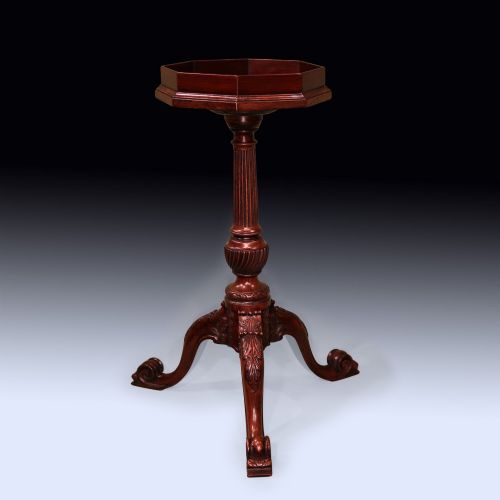
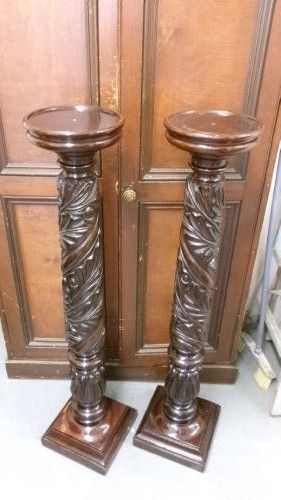
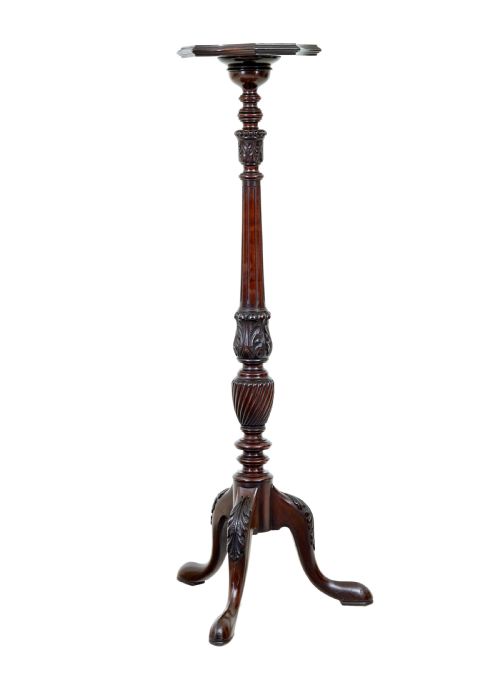
Buyers browsing this selection will most frequently encounter tall plant stands, tripod tables, and pedestals executed in mahogany or giltwood. The form typically elevates a surface or object on a carved pillar, terminating in tripod legs or a sturdy base.
Origins span the eighteenth century through to the early twentieth century, taking in Georgian Revival, Edwardian, and Italian Baroque styles. Each piece employs the characteristic acanthus leaf motif, translating classical architectural foliage into functional furniture.
How they were made
Makers shaped these supports primarily from solid timbers like mahogany, oak, and birch, utilising dense woods that accepted crisp chisel work. Skilled carvers rendered the curled acanthus leaves directly into the grain, achieving deep relief and distinct foliate edges.
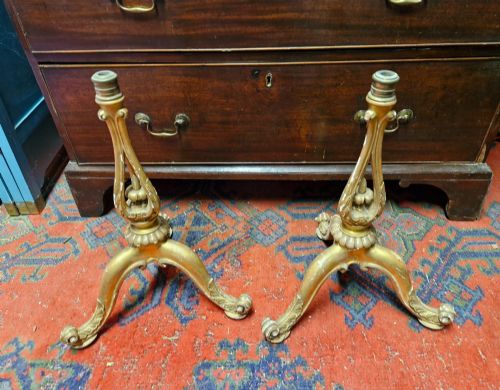
Giltwood versions relied on applying thin layers of gold leaf over a prepared gesso and bole ground upon a wooden carcase. Other pieces combined carved wooden elements with contrasting materials, incorporating brass prickets, mirrored glass centres, or leather tops.
Object forms range from tall plant stands and torchères to occasional tables, picture frames, and mirrored cake display centerpieces.
What varies in quality
Quality rests upon the depth, sharpness, and vitality of the foliage carving, distinguishing fluid hand-chiseled acanthus leaves from shallow or mechanical imitations. The best examples exhibit a confident handling of the wooden scrollwork where the classical motifs appear natural and undercut.
Proportion and structural stability dictate the standing of a piece, separating well-balanced tripod bases and sturdy pedestals from awkward or heavy assemblies. Timber selection also plays a part, with dense, richly figured mahogany and clean-grained oak commanding greater visual authority.
The Carved Acanthus Stand Glossary
- Acanthus
- A classical decorative motif derived from Mediterranean foliage, characterised by lobed, spiny leaves. It forms the primary carved ornament on the stems and legs of these stands.
- Torchère
- A tall, slender stand originally designed to carry a candle or torch. In later periods, these forms frequently served as elevated plant stands or lamp bases.
- Tripod base
- A support structure resting upon three legs, commonly utilised on nineteenth-century tables and pedestals to ensure stability on uneven floors.
- Giltwood
- Timber that has been coated with gold leaf. This finish reflects light and highlights the intricate contours of carved scrollwork.
- Kettlestand
- A small occasional table designed to hold a tea kettle. These low or mid-height pieces often feature suppressed tripod feet and moulded tops.
Carved Acanthus Stand: Frequently Asked Questions
What is a carved acanthus stand used for?
These stands serve as elevated platforms for display, traditionally holding potted plants, jardinières, lamps, or decorative tableware. They lift objects into the line of sight and break up flat expanses of flooring in a room.
In period interiors, similar tall forms held candles or lighting fixtures. Today, buyers use them as accent tables or sculptural pedestals in corners and hallways.
How do I identify eighteenth century pieces?
Eighteenth century examples, often associated with Chippendale or Rococo styles, rely on dense mahogany and hand-cut joinery that reveals traditional cabinet-making methods. The carving on these earlier pieces tends to feel deeply integrated into the structural form.
Later Victorian and Edwardian revivals often mimic these historical lines but employ different finishing techniques and machine-assisted turning alongside hand carving.
How do I care for mahogany stands?
Keep wooden surfaces away from direct sunlight and sudden temperature shifts to prevent the timber from drying out or splitting. Dust regularly with a dry cloth and apply a quality beeswax sparingly when the wood appears dry.
Avoid placing damp plant pots directly onto polished wooden tops without a protective saucer or liner to prevent moisture rings.
What is the difference between a torchere and a plant stand?
A torchère originates as a tall, slender stand built to support a light source, while a plant stand is generally engineered to bear the weight and moisture of a potted botanical specimen. Over time, the terms frequently overlap as tall stands changed functions within domestic settings.
Both share the vertical format and decorative carved elements, though torchères may incorporate narrower tops or metal prickets.