
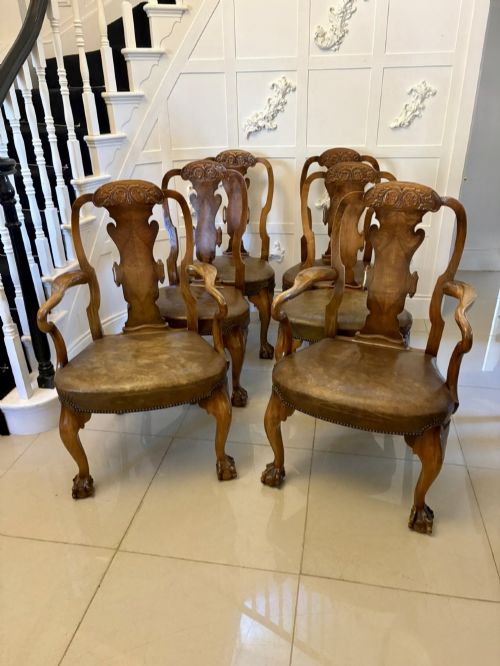
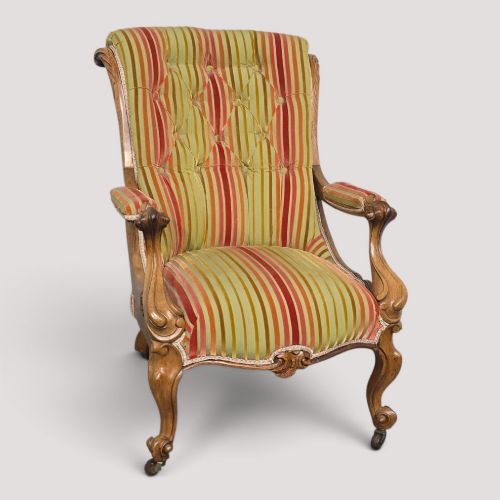
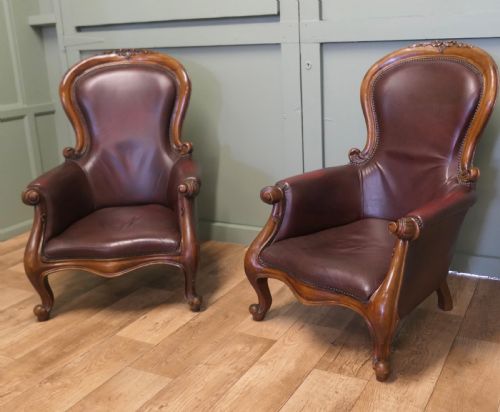
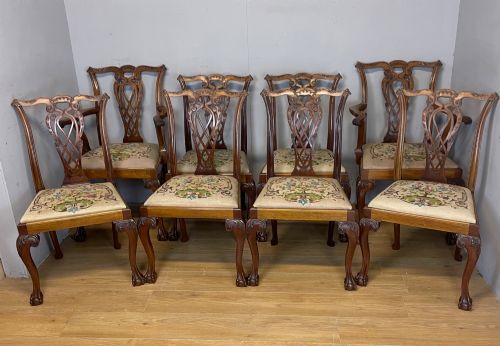
Victorian Cabriole Armchair
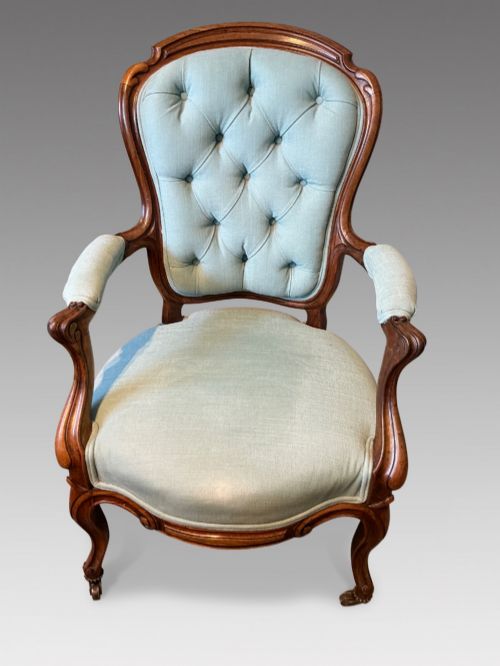
A victorian cabriole armchair brings nineteenth-century comfort and curved wooden legs together in one substantial seat.
Victorian Cabriole Armchair
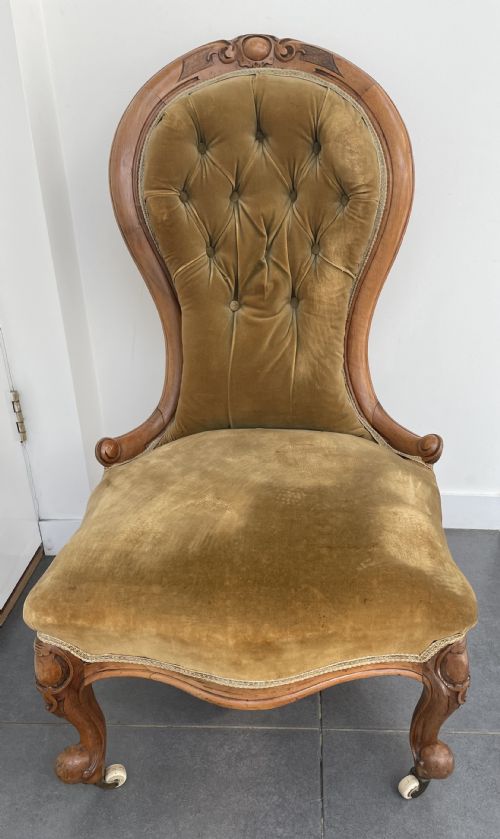
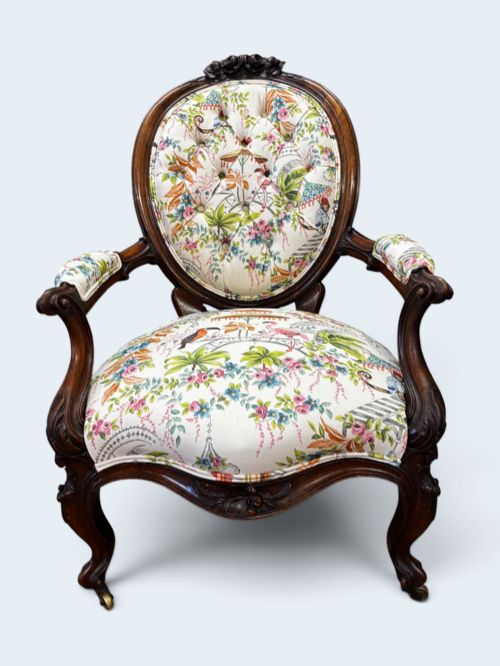
A victorian cabriole armchair is defined by its curving legs, which sweep outward at the knee and inward at the foot. These seats emerge predominantly from the nineteenth century, including specific dates such as 1850, 1860, 1870, 1880, and 1900.
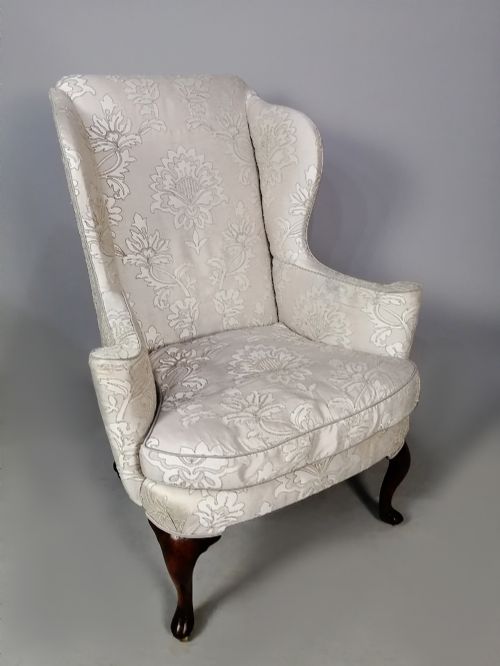
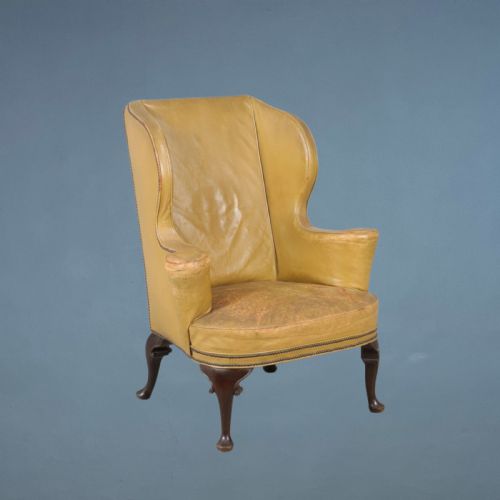
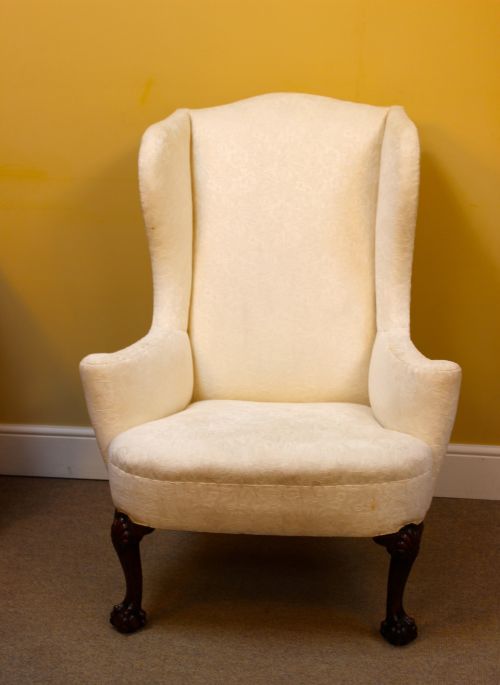
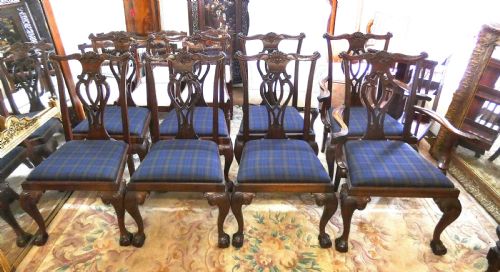
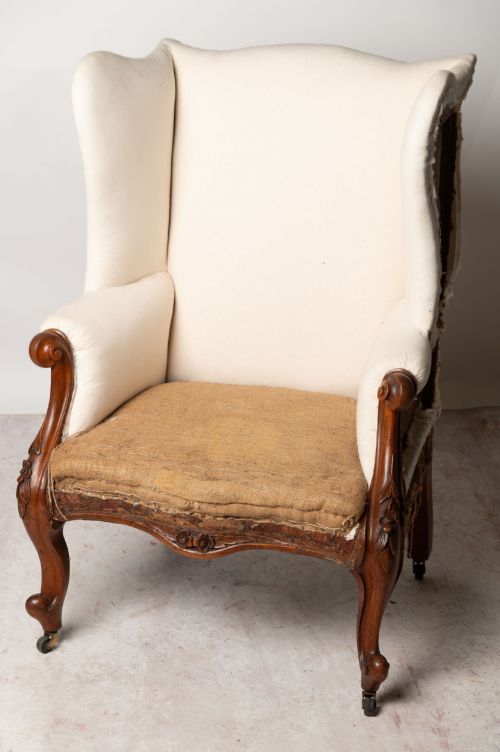
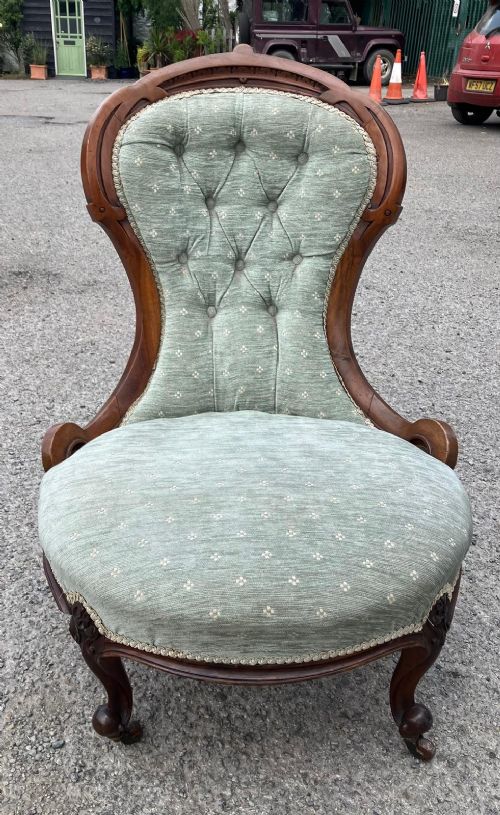
The selections span various formats within this search phrase, ranging from open armchairs and spoon backs to wingbacks and fireside models. Walnut and rosewood frames dominate the offerings, often accompanied by mahogany and diverse upholstery fabrics.
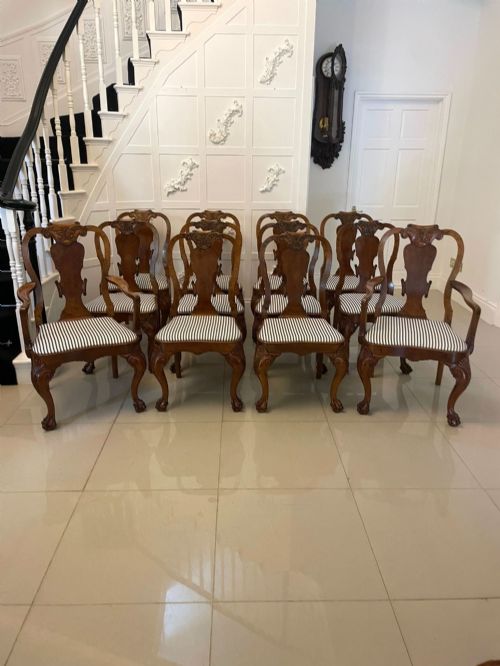
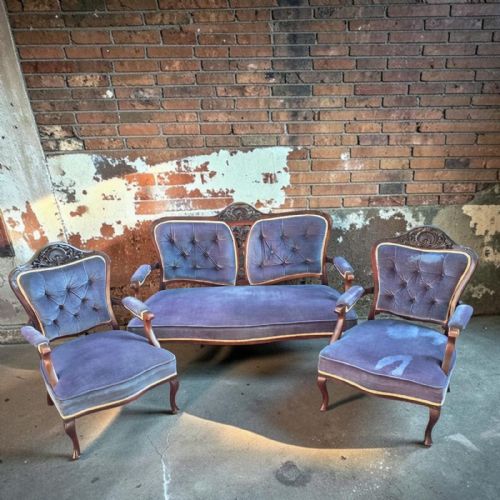
Makers and designers drew upon historical revivals, producing pieces styled in the manner of Queen Anne or Louis XV alongside standard Victorian production. Salon suites and individual occasional chairs also appear frequently among the listings.
Materials and construction
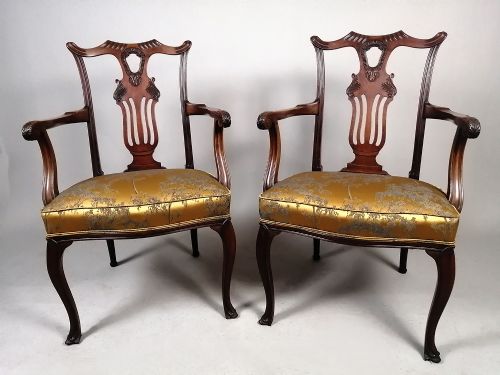
Makers shaped structural frames from hardwoods such as walnut, rosewood, and mahogany, selecting timber capable of supporting the sweeping curves of the leg. These wooden frames were frequently carved with leaf motifs or scroll arms.
Upholstery involved traditional stuffing techniques, often finished with deep buttoning and covered in leather, velvet, or contemporary fabric. Brass fittings and castors occasionally supported the base of the seating.
Some chairs retain deep buttoning so enthusiastic that loose buttons require polite conversation before sitting.
Craftsmanship and proportion
Quality rests in the fluidity of the woodcarving along the knee and ankle of the leg, distinguishing crisp hand-shaped curves from softer factory lines. The balance between the show frame and the upholstered body determines the visual elegance of the piece.
Condition of the timber frame and the historical integrity of the show woodwork separate fine examples from heavily altered pieces. Upholstery may be recent, but the underlying webbing and springs dictate the longevity of the seat.
Warings·John Reid And Sons
The Victorian Cabriole Armchair Glossary
- Cabriole leg
- A furniture leg that curves outward at the top and inward at the bottom, mimicking an animal's limb. This form appears frequently on eighteenth-century revivals and Victorian seating.
- Spoon back
- An upholstered chair back shaped to resemble the bowl of a spoon, providing ergonomic support for the spine. It is commonly found on Victorian walnut and rosewood chairs.
- Show frame
- A wooden chair frame where the polished timber remains visible around the upholstered sections. Makers utilised this technique to display fine grains of walnut or mahogany.
- Button back
- An upholstery method where deep indentations are secured with fabric-covered buttons in a diamond pattern. This technique adds tension and texture to leather and velvet surfaces.
- Wingback
- An armchair with side panels attached to the arms to deflect drafts from firesides. These panels wrap around the user's head for warmth.
Victorian Cabriole Armchair: Frequently Asked Questions
What periods do these armchairs date from?
The listings span the nineteenth century, with specific examples originating around 1850, 1860, 1870, 1880, and 1900. Some pieces reflect earlier Regency influences or later Edwardian transitions.
Revival styles from the Victorian era frequently incorporate eighteenth-century design elements into these nineteenth-century frameworks.
Which woods were used for the frames?
Walnut and rosewood are the most prevalent timber choices seen across the frames, often chosen for their rich grain and dark tones. Mahogany also appears regularly in both solid and carved forms.
Goncalo Alves and other dense hardwoods occasionally support alternative stylistic interpretations within the selection.
Were these chairs originally used at desks?
While the majority function as fireside, salon, or easy chairs, specific variants serve as desk chairs or occasional seating. Spider web backs and swivel mechanisms occasionally distinguish workspace models.
Most surviving examples are designed for relaxed drawing room environments rather than formal study use.