






Victorian Buttoned Leather Settee
A victorian buttoned leather settee offers deep comfort and traditional presence, grounding a room with rich hides and careful pleating.
Victorian Buttoned Leather Settee
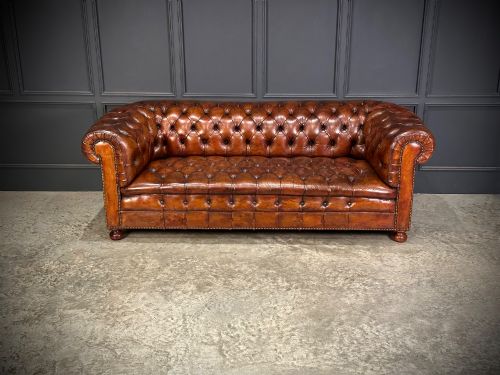
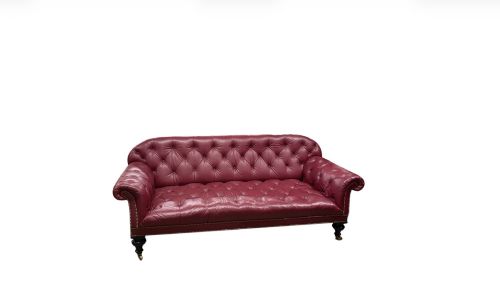
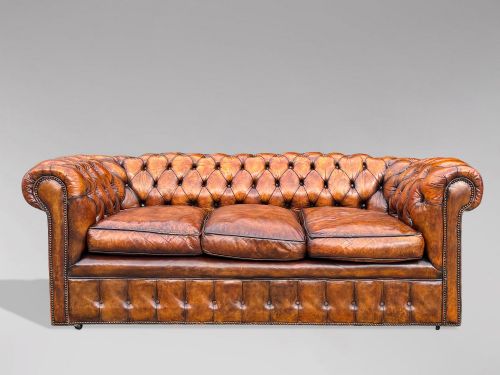
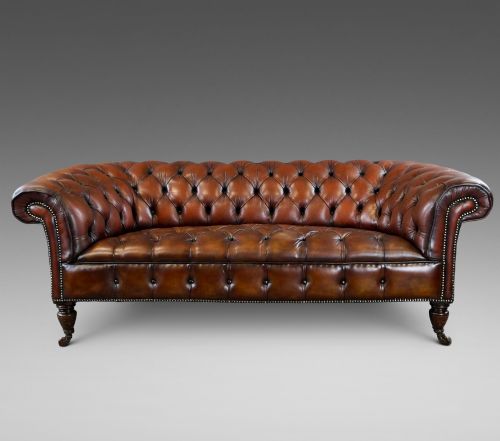
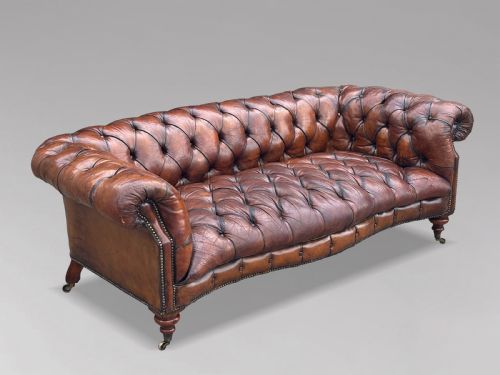
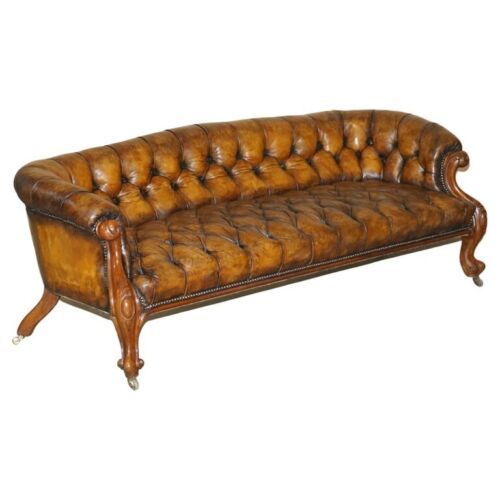
A victorian buttoned leather settee combines generous upholstery with low backs and deep seats designed for formal parlours and smoking rooms. The pieces appearing here span the nineteenth century, including various chesterfield forms alongside corner sofas and double spoon-back designs.
Most examples present as substantial three-seater chesterfields or smaller two-seat configurations finished in hand-dyed leathers. Makers utilised robust timber frames of mahogany, walnut, and hardwood to support the heavy sprung interiors.
What Varies in Quality
The integrity of the internal springing and the weight of the timber frame dictate the longevity of each seat. Superior examples retain original frame construction without excessive timber shrinkage or loose joinery.
Leather selection ranges from standard commercial hides to rich hand-dyed or original patinated leathers that show depth of tone. The precision of the button pleating and the crispness of any carved woodwork further separate standard pieces from finer ones.
Victorian Buttoned Leather Settee Retail Price Guide 2026
Typical asking prices for victorian buttoned leather settee among the pieces listed under this phrase on Sellingantiques today, from the lower quarter to the upper quarter. They describe what is for sale here now, not the wider market.
Conversational sofas allowed two people to sit close while facing opposite directions, perfect for polite Victorian gossip.
Howard & Sons·Hampton & Sons of Pall Mall
The Victorian Buttoned Leather Settee Glossary
- Chesterfield
- A large upholstered sofa with arms and back of the same height, traditionally featuring deep button tufting. This form remains the dominant style found within nineteenth-century seating.
- Button-back
- An upholstery technique where buttons are pulled tight through the padding to create a diamond pattern. This method secures the internal filling while providing a tailored surface.
- Show-frame
- Exposed wooden framing around the back and arms of a sofa, typically carved from walnut or mahogany. It allows the decorative woodwork to remain visible beneath the upholstery.
- Hand-dyed
- Leather treated with aniline dyes applied by hand to achieve variegated tones and traditional colour depth. This process enhances the natural grain and historical appearance of the hide.
- Scroll end
- A sweeping, curved arm design terminating in a tight roll inspired by earlier regency forms. This profile adds sculptural movement to the ends of the settee.
Victorian Buttoned Leather Settee: Frequently Asked Questions
What is a chesterfield sofa?
A chesterfield is a traditional upholstered seating form characterised by rolled arms that match the height of the backrest. Deep buttoning covers the inner surfaces to create a firm, padded structure.
Victorian makers built these sofas using sturdy hardwood frames and heavy horsehair stuffing. They served as central furnishings in libraries, smoking rooms, and formal sitting areas.
How do I care for antique leather?
Antique leather requires regular dusting with a soft, dry cloth and occasional treatment with appropriate leather balms to prevent drying. Avoid placing these pieces near direct heat sources or strong sunlight.
Preserving the original patina involves minimising chemical cleaners and protecting the hide from sharp objects. Natural oils in the leather respond well to gentle conditioning that maintains flexibility.
Are these settees comfortable for daily use?
Nineteenth-century settees were constructed with dense horsehair stuffing and intricate spring systems designed for upright posture. While firm compared to modern foam furniture, they offer substantial support.
Larger three-seater versions provide ample length for reclining, though seat depths vary across different styles. Corner configurations and conversational seats offer alternative seating arrangements for social spaces.
How do I identify a Victorian piece?
Victorian seating is identified through traditional construction methods, timber choices such as mahogany and walnut, and specific upholstery styles. Heavy buttoning and hand-dyed hides frequently mark this era.
Structural traits like exposed carved show-frames or scroll ends help date the piece to the mid-to-late nineteenth century. Maker stamps on wooden frames or castors can provide further historical context.