
Victorian Burr Walnut Console
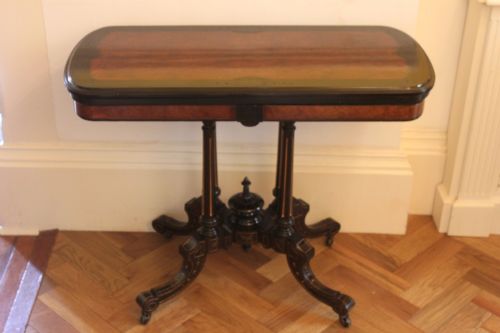
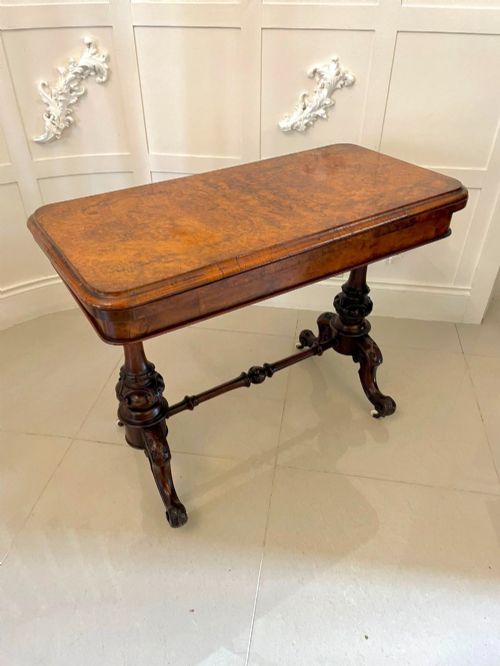
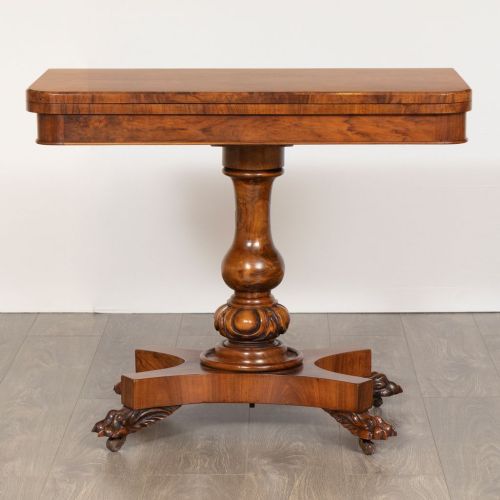
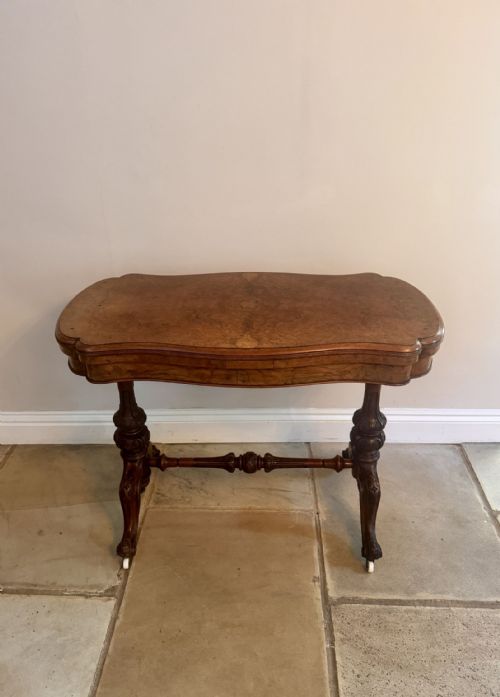
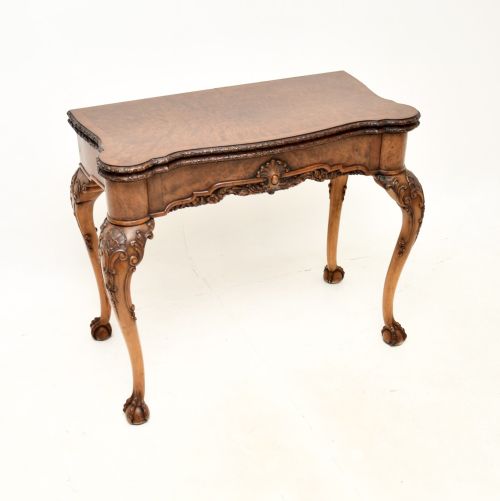
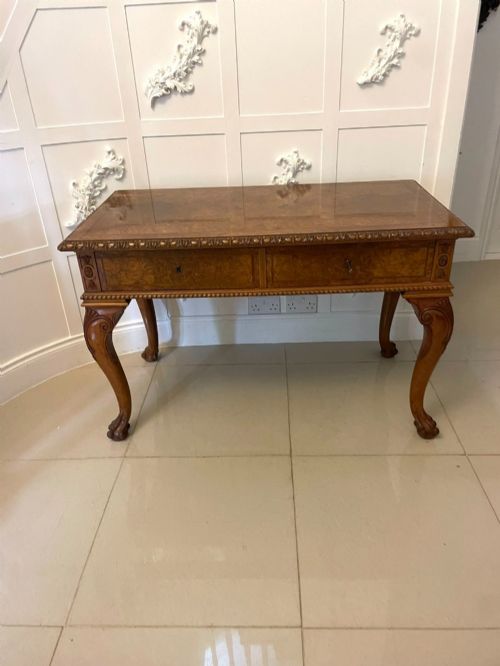
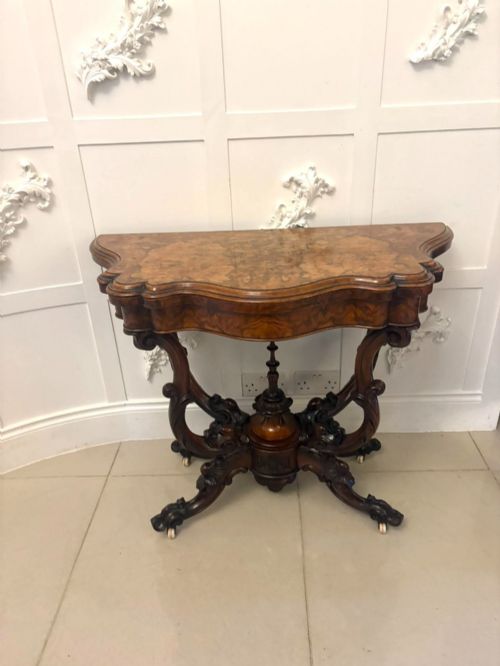
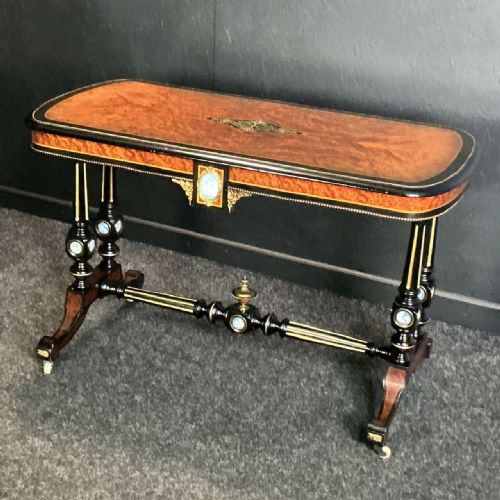
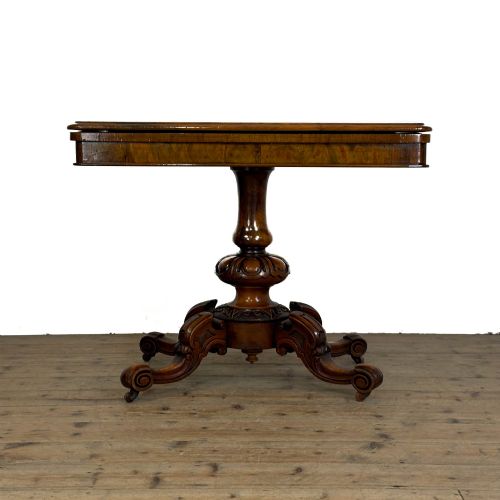
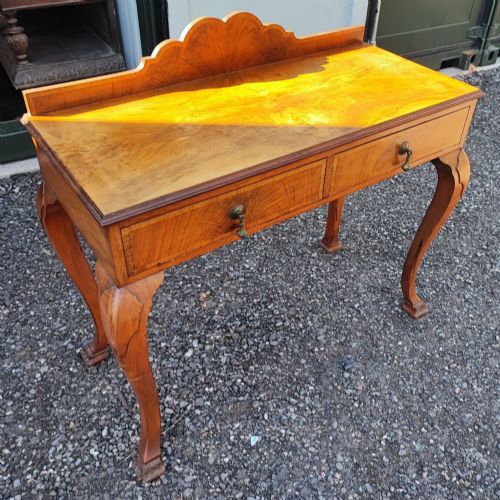
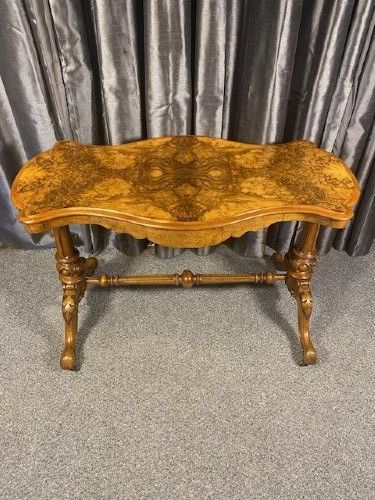
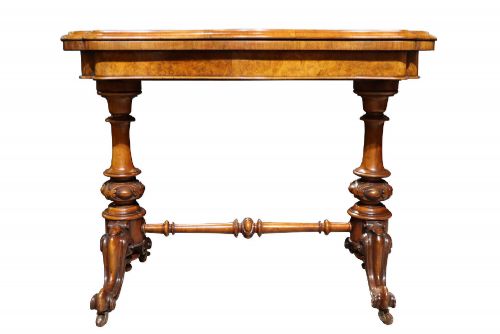
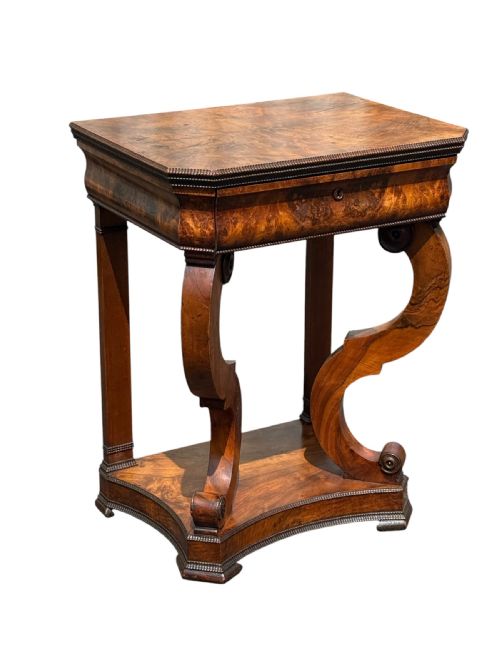
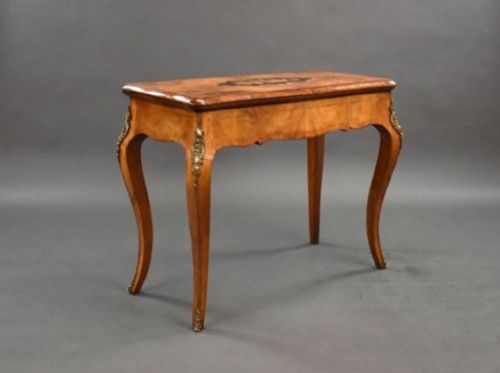
These pieces of a victorian burr walnut console bring rich figuring and elegant proportions to any hallway or drawing room.
Victorian Burr Walnut Console
A victorian burr walnut console table combines decorative timber with versatile furniture forms designed for display and entertainment in nineteenth-century interiors.
The selections available here frequently cross over with card tables, games tables, and serpentine side tables sharing the same foundational console design.
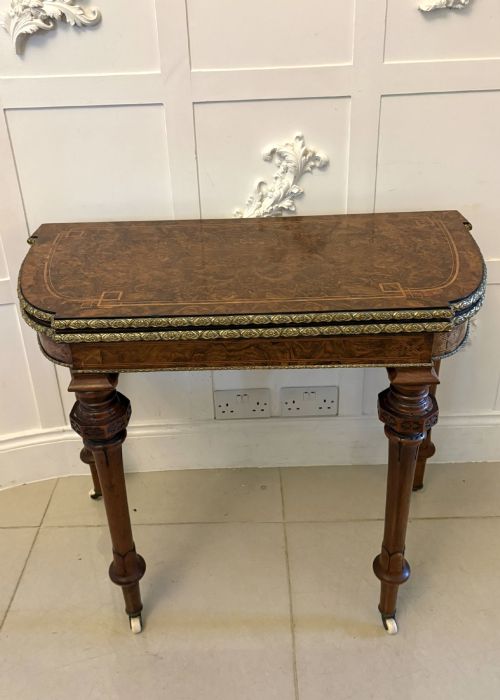
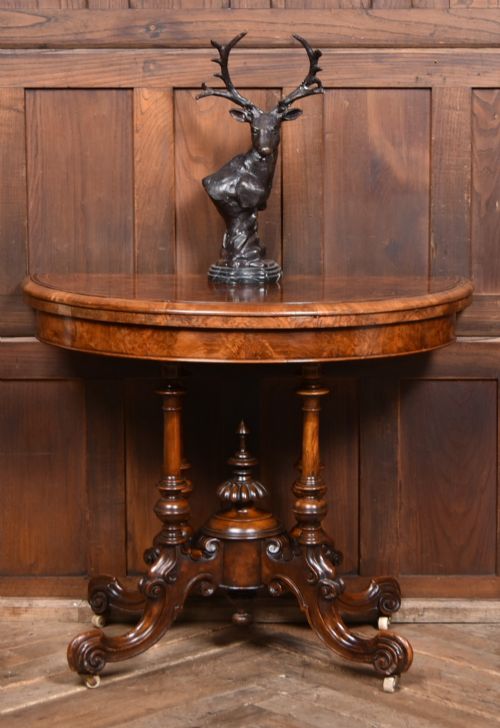
Originating predominantly from the Victorian period, these tables often feature fold-over tops and shaped bases suited to both formal and intimate rooms.
How they were made
Craftsmen utilised highly figured burr walnut veneers applied over solid carcase woods to create swirling, organic patterns across the surfaces.
Decoration was enhanced through boxwood inlay, marquetry, and polished brass or ormolu mounts fitted to carved wooden supports.
Several tables cleverly double as secret gaming dens with hidden compartments for cards and counters.
What varies in quality
The density and movement of the burr walnut grain distinguish finer examples from plain timber surfaces.
Execution of carved basket bases and precise marquetry inlay separate standard production pieces from master cabinet work.
Edwards & Roberts
The Victorian Burr Walnut Console Glossary
- Burr walnut
- A veneer sliced from the knotty growths of walnut trees, prized for its intricate and swirling grain patterns. It provides a highly decorative surface for Victorian cabinet furniture.
- Marquetry
- The art of applying pieces of veneer to a structure to form decorative patterns and pictorial designs. Cabinet makers used contrasting woods such as boxwood to achieve detailed floral motifs.
- Ormolu
- Gilded bronze ornamentation applied to furniture mounts and feet. This decorative technique adds metallic contrast to dark timber surfaces.
- Serpentine
- A furniture shape characterised by a wavy outline with a convex centre flanked by concave sides. This contour adds movement and elegance to console and card tables.
- Fold-over top
- A hinged tabletop design that opens to double its surface area, frequently concealing a baize-lined interior for card games.
Victorian Burr Walnut Console: Frequently Asked Questions
What is a console table?
A console table is a narrow piece of furniture traditionally designed to stand against a wall, sometimes secured with wall brackets or supported by front legs.
In Victorian interiors, these tables served both decorative and functional purposes in hallways, drawing rooms, and reception spaces.
How do I use a fold over card table?
The hinged top swivels and unfolds to reveal a flat surface, often lined with baize, which was historically used for playing cards or board games.
When closed, the table functions as a compact console or side table against a wall.
What distinguishes burr walnut from plain walnut?
Burr walnut is cut from irregular tree growths, yielding intricate, swirling grain patterns rather than the straight, uniform grain found in standard timber.
This distinct figuring makes each piece visually unique and highly sought after by collectors of Victorian furniture.
Where should I place a console table in my home?
These tables fit naturally in entrance halls, living rooms, or behind sofas where surface space is needed without blocking walkways.
Their decorative wood grain and polished finishes make them ideal focal points for displaying lamps or decorative objects.