

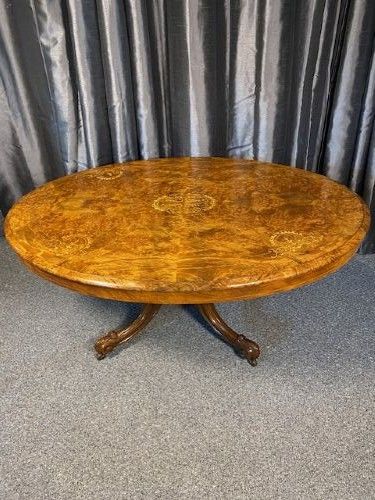
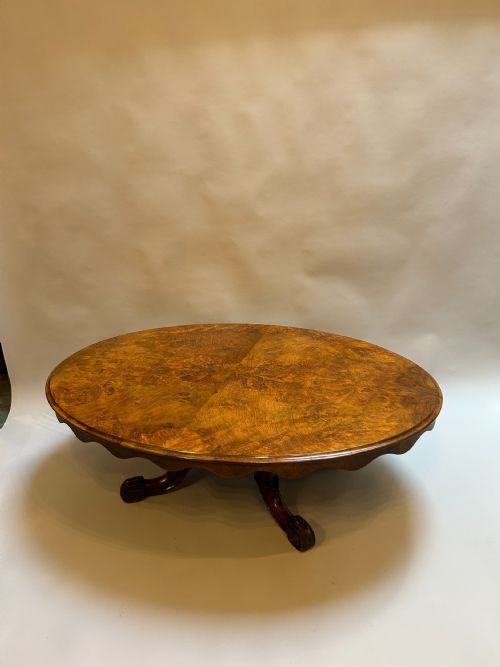
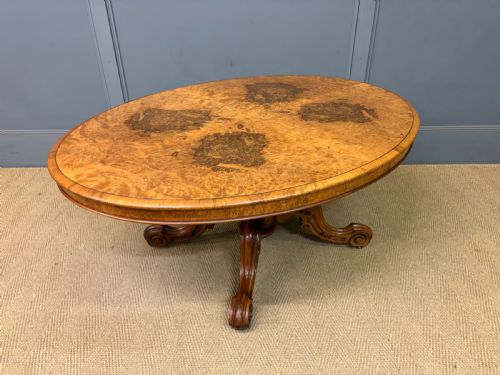
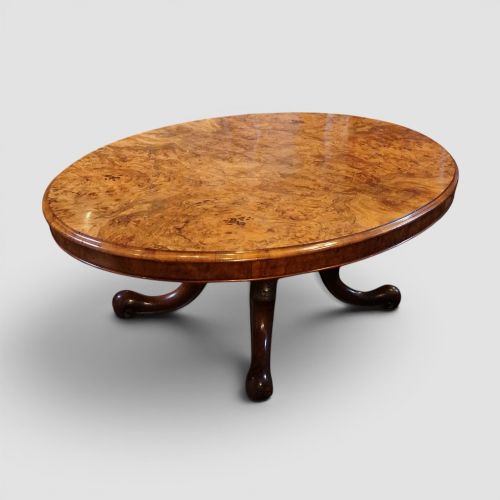
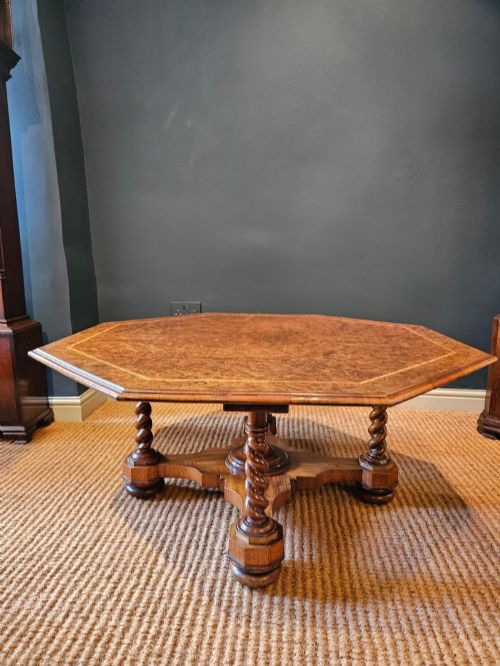
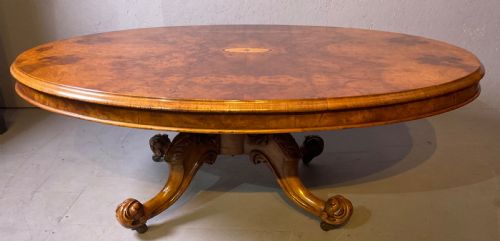
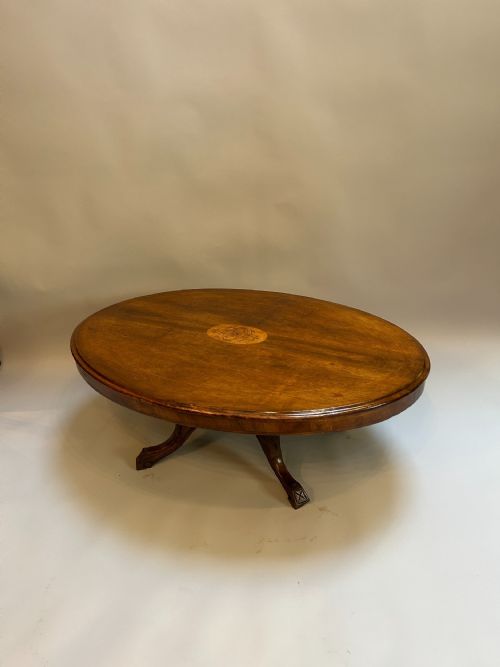


Victorian Burr Walnut Coffee Table
A Victorian burr walnut coffee table brings rich timber figure and nineteenth-century craftsmanship into a modern room.
Victorian Burr Walnut Coffee Table
A Victorian burr walnut coffee table combines nineteenth-century cabinet-making with richly figured timber veneers. These pieces often originate as larger Victorian occasional, centre, or games tables that have been adapted to a lower coffee height over time.
The selection ranges across oval, rectangular, octagonal, and circular shapes, frequently featuring detailed marquetry or stringing. Makers utilised walnut timber for its distinctive grain patterns, creating a focal point for a traditional or contemporary interior.
The inventory includes examples dated through the nineteenth century, spanning decades such as eighteen-sixty, eighteen-seventy, and eighteen-eighty. Buyers encounter styles varying from standard Victorian to Aesthetic Movement designs and later Victorian Revival interpretations.
How these tables were constructed
Cabinet-makers applied thin slices of burr walnut veneer over solid secondary timbers to display intricate, swirling grain patterns across the top surface. Artisans enhanced these timber surfaces with boxwood and various wood inlays, sometimes incorporating brass fittings or ceramic elements.
Structural framing often employed solid walnut or ebonised wood, providing sturdy support for the heavily figured tabletops. Workshops utilised traditional joinery alongside hand-carved details, occasionally pairing period walnut tops with replacement bases such as modern cast iron tripods.
Materials recorded across the inventory include burr walnut, standard walnut, brass, ceramic, ebonised wood, and boxwood inlay.
What determines quality in these pieces
Quality rests significantly on the density and symmetry of the burr walnut figuring across the primary surface. Finer examples display continuous, unbroken veneer matching with meticulous attention to detail in the surrounding wood inlay and marquetry.
The structural integrity of the timber frame and the crispness of any hand-carved elements separate superior workshops from standard production. Tables retaining original proportions, harmonious patination, and intact period inlays command greater appreciation from collectors.
The Victorian Burr Walnut Coffee Table Glossary
- Burr walnut
- A specialised timber cut from walnut tree growths that produces highly patterned, swirling grain formations. Cabinet-makers prized this material for creating decorative veneered surfaces.
- Marquetry
- Elaborate decorative inlay work using various tinted woods to form pictorial or geometric designs. Artisans applied this technique to tabletops for added visual depth.
- Centre table
- A nineteenth-century freestanding table designed to be viewed from all sides in the middle of a room. Many modern coffee tables originate from these versatile larger pieces.
- Sutherland table
- A narrow dropleaf table with folding flaps supported by swinging gate legs. Smaller versions appear frequently in lower coffee table formats.
- Ebonised wood
- Timber treated with a dark finish to imitate expensive ebony. This dark staining provided stark contrast against lighter wood inlays.
Victorian Burr Walnut Coffee Table: Frequently Asked Questions
Are these tables converted from older furniture?
Many tables found today began life as nineteenth-century occasional, centre, or games tables. Cabinet-makers or restorers subsequently reduced the height to suit contemporary living requirements.
This adaptation process preserves the original tabletop and craftsmanship while making the furniture functional for modern seating arrangements.
How do I care for burr walnut veneer?
Burr walnut requires gentle maintenance to protect the delicate veneer and traditional polish. Keep the timber away from direct heat sources and strong sunlight to prevent warping and fading.
Apply a quality furniture wax occasionally and buff with a soft cloth to maintain the natural lustre of the wood.
How do I identify an Aesthetic Movement table?
Aesthetic Movement pieces from the nineteenth century emphasise simplicity, artistic design, and often incorporate ebonised wood elements. These items typically shun heavy Victorian ornamentation in favour of cleaner lines and subtle decoration.
Examining the construction methods and inlay motifs helps distinguish this specific nineteenth-century design current from standard Victorian output.