
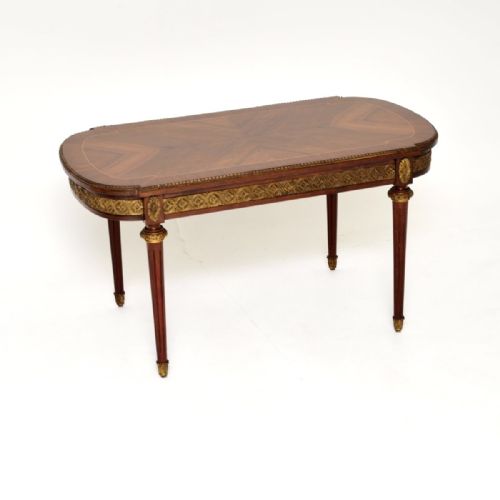


Inlaid Marquetry Low Table
These inlaid marquetry low table pieces bring intricate wood patterns and low proportions to a room, offering both decorative surface work and practical everyday utility.
Inlaid Marquetry Low Table
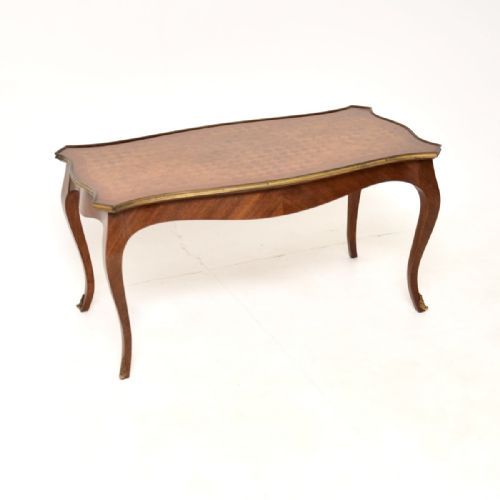
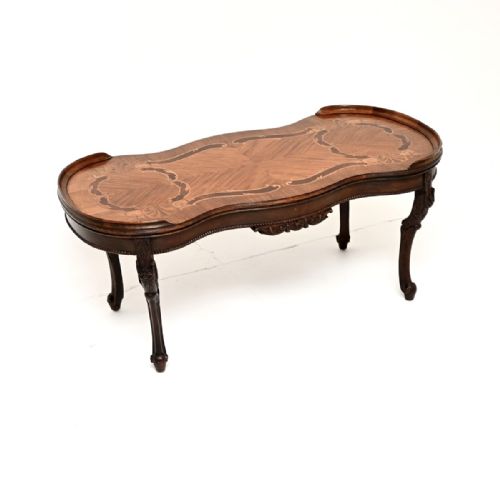
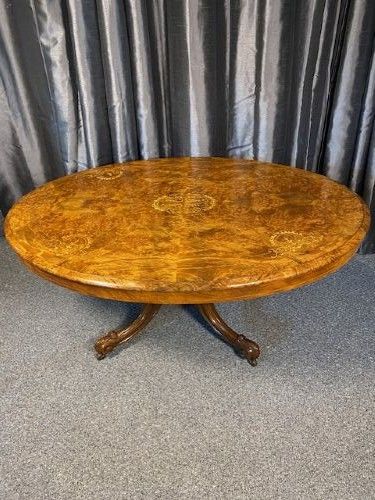
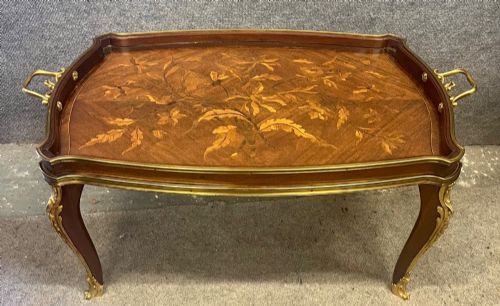
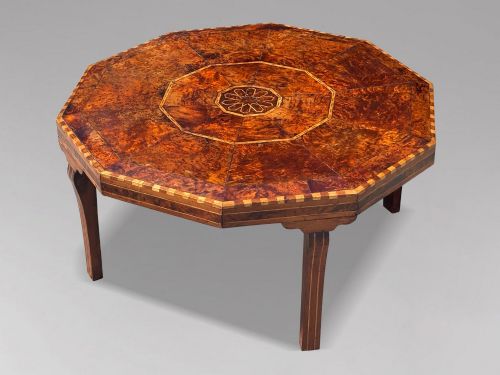
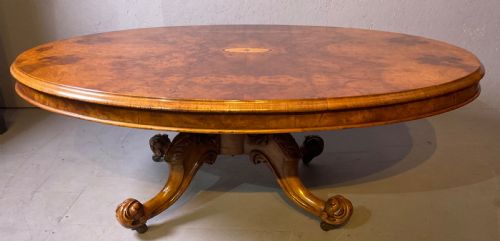
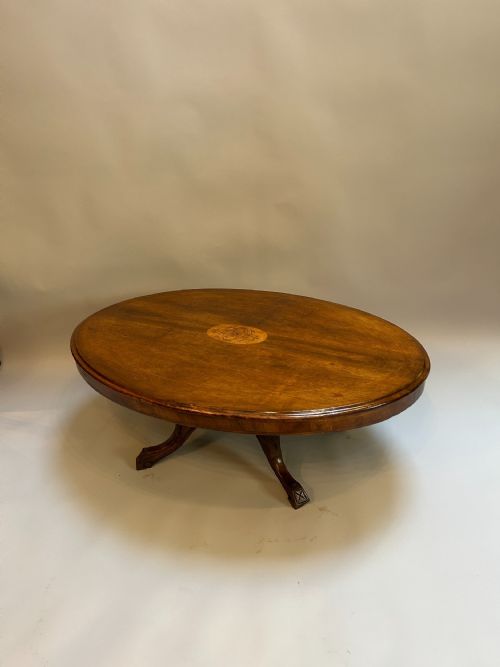
An inlaid marquetry low table is a piece designed with decorative wood veneers arranged in pictorial or geometric patterns across the top surface. When you search for an inlaid marquetry low table, you encounter forms ranging from Victorian burr walnut coffee tables to French occasional tables from the early twentieth century. These pieces function as coffee tables or low centre tables, often featuring shaped tops and detailed parquetry or marquetry work.
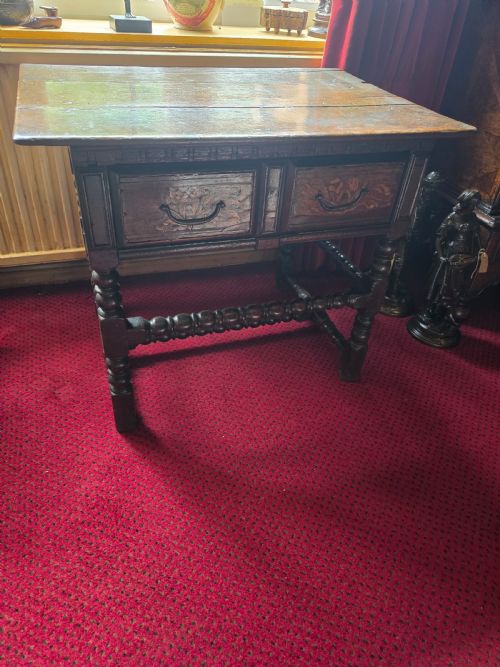
The materials span walnut, burr walnut, satinwood, and fruitwood, enhanced by boxwood and brass details. You will find rectangular, octagonal, round, and oval formats, sometimes adapted from earlier side tables or games tables. The overall height sits low to the floor, fitting modern seating arrangements while retaining traditional cabinetmaking signatures.
How they were made
Cabinetmakers constructed these tables using solid carcase woods like oak or mahogany, overlaid with figured veneers such as burr walnut and satinwood. The surface decoration relies on marquetry, where contrasting timbers like fruitwood and boxwood are cut and fitted into a veneer ground to create floral or geometric motifs. Brass or ormolu mounts often edge the tops, and hand-carved bases provide structural support.
Makers applied traditional polishing methods using shellac or varnish to build a warm gloss over the timber grain and the multi-coloured wood inlays. In some examples, parquetry creates geometric cube patterns, while others employ intricate scrolls and foliage executed with fine veneer saws.
Listings feature walnut, burr walnut, satinwood, fruitwood, and boxwood, spanning Victorian, Art Deco, and Louis XV Revival styles.
What varies in quality
Quality rests upon the precision of the veneer cutting and the variety of timbers employed within the marquetry design. Tables utilising richly figured burr walnut alongside diverse fruitwood and boxwood inlays demonstrate a higher tier of craftsmanship than plain or uniformly veneered surfaces.
The integration of hand-carved elements, gilt bronze or ormolu mounts, and secondary woods like oak distinguishes standard production from superior workshops. A well-balanced base and crisp, tight joints in the inlay work separate the finest examples from simpler regional pieces.
Edwards and Roberts·Gillows
The Inlaid Marquetry Low Table Glossary
- Marquetry
- The art of applying pieces of veneer to a structure to form decorative patterns, such as flowers or landscapes. This technique utilises varied timbers to create contrasting tones.
- Parquetry
- Geometric mosaic woodwork used for floors or table tops, formed from small blocks or veneers of wood. It differs from marquetry by strictly following geometric grids rather than pictorial designs.
- Burr walnut
- A timber harvested from walnut tree growths, producing swirling and mottled grain patterns prized for decorative table tops. It forms the primary surface material for many Victorian examples.
- Ormolu
- Gilded bronze mounts applied to furniture edges and legs during the nineteenth and early twentieth centuries. This metalwork adds structural accent and decorative contrast to the wood.
- Satinwood
- A pale, hard timber with a natural sheen, frequently used in marquetry for light-coloured highlights and borders. It provides sharp contrast against darker walnut fields.
Inlaid Marquetry Low Table: Frequently Asked Questions
What is an inlaid marquetry low table?
An inlaid marquetry low table is a low-standing furniture piece decorated with patterned wood veneers on the top surface. These tables serve as coffee or centre tables in living spaces.
They combine historical cabinetmaking techniques with low proportions suited to contemporary domestic use, displaying intricate wood designs.
How do I date an inlaid low table?
Dating relies on timber choice, construction methods, and stylistic cues such as Victorian walnut framing or later twentieth-century Art Deco lines. Secondary woods and veneer thickness also indicate the period.
Examining the type of brass mounts and the style of the hand-carved base helps narrow down the decade of manufacture.
Are these tables sturdy enough for daily use?
Most of these tables were originally built as occasional, games, or side tables rather than heavy-use coffee tables, though their solid carcases provide everyday stability. Care must be taken with the veneered surfaces.
Using coasters and placing them away from direct heat sources helps protect the delicate marquetry and polish.
What is the difference between marquetry and parquetry?
Marquetry forms pictorial or floral scenes using varied timber veneers cut into organic shapes. Parquetry arranges geometric tiles or blocks into repeating patterns like cubes or zigzags.
Both techniques appear on the surface tops of these low tables to create visual depth and texture.