

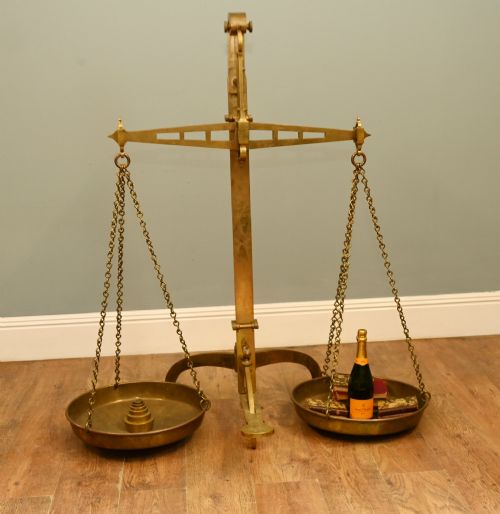
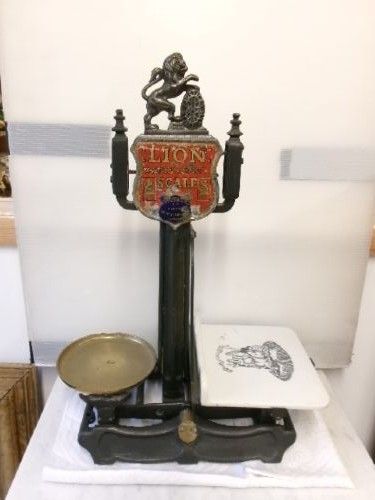
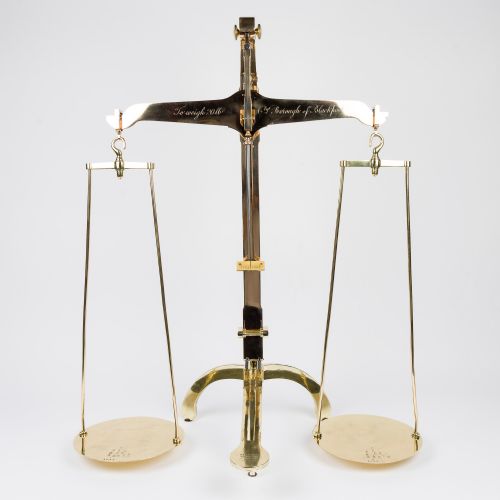
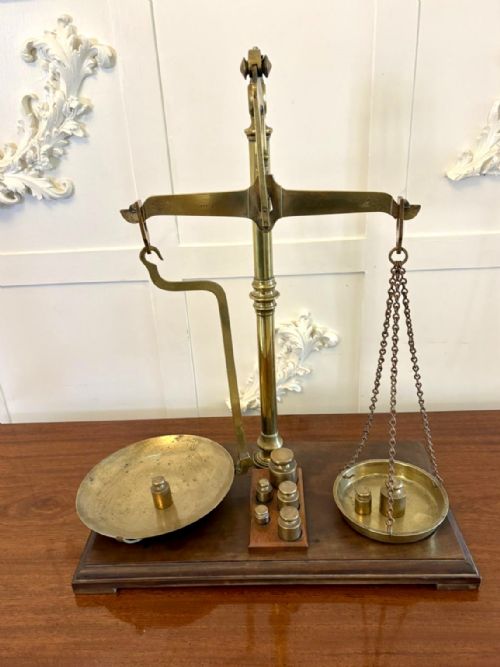


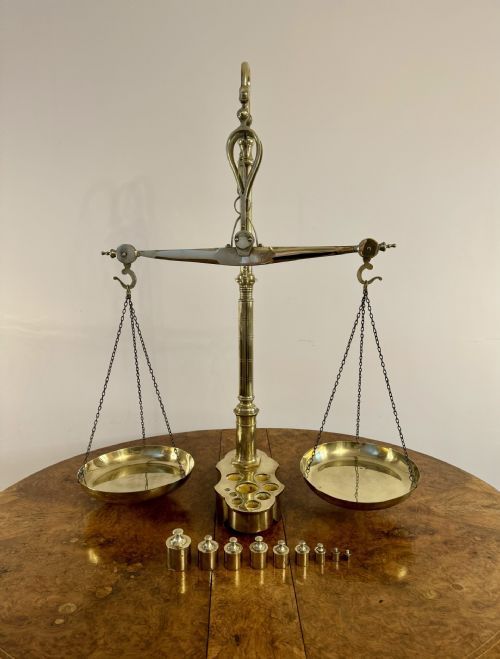


Victorian Brass Weighing Scale
These Victorian brass weighing scale examples bring utilitarian utility and polished metal warmth directly from counting houses, shops and surgeries into the modern interior.

Victorian Brass Weighing Scale
A victorian brass weighing scale represents the intersection of nineteenth century commerce, science and domestic life, appearing in forms ranging from heavy-duty grocers' balances to delicate apothecary sets. These instruments were engineered for precise measurement in trade and everyday administration, utilising robust metals mounted on wooden bases.
The variations found on this page span postal scales designed for correspondence, countertop balance scales for merchants, and specialised personal weighing equipment. Mahogany, oak and cast iron frequently serve as the supportive foundations for gleaming brass beams and pans.
Originating across decades from the mid nineteenth century through the early twentieth century, these pieces reflect both regional trade standards and domestic utility. Many survive complete with their original weights or associated advertising elements.
Materials and Construction
The primary material combination pairs cast and polished brass components with hardwood bases fashioned from mahogany or oak. Iron and cast iron provide structural reinforcement for larger floor-standing models and heavy-duty grocers' scales.
Makers utilised precision casting for beams and pans, often pairing them with fitted wooden box bases or mounted boards equipped with weight compartments. Glass components occasionally appear in specialised dials or indicator covers.
Victorian Brass Weighing Scale Retail Price Guide 2026
Typical asking prices for victorian brass weighing scale among the pieces listed under this phrase on Sellingantiques today, from the lower quarter to the upper quarter. They describe what is for sale here now, not the wider market.
The selection includes specialised apothecary balances, postal scales and butcher's beam scales.
Evaluating Quality
Quality rests upon the crispness of maker inscriptions, the retention of matching original weights and the overall proportion of the brass beam relative to its wooden base. Pieces bearing documented maker stamps demonstrate higher workshop provenance.
The integrity of the finish and the preservation of original mounting boards without replacement timber distinguish standard utility pieces from exhibition examples designed for prominent mercantile use.
Day and Millward·Parnall and Sons of Bristol·Ratcliff Birmingham·W and T Avery·Bartlett and Sons·De Grave and Co London
The Victorian Brass Weighing Scale Glossary
- Beam scale
- A weighing instrument comprising a central pivoting horizontal lever with suspended pans at each end. This design forms the fundamental mechanism for most nineteenth-century mercantile and scientific measuring devices.
- Postal scale
- A compact countertop weighing device specifically calibrated to determine letter and parcel postage rates. These often feature stepped brass weights and decorative wooden or cast-metal bases.
- Apothecary balance
- A sensitive precision scale utilised by chemists and pharmacists for measuring small quantities of medical ingredients. They are typically housed within fitted glass and mahogany display cases.
- Jockey scale
- A specialised personal weighing machine historically used in the racing industry to check the weight of riders. These robust devices often incorporate large seated dials or heavy-duty brass mechanisms.
Victorian Brass Weighing Scale: Frequently Asked Questions
How do I clean antique brass scales?
Dust gently with a soft dry cloth to preserve the aged surface patination accumulated over decades of use. Avoid aggressive chemical polishes that strip away the authentic historical appearance.
For stubborn grime on brass components, use a mild soapy solution on a damp cloth, drying thoroughly immediately afterward to prevent spotting or corrosion.
Are these scales still accurate for weighing?
Most antique balances retain their mechanical equilibrium, though minor adjustments or calibration may be necessary after transport. They function adequately for basic demonstration rather than certified commercial trade.
Checking the movement of the central pivot and ensuring the pans hang freely will indicate whether the mechanism operates smoothly.
How do I identify the period of a scale?
Examine the style of the wooden base, the typography of any maker inscriptions and the construction of the brass beam. Victorian examples often display hand-stamped verification marks and dense mahogany mountings.
Later Edwardian and twentieth-century iterations frequently introduce cast iron elements or simplified lettering on the indicator plates.
Where should I display postal scales?
Compact postal scales suit entryways, desks or bookshelf surfaces where their brass beams catch natural light. Their modest footprint allows placement in home offices or libraries.
Pairing them with related stationery or small vintage desk accessories complements their original domestic and commercial context.