

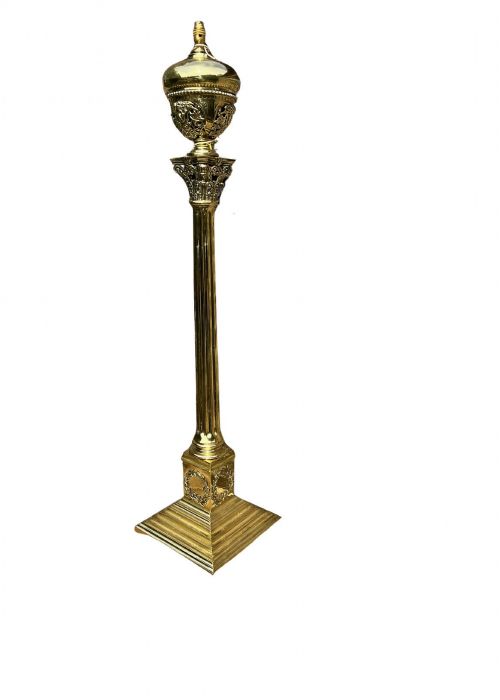


Victorian Brass Standard Light
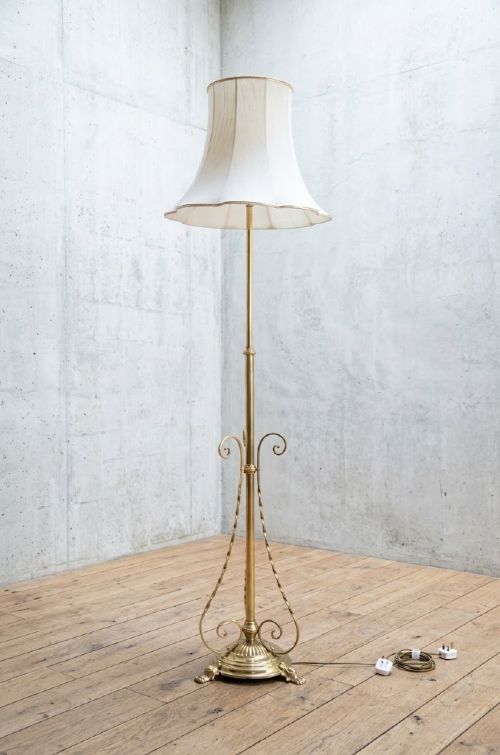
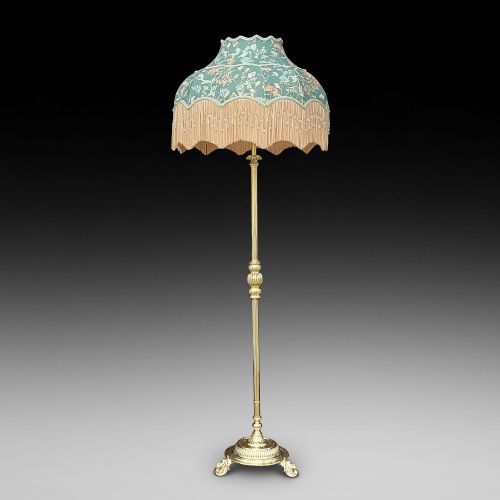
A victorian brass standard light brings practical height and warm metal tone to a room, most often found in the telescopic oil lamp and column forms.
Victorian Brass Standard Light
When you search for a victorian brass standard light, you look at heavy metal floor lamps that began as oil lamps and later converted to electricity. Most examples date from the nineteenth century into the Edwardian years, reflecting periods from Victorian to Arts and Crafts.
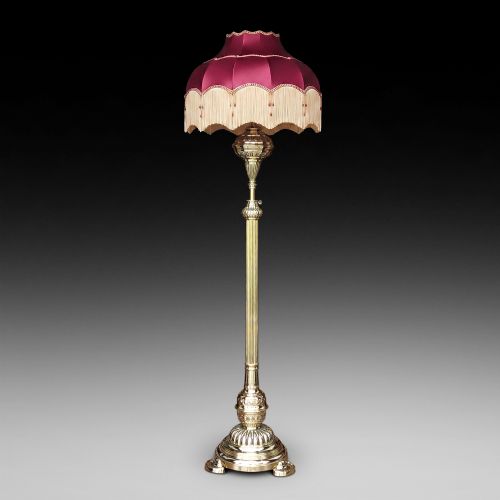
The standard lamp and floor lamp forms dominate the offerings, alongside standard oil lamps and floor candlesticks. You will frequently meet telescopic variants and heavy brass columns designed to stand beside a reading chair or in a drawing room corner.
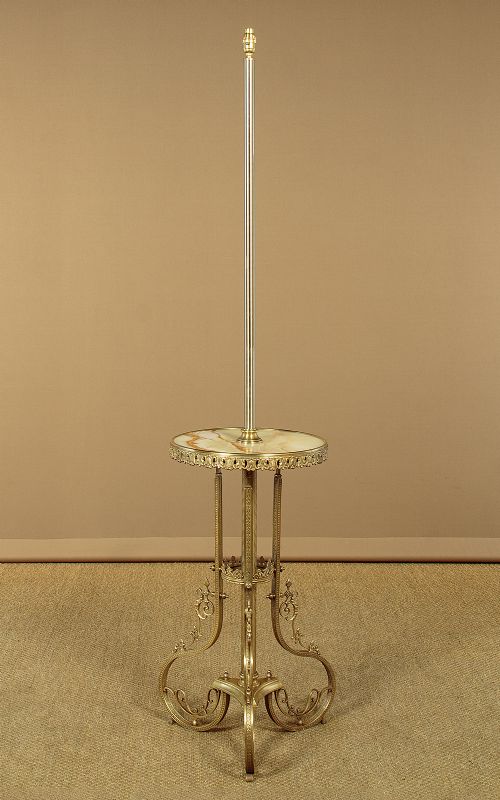
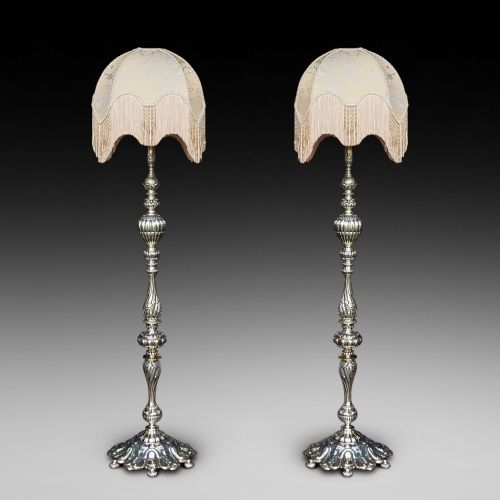
Makers such as Hinks produced notable examples, while other pieces incorporate copper, onyx, marble, and decorative glass fonts. Styles range from classical revival Corinthian columns to organic Art Nouveau and functional Arts and Crafts designs.
How they were made
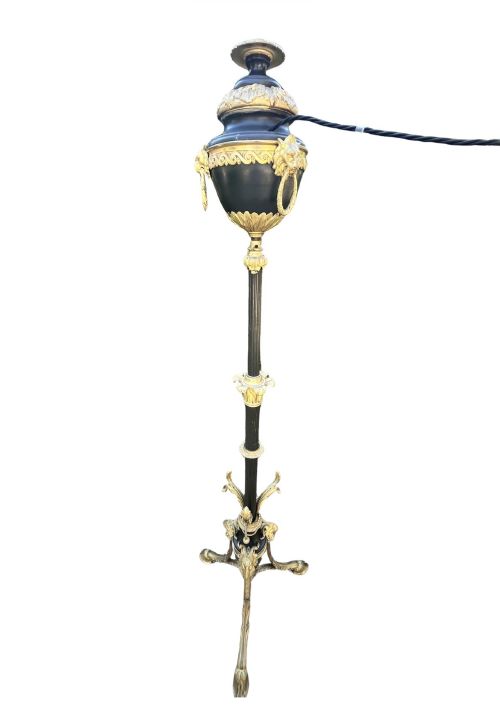
These lamps rely heavily on cast and spun brass, often paired with copper, gilt bronze, or ormolu for contrasting colour and texture. Heavier bases frequently incorporate marble or onyx to anchor the tall stems securely against tipping.
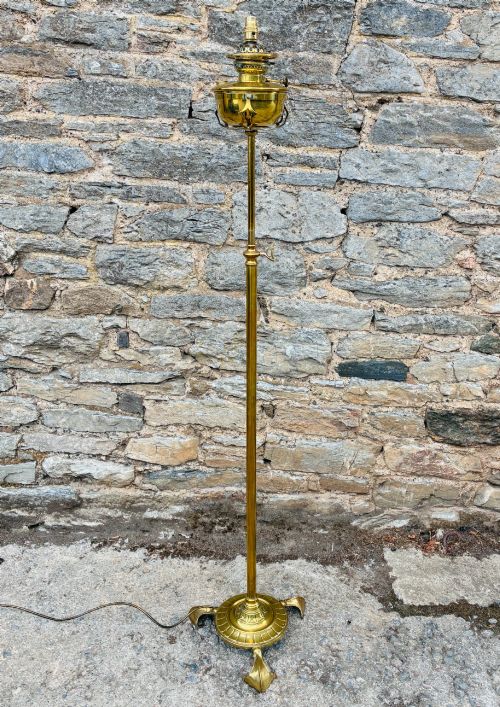
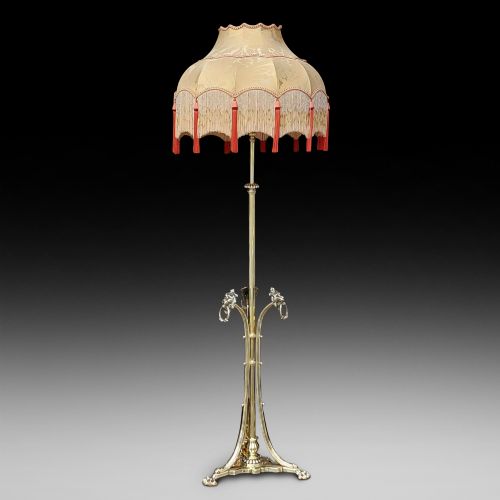
Many specimens utilise telescopic mechanisms, allowing the height of the standard to adjust smoothly via a central key or collar. Conversion from original oil burning setups to electric wiring is common, retaining the original burners, fonts, and sometimes cranberry glass reservoirs.
Decoration ranges from simple floral openwork bases to ornate neoclassical Corinthian capitals and rose and thistle motifs. Shade fittings often accommodated fabric, silk, or fringed covers above the burner assembly.
Listings span periods from the Victorian era and 1850 through to the Edwardian period and 1930, uniting brass, copper, onyx, and cranberry glass.
What varies in quality
The heft of the metalwork and the stability of the base separate simpler stands from monumental examples. Substantial gauge brass and solid marble or onyx inserts indicate superior manufacturing ambition.
The precision of the telescopic action and the crispness of cast details like Corinthian acanthus leaves or openwork foliage determine the piece's standing. Maker attribution, such as signed Hinks components, elevates a standard light above unbranded workshop production.
Hinks of B'ham
The Victorian Brass Standard Light Glossary
- Telescopic
- A shaft design featuring inner and outer tubes that slide to alter the overall height of the lamp. This mechanism allowed Victorian readers to adjust light levels precisely over a desk or armchair.
- Corinthian column
- A classical architectural column form used for the main standard, topped with ornate acanthus leaf capitals. It reflects the Victorian taste for neoclassical revival design in domestic interiors.
- Steamer lamp
- A specialised standard lamp fitted with a weighted or gimbaled base designed to stay upright on a moving ship. These sturdy pieces found their way into large homes for their robust stability.
- Ormolu
- Gilt bronze ornamentation applied to enhance metal surfaces, often seen alongside onyx or marble sections. The technique gives a rich golden sheen that contrasts with polished brass.
Victorian Brass Standard Light: Frequently Asked Questions
Were these originally oil lamps?
Many examples began life as burning oil lamps featuring reservoirs and wick burners before later conversion to electricity. This history accounts for the complex mechanisms and collars found near the top of the stem.
When modern wiring was added, the original fuel chambers were bypassed or hollowed out to take standard lamp holders and flex.
How do I adjust the height?
Telescopic models use an internal sliding tube secured by a thumbscrew, key, or collar mechanism located on the upper shaft. Twisting or loosening this fastener allows you to raise or lower the light source.
Take care to support the upper section with one hand while releasing the fastener to prevent sudden drops.
What styles are common?
Victorian neoclassical columns and Corinthian shafts appear alongside organic Art Nouveau curves and sturdy Arts and Crafts designs. French influences also introduce materials like onyx and ormolu into the mix.
Plain brass standards and heavy stepped bases also feature strongly across the nineteenth and early twentieth centuries.