





Victorian Brass Miniatures
Victorian brass miniatures comprise small-scale household objects, timepieces and decorative models crafted during the nineteenth century.
Victorian Brass Miniatures
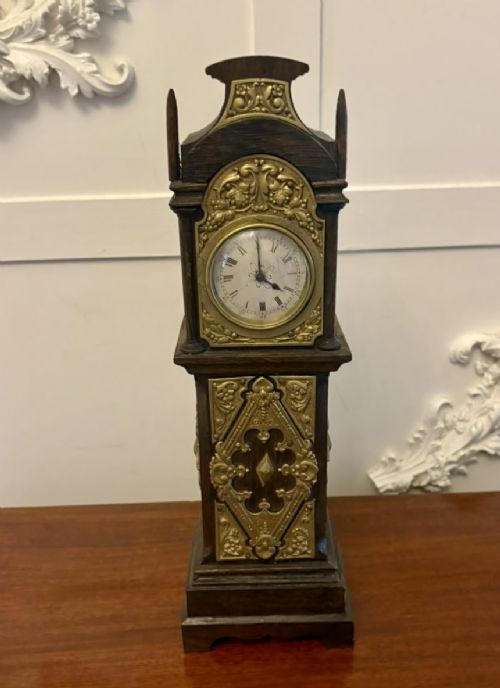
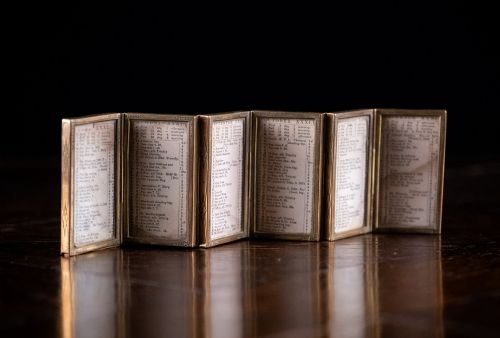
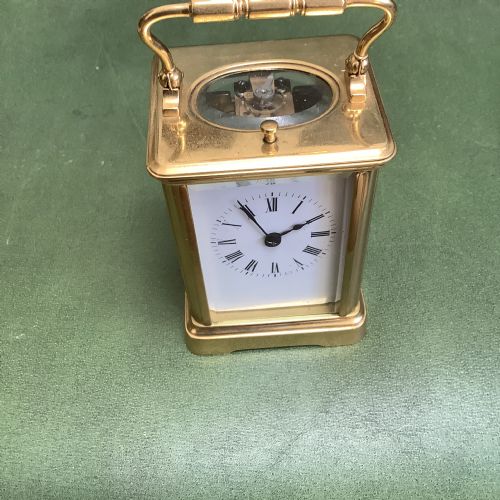
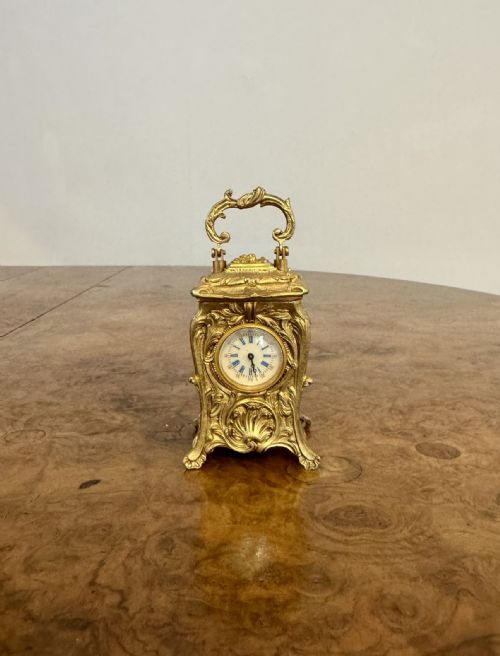
Victorian brass miniatures encompass a diverse group of small-scale items produced during the nineteenth century, ranging from practical desk accessories to decorative furnishings. Collectors pursuing victorian brass miniatures frequently encounter carriage clocks, miniature chests of drawers, and ornamental vessels such as Grand Tour vases.
The selection includes domestic items modelled at a fraction of their standard size, alongside travelling pieces and salesman samples. Carriage clocks and table cabinets demonstrate the period's preference for functional small-scale design.
Origins span English, French and continental workshops, reflecting varied regional aesthetics within the broader Victorian style. Pieces integrate traditional forms with the precise mechanical requirements of miniature horology and cabinetry.
How they were made
Makers utilised brass, gilt brass and cast iron alongside cabinet timbers such as mahogany, rosewood and burr walnut. Metal components underwent casting, engraving and gilding, while wooden elements received precise joinery, inlay and ebonisation.
Horological items required intricate brass movement assembly, enamel dial painting and glass casing. Ornamental models combined cast metal elements mounted on wooden or iron carriages, demonstrating diverse nineteenth-century workshop techniques.
Victorian Brass Miniatures Retail Price Guide 2026
Typical asking prices for victorian brass miniatures among the pieces listed under this phrase on Sellingantiques today, from the lower quarter to the upper quarter. They describe what is for sale here now, not the wider market.
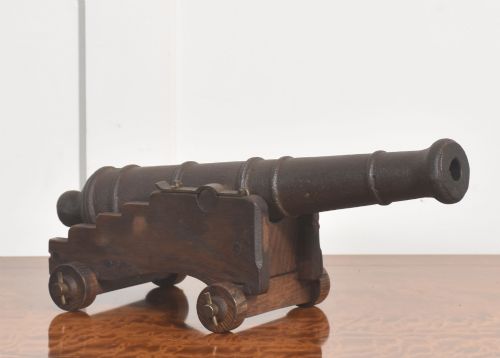
A cast iron signal cannon sits ready on an oak carriage.
What varies in quality
Quality differentiates through the crispness of casting detail, the depth of manual engraving, and the precision of mechanical movements in clocks. Superior examples display refined proportions and clean joints, whereas coarser pieces show simplified casting and assembly.
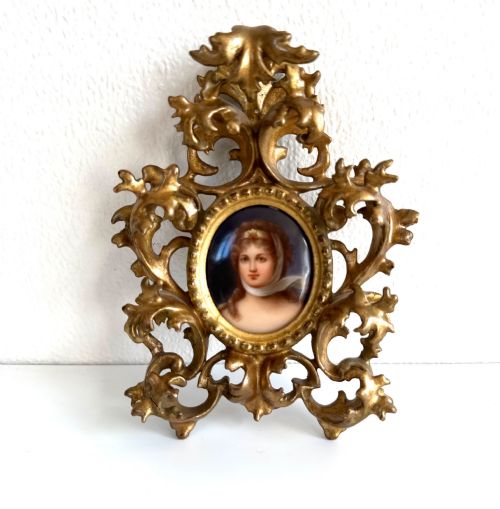
The integration of supplementary materials, such as porcelain panels, bevelled glass panels or fine veneers, elevates a piece above standard utilitarian production. Maker execution determines whether an object functions as a high-status desk ornament or a simple souvenir.
F.H.Ayres Ltd., London·Flor & Findel
The Victorian Brass Miniatures Glossary
- Carriage clock
- A portable spring-driven timepiece designed for travelling during the nineteenth century. These clocks usually feature brass frames with glass panels.
- Fusee clock
- A clock mechanism utilising a conical pulley and chain to equalise the force of the mainspring as it unwinds. This system improves timekeeping accuracy.
- Grand Tour
- A traditional trip through Europe undertaken by upper-class individuals to study art and antiquities. Miniature vases and souvenirs commemorated these travels.
- Salesman sample
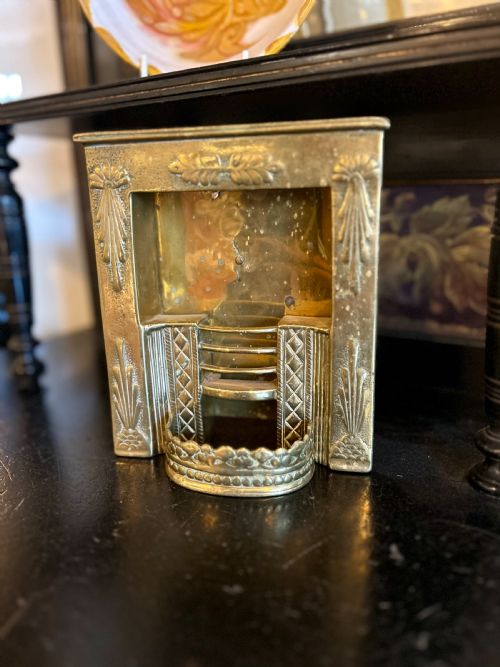
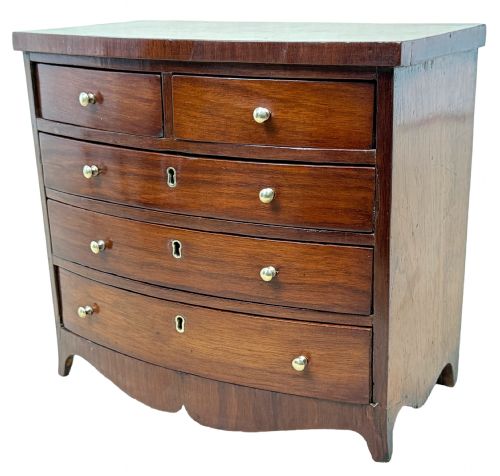
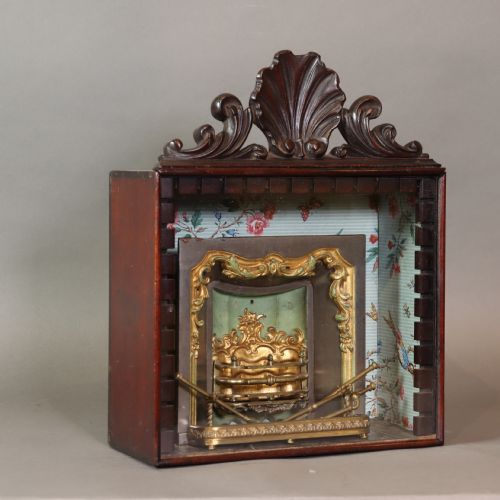
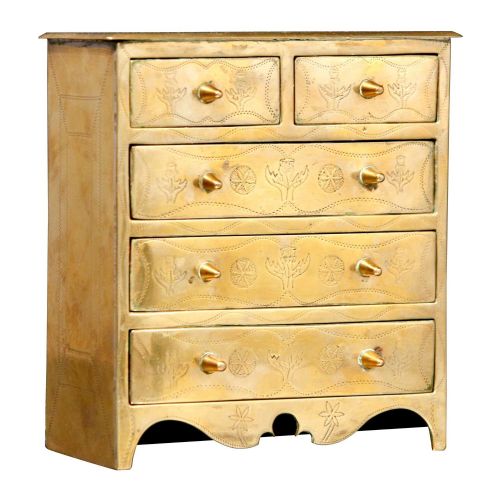
- A small-scale model utilised by commercial representatives to demonstrate furniture or fireplaces to prospective buyers. These items replicated full-sized products accurately.
- Campaign chest
- A sectional piece of furniture designed for military officers to dismantle and transport easily. Miniature versions replicate the brass corners and recessed handles.
Victorian Brass Miniatures: Frequently Asked Questions
What are victorian brass miniatures?
Victorian brass miniatures are small nineteenth-century decorative and functional objects produced in workshops across Europe. They replicate full-sized furnishings, timepieces and equipment at a reduced scale.
These items range from mechanical carriage clocks to ornamental cannons and miniature chests. The category reflects nineteenth-century precision manufacturing and decorative taste.
How were carriage clocks used?
Carriage clocks served as portable timepieces for travellers during the nineteenth century. Their robust brass frames and fitted travelling cases protected the delicate movements on journeys.
Owners placed them on desks, mantelpieces or bedside tables. Many examples included alarms or striking mechanisms for daily practicality.
How should I display them?
These small-scale objects suit placement on desktop surfaces, within display cabinets or on dedicated shelves. Their compact dimensions allow integration into existing collections without requiring extensive space.
Stable environmental conditions protect delicate wooden cases, paper components and glass panels from damage. Proper lighting enhances the engraved brass details and mounted materials.