


Victorian Brass Fireirons
Victorian brass fireirons are hearth furnishings designed for managing coal fires, combining polished metal shafts with decorative handles to anchor a period fireplace.
Victorian Brass Fireirons
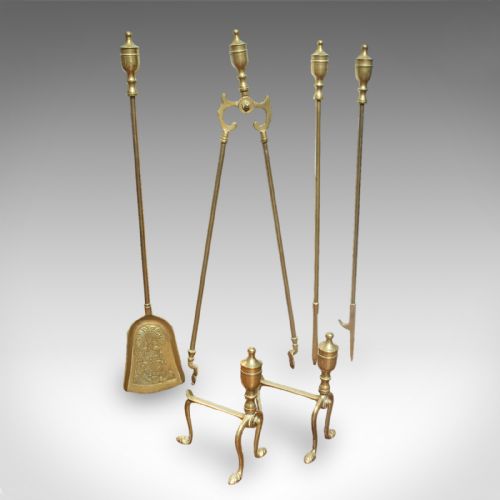
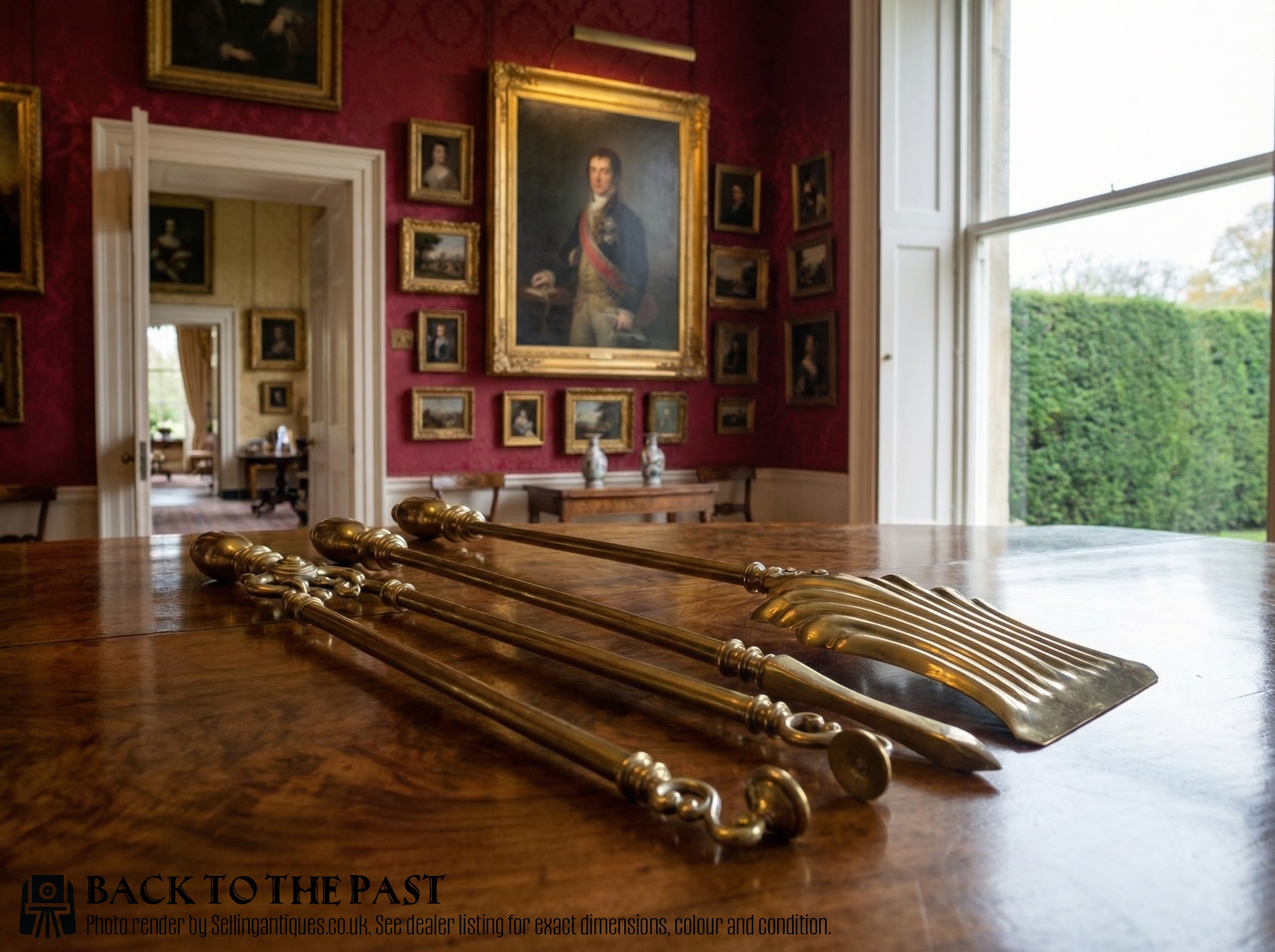
Victorian brass fireirons comprise matched suites of implements built for tending coal grates, typically grouping a shovel, poker and tongs together on a companion stand. Most examples encountered here date from the nineteenth century, ranging from mid-Victorian sets to later nineteenth-century productions.
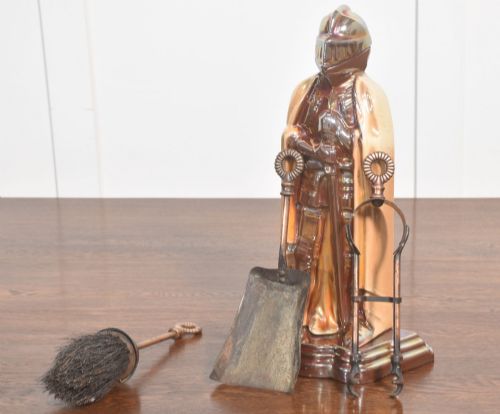
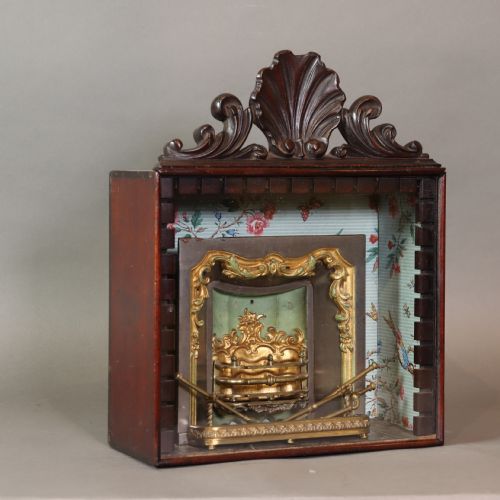
The assortment extends from standard hearth sets to miniature salesman samples and associated fireplace accessories such as fire dogs. Forms vary from simple utilitarian shapes to heavy cast elements incorporating Gothic Revival influences or detailed rope twist handles.
Materials and construction
Makers constructed these implements primarily from brass, often pairing bright metal shafts with iron or steel working ends to ensure durability under heat. Handles frequently utilised cast brass or rope twist detailing, while related companion sets occasionally incorporated painted metal, copper finishes or wooden elements.
Assembly methods relied on traditional metalworking techniques, combining turned and cast components to secure grips and terminals to the main tool bodies. Bristles and secondary materials appear on associated brushes and sweepers within larger companion sets.
The listings span the Victorian period alongside dated examples from 1860, 1890 and 1910, incorporating brass, iron, steel, copper finish and wood.
Judging quality and character
Quality rests in the weight of the metal and the crispness of the casting, distinguishing heavy, purposeful hearth tools from lighter decorative alternatives. Finer sets display consistent finishing across all component tools, such as cleanly executed rope twist handles and well-proportioned shovels.
The integrity of the ensemble also dictates distinction, as complete original groupings of companion tools carry more cohesion than assembled sets. Well-preserved surface patination without excessive smoothing indicates better historical survival.
James Cartland & Son
The Victorian Brass Fireirons Glossary
- Companion set
- A group of fireplace tools designed to be housed together on a dedicated stand or rack. These suites typically include a shovel, poker and tongs.
- Fire dogs
- Andirons used to support logs in an open hearth, frequently found alongside companion sets in Victorian fireplace arrangements.
- Gothic Revival
- A nineteenth-century design style drawing inspiration from medieval architecture and ornament, visible on selected heavy hearth furnishings.
- Salesman sample
- A miniature version of a product used by commercial travellers to demonstrate wares to potential buyers without carrying full-sized goods.
Victorian Brass Fireirons: Frequently Asked Questions
What tools are included in a standard set?
A standard set generally comprises a coal shovel, a poker and a pair of tongs designed for managing a solid fuel fire. These implements work in tandem to tend the grate and maintain the hearth.
Additional pieces such as brushes with bristles or dedicated companion stands occasionally accompany the core three tools in larger suites.
How were these tools used daily?
The poker adjusts burning fuel, the shovel clears ash from beneath the grate, and the tongs place fresh coal onto the fire without soiling hands. They formed an essential domestic utility for coal-heated rooms.
Beyond functional use, polished metal sets served a decorative role in the Victorian drawing room, reflecting light from the hearth.
Where should fireirons be placed?
Most sets stand beside the fireplace on the hearth floor, either resting against a fender or suspended from a dedicated companion stand. This keeps them immediately accessible when tending the fire.
Proper placement prevents accidental knocks while ensuring the polished brass remains a prominent visual feature of the fireplace surround.
How do I care for brass handles?
Regular dusting with a dry cloth prevents soot and grime accumulation on the metal surfaces. Avoid harsh abrasives that can wear away historical patination.
Gentle cleaning maintains the natural lustre of the brass without stripping the character acquired over decades of domestic use.