

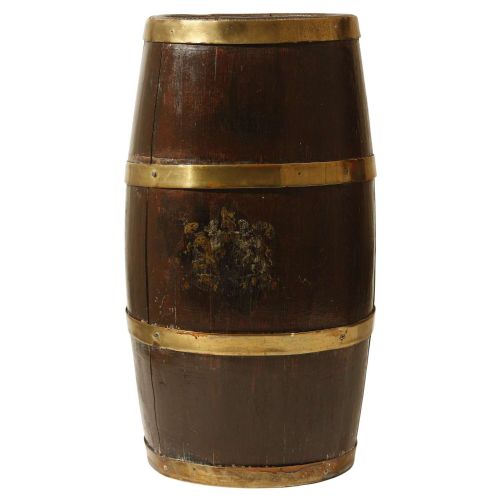


Victorian Brass Bound Barrel
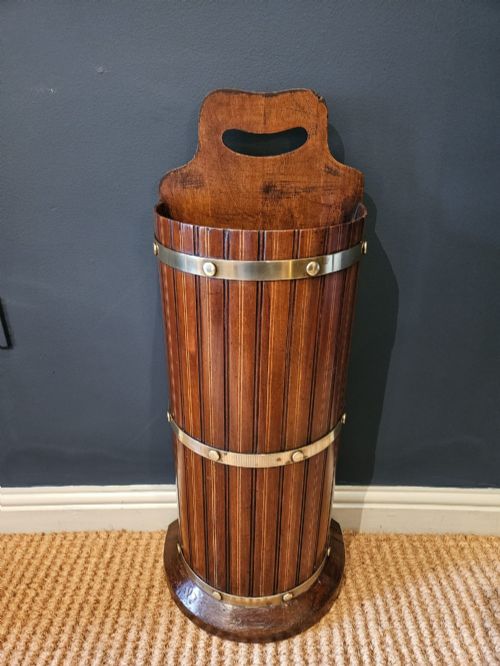
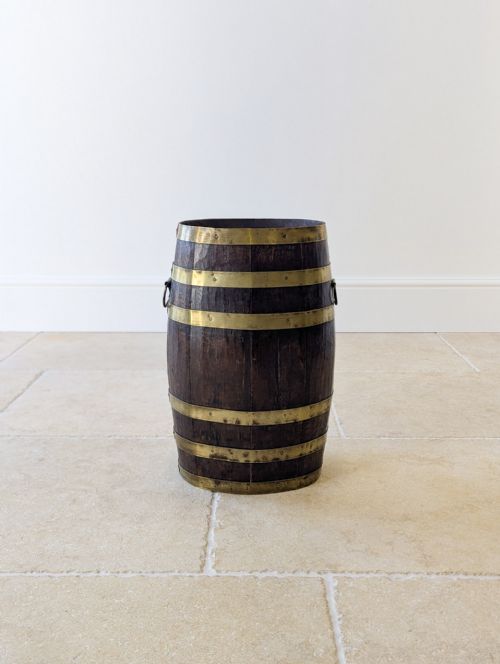
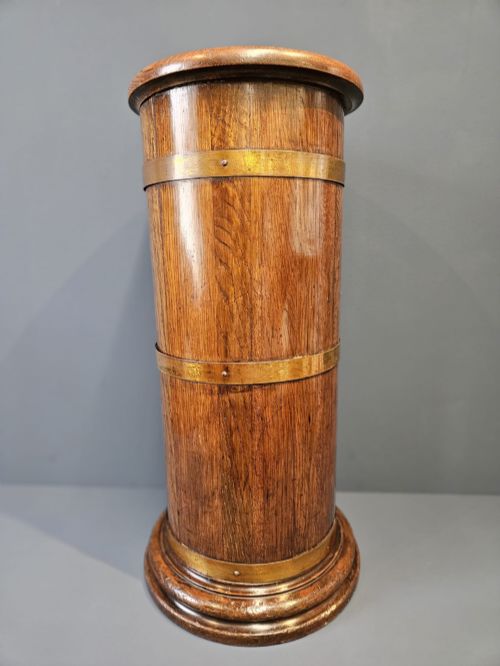
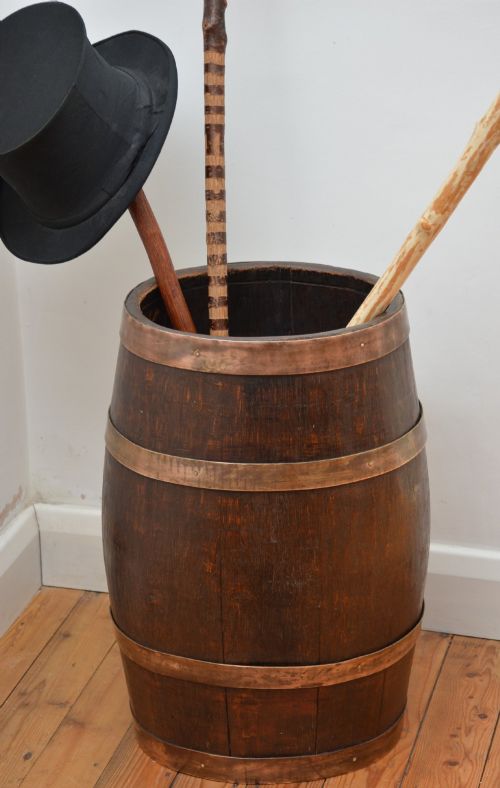
These Victorian brass bound barrel pieces are solid coopered vessels banded in bright metal, built to hold umbrellas or fuel by the hearth.
Victorian Brass Bound Barrel
A Victorian brass bound barrel is a sturdy coopered container made from oak or mahogany, secured with heavy metal bands and straps. When you search for this phrase, you find practical hallway furnishings and hearth accessories designed to withstand daily use in a bustling nineteenth century household. The most common form on this page is the umbrella or stick stand, often shaped as an oval or halved cask.
Beyond hallway stands, the listings show related coopered vessels including coal hods, water barrels, and sailor rum tubs. These items bridge domestic utility and maritime history, featuring watertight stave construction and riveted metal fixtures. English country house examples sometimes incorporate coats of arms or specialised umbrella loops into the design.
Materials and construction
The makers built these pieces using traditional cooperage methods, shaping individual wooden staves of oak or mahogany to form a watertight or structurally rigid cylinder. These wooden staves are held tightly together by heavy brass bands or copper hoops, often secured with copper rivets or brass screws.
Metals contrast with the warm grain of the timber, utilising brass for structural reinforcement and decorative studs. Some items add leather, paint, or canvas accents, particularly on maritime trunks and optical gear, while interior surfaces retain bare wood or metal linings.
Distinctions in quality
Quality rests in the precision of the cooperage work and the thickness of the brass bands. Finer pieces display tightly fitted staves that maintain their shape over decades without excessive shrinkage or warping in the wood.
The choice of secondary materials and decorative additions also elevates certain pieces above standard utility items. Carved wooden stands, heraldic crests, and substantial cast brass mounts indicate workshop production intended for prominent reception rooms rather than back corridors.
R. A. Lister & Co.
The Victorian Brass Bound Barrel Glossary
- Coopered
- Constructed from curved wooden staves bound together with hoops, just like a traditional drinking cask or water bucket.
- Stave
- One of the narrow shaped wooden strips that form the sides of a barrel or tub.
- Coal Hod
- A domestic container designed specifically for holding and transporting household coal to an open fireplace.
- Monocular
- A compact optical viewing instrument for a single eye, usually wrapped in leather and fitted with brass draw tubes.
Victorian Brass Bound Barrel: Frequently Asked Questions
What were brass bound barrels originally used for?
These vessels served various practical duties around the home and ship, from holding wet walking umbrellas in the hallway to storing coal by the fireplace or rum on merchant vessels.
Their robust coopered construction made them ideal for containing heavy or damp materials without leaking or structural failure.
How do I care for oak and brass barrel furniture?
Keep the wood nourished with a traditional beeswax polish to prevent the oak staves from drying out in centrally heated rooms.
Polish the brass bands sparingly with a soft cloth to maintain their natural metallic lustre without removing the historical patina.
How can I tell a nineteenth century barrel from a later copy?
Examine the construction methods of the staves and the fastening of the metal bands, looking for hand-beveled edges and forged or hand-cut brass rivets.
Nineteenth century oak displays deep grain texture and colour variation that modern machine-cut timber simply does not replicate.