

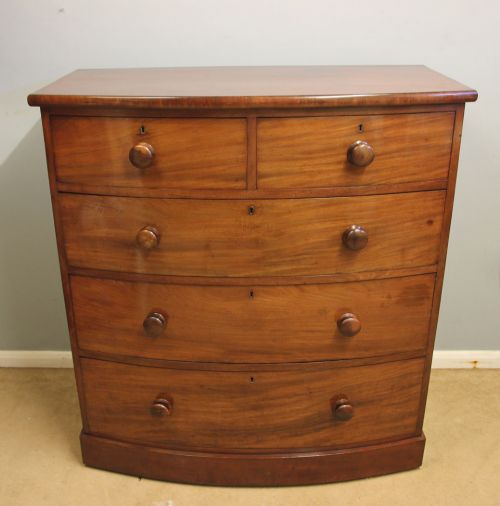


Victorian Bowfront Dresser
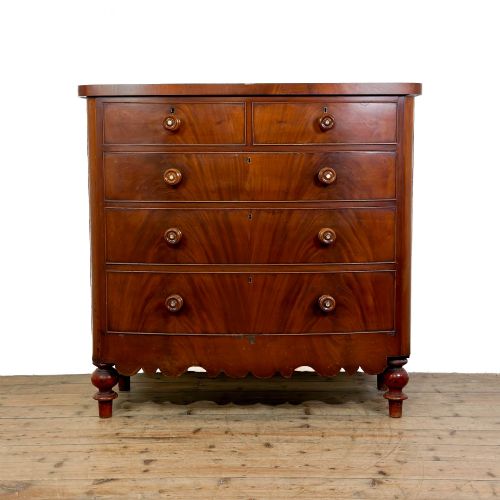
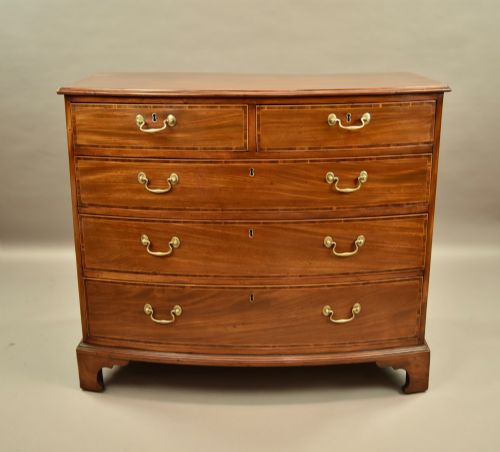
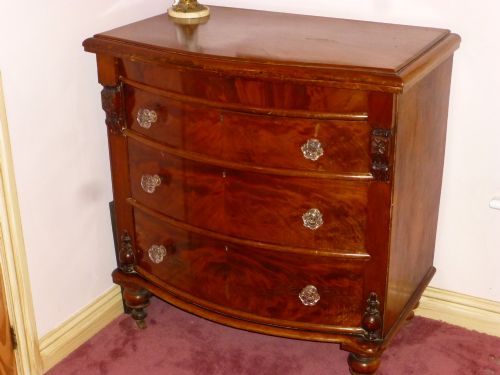
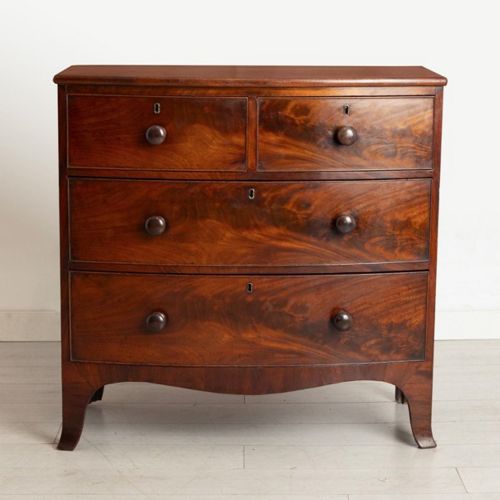
A victorian bowfront dresser brings warmth and presence to a room, offering generous storage within a curved silhouette.
Victorian Bowfront Dresser
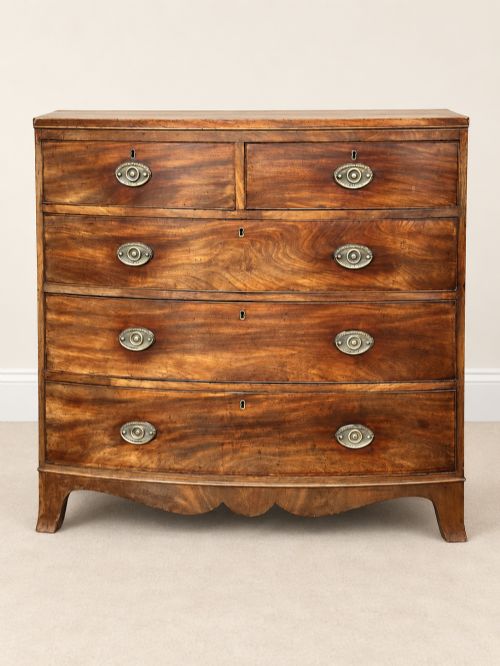
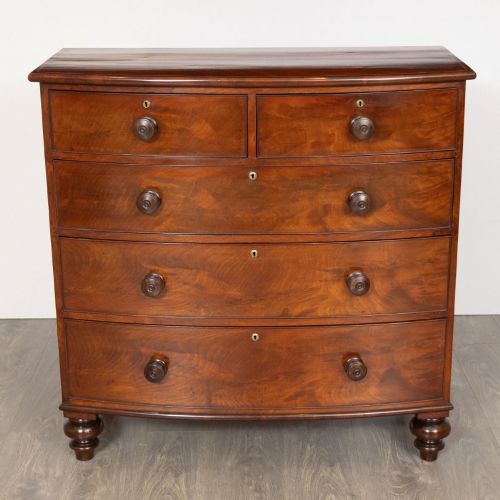
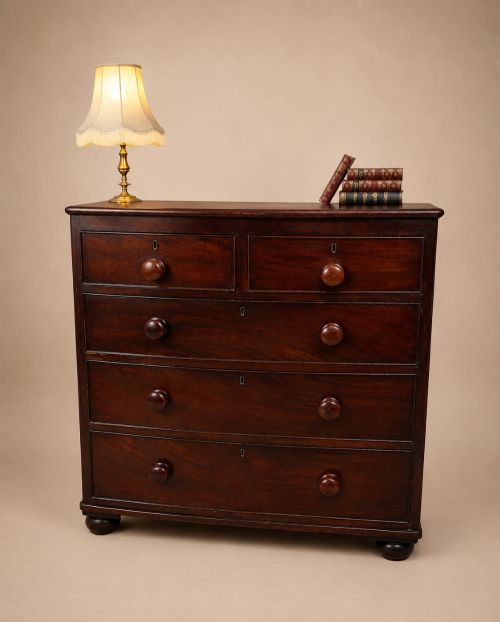
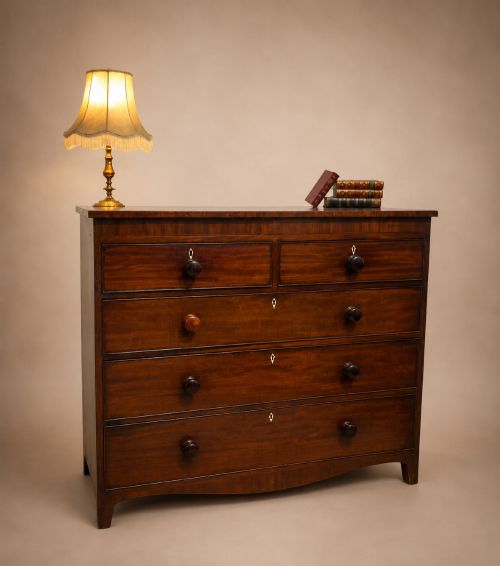
A victorian bowfront dresser primarily takes the form of a chest of drawers, shaped with a rounded, projecting front that softens the lines of a room. The pieces encountered on this page date largely from the nineteenth century, spanning periods from the regency era through to late victorian times.
Makers constructed these items predominantly in mahogany, utilising flame mahogany veneer for visual depth, alongside secondary timbers such as pine. Examples range from small bedside proportions and scotch chests to larger formats, occasionally incorporating secret drawers or intricate carvings.
Origins vary across the selections, encompassing domestic British workshops as well as American interpretations of the form. Buyers encounter both restrained classicism and more unusual decorative expressions within the nineteenth century timeline.
What varies in quality
The degree of refinement in timber selection dictates much of the visual hierarchy, with book-matched flame mahogany veneers marking out the more ambitious commissions. Cabinetmakers who achieved seamless curvature along the bow front and integrated tight dovetail joints demonstrate superior technical execution.
Proportion and decorative restraint also separate standard utility items from exceptional examples. Pieces exhibiting balanced drawer arrangements, well-turned handles, and crisp mouldings hold greater architectural presence than plainer counterparts.
Some chests hide secret drawers tucked away behind the mouldings, offering a quiet nod to nineteenth-century skullduggery.
The Victorian Bowfront Dresser Glossary
- Bowfront
- A curved convex front projecting outward from the frame. This shape softens rigid wall lines and requires skilled woodworking to fit drawers precisely to the curve.
- Flame mahogany
- A veneer cut from timber where the branch meets the trunk, producing a rippling, flame-like pattern. Cabinetmakers prized this figure for its dramatic visual movement on prominent surfaces.
- Scotch chest
- A tall chest of drawers originating in Scotland, typically featuring a deep top drawer flanked by smaller drawers. These pieces often display bold mahogany veneers and substantial proportions.
- Dovetail
- A joint formed by interlocking wedge-shaped fingers, used to construct sturdy drawer boxes. Fine nineteenth-century examples show closely spaced, hand-cut pins.
Victorian Bowfront Dresser: Frequently Asked Questions
How do I date a bowfront chest?
Dating relies on timber selection, handle styles, and construction methods. Earlier nineteenth-century pieces often feature simpler mahogany surfaces, while later Victorian examples may incorporate more elaborate turned handles or carved details.
Changes in secondary woods like pine and shifts in regional cabinetmaking trends further help narrow the decade of manufacture, from regency influences through to the late eighteen-eighties.
Where should I place a bowfront chest?
These chests suit bedrooms, hallways, or living rooms where the curved front softens linear architecture. Their depth requires adequate floor clearance so the projecting drawers open without obstruction.
Positioning them away from direct sunlight protects the mahogany veneer and maintains the rich polish of the wood over time.
What is a secret drawer?
A secret drawer is a concealed compartment built into the framing of the chest, often hidden behind decorative moulding or within the top frieze. Owners used these spaces to store valuables or private documents.
Accessing them typically requires releasing a hidden wooden catch or removing an adjacent drawer to reveal the mechanism.
How do I care for mahogany veneer?
Mahogany surfaces benefit from dusting with a soft, dry cloth and occasional treatment with quality beeswax to nourish the timber. Avoiding excessive moisture and sudden temperature changes prevents the veneer from lifting.
Placing felt pads beneath objects on top protects the polished finish from scratches and rings.