

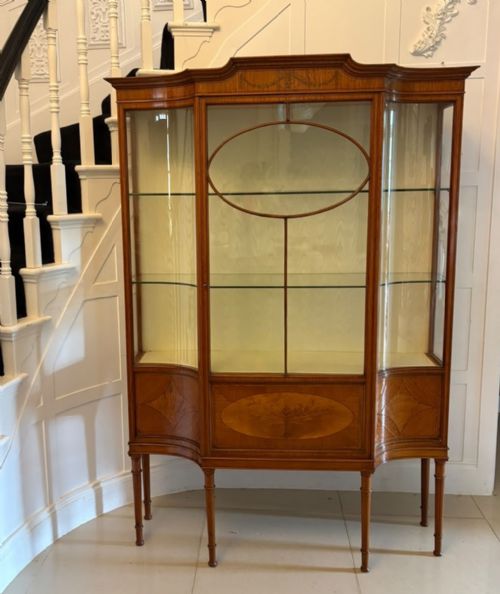


Victorian Bow Fronted Cabinet
A victorian bow fronted cabinet brings a curved silhouette and warmth to a room, offering display or storage through traditional craftsmanship.
Victorian Bow Fronted Cabinet
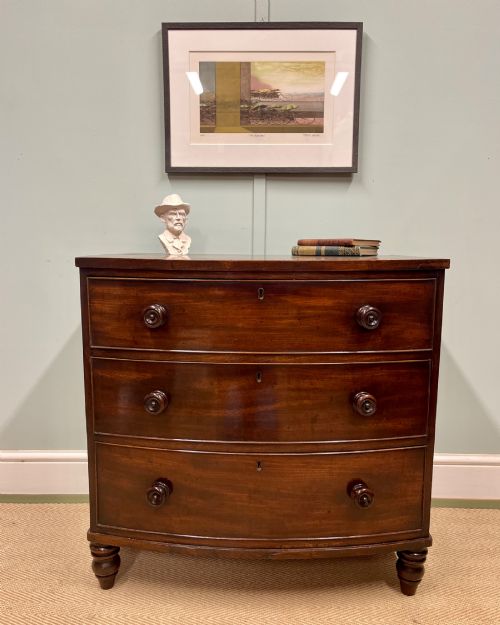
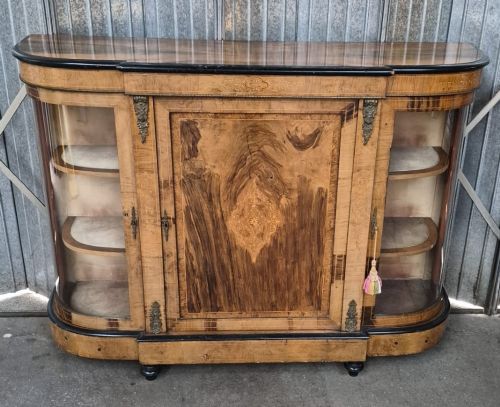
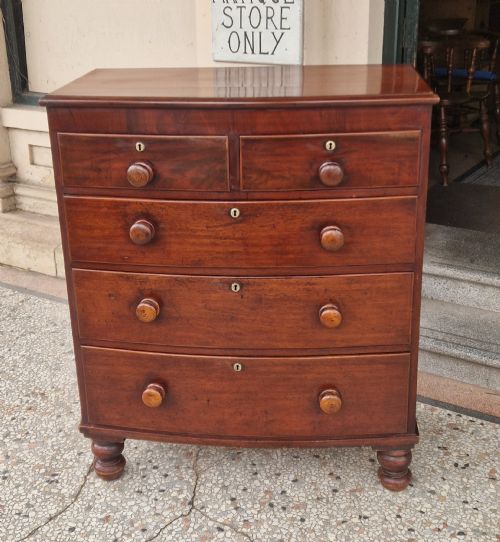
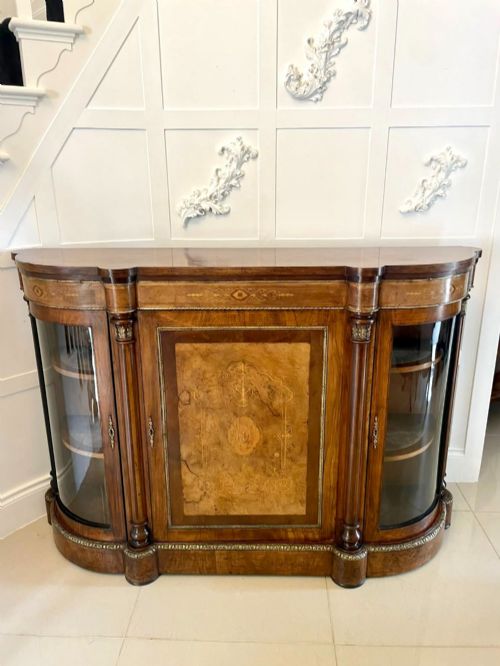
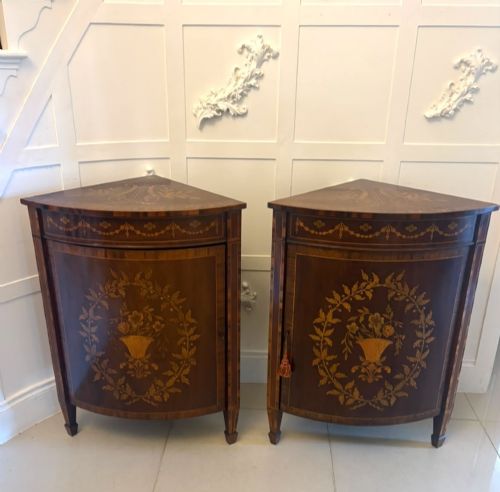
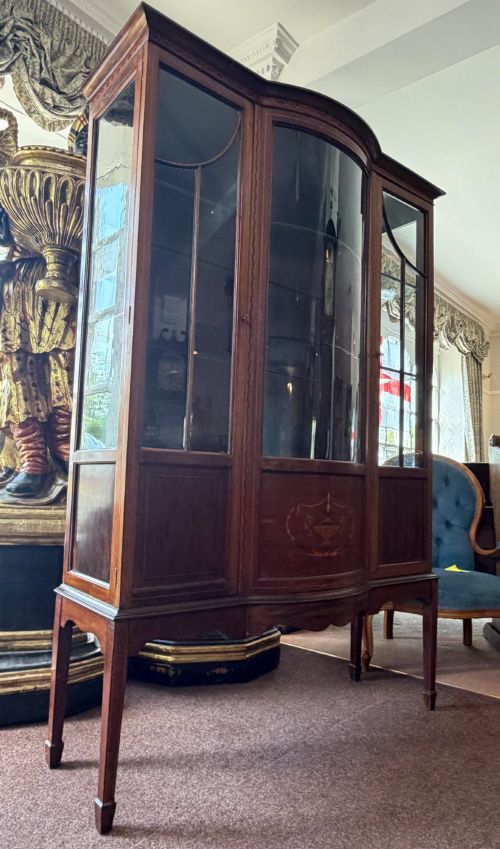
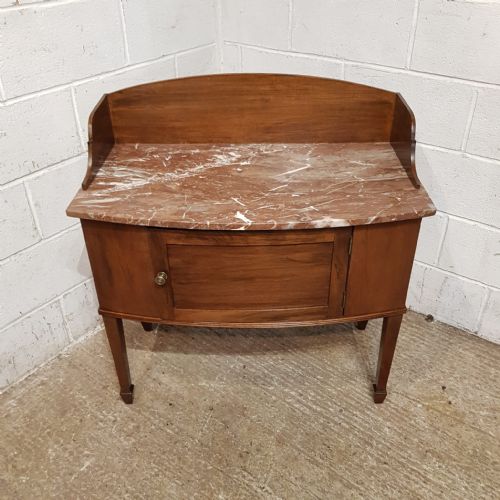
A victorian bow fronted cabinet spans various functional forms created during the nineteenth century, including display cabinets, side cabinets, corner cupboards, and chests of drawers. These items range from compact miniature furniture to large credenzas and wardrobes, reflecting the diverse domestic needs of the era.
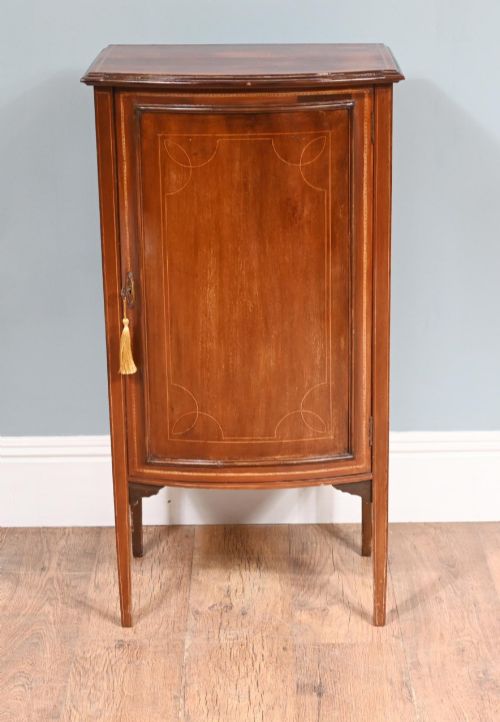
Mahogany and burr walnut dominate the selection, often enriched with satinwood, fruitwood, and delicate marquetry or string inlay. Pieces frequently incorporate glazed doors, brass mounts, and marble tops alongside the characteristic curved front.
Makers from the period utilised revival styles such as Sheraton Revival and Queen Anne Revival alongside standard Victorian designs. Buyers will encounter both large statement credenzas and smaller bedside lockers or corner units sharing the signature bowed profile.
How they were made
Cabinet makers built these pieces using solid timbers and decorative veneers such as burr walnut and mahogany over secondary woods. Curved front panels required skilled steam bending or careful lamination of timber to achieve the distinct bow shape without compromising structural integrity.
Surface ornamentation involved intricate marquetry, fruitwood and satinwood inlay, ebonised detailing, and sometimes ormolu mounts or pietra dura plaques. French polishing finished the wood surfaces to highlight the natural grain and rich patina of the timber.
Victorian Bow Fronted Cabinet Retail Price Guide 2026
Typical asking prices for victorian bow fronted cabinet among the pieces listed under this phrase on Sellingantiques today, from the lower quarter to the upper quarter. They describe what is for sale here now, not the wider market.
Miniature cabinets appeared alongside full-scale furniture, proving that master craftsmen enjoyed showing off by making tiny, perfectly proportioned chests.
What varies in quality
The sophistication of the timber selection and the precision of the inlay dictate the upper tier of these cabinets. Pieces featuring choice burr walnut veneers, meticulous fruitwood marquetry, and original brass hardware stand apart from simpler utility items.
Construction details such as dovetailed drawer joints, well-fitted curved doors, and the preservation of a deep, warm patina mark superior workshop output. The complexity of the form, whether a standard chest or an elaborate ormolu-mounted credenza, influences the overall refinement.
Edwards and Roberts
The Victorian Bow Fronted Cabinet Glossary
- Bow front
- A convex curved cabinet or drawer front that projects outward. This shape softens room lines and requires advanced carpentry techniques to construct.
- Credenza
- A grand display or storage cabinet, often featuring glazed curved end doors and central compartments. They frequently incorporate ormolu mounts and intricate marquetry.
- Marquetry
- Decorative veneer patterns formed from different coloured woods, ivories, or shells fitted into a wooden background. It creates pictorial or geometric designs on cabinet doors and tops.
- Ormolu
- Gilded bronze mounts applied to furniture for decorative accent. These metal details enhance the richness of nineteenth-century revival pieces.
- Burr walnut
- Timber taken from the wart or growth on a walnut tree, yielding highly figured, swirling grain patterns. It served as a prized veneer for luxury Victorian furniture.
Victorian Bow Fronted Cabinet: Frequently Asked Questions
Where did people place these cabinets?
These cabinets served multiple rooms in nineteenth-century homes, functioning as display pieces in formal reception rooms or storage units in bedrooms. Smaller corner cupboards and bedside lockers found places in tighter spaces.
Larger credenzas and side cabinets anchored dining rooms and drawing rooms, housing porcelain, linens, or glassware behind glass or wooden doors.
How do I care for the wood?
Maintain these pieces by keeping them away from direct sunlight and steady heat sources to prevent the veneers from drying out. Regular dusting with a soft, dry cloth preserves the French polished surface.
Apply high-quality beeswax sparingly when the wood appears dry, buffing gently to maintain the natural patina without building up heavy wax layers.
What styles influenced these designs?
Victorian cabinet makers drew heavily on earlier historical periods, producing pieces in Sheraton Revival, Queen Anne Revival, and Regency styles. These revivals reinterpreted eighteenth-century elegance through nineteenth-century manufacturing methods.
Inlay work, classical proportions, and painted satinwood reflect this continuous dialogue with past design movements, alongside contemporary Victorian tastes.
How can I tell the period?
Examine the secondary woods inside drawers and back panels, as well as the construction methods used for joints and fixings. Nineteenth-century pieces often display hand-cut dovetails and specific timber choices like mahogany or burr walnut.
Stylistic cues such as delicate fruitwood inlay, ormolu mounts, and specific revival motifs help narrow down the date of manufacture within the Victorian era.