


Victorian Book Accessories
These victorian book accessories span walnut slides, sterling silver bookmarks, and carved mahogany stands designed to organise and display a nineteenth-century library.
Victorian Book Accessories
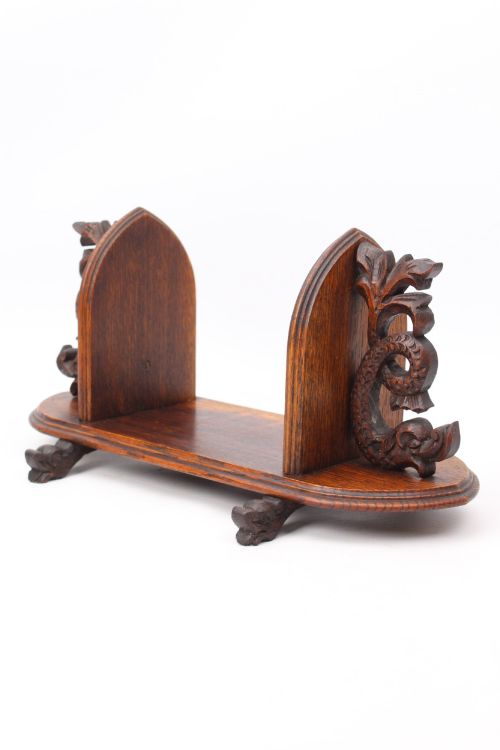
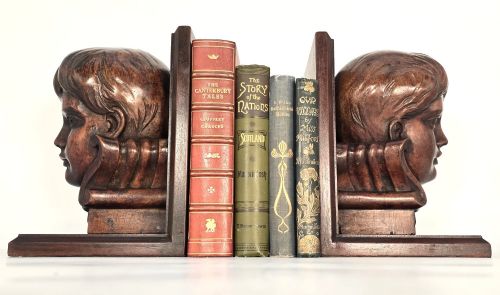
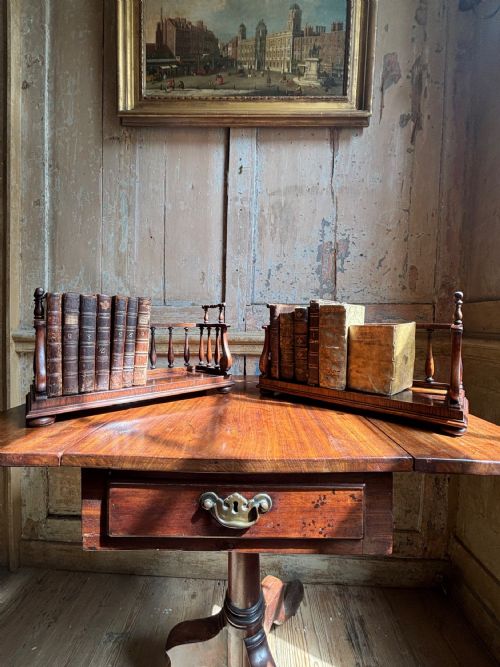
When you search for victorian book accessories, you encounter a range of functional items intended for desk and library use, dominated by extending book slides, desk stands, and bookends. These pieces date principally from the nineteenth century into the Edwardian period, capturing the domestic and scholarly habits of the era.
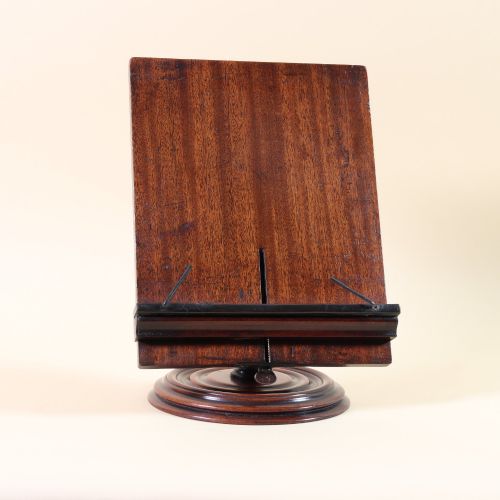
The assortment on this page includes items fabricated for reading and writing, such as page turners, prayer book holders, and reading stands. Many examples utilise expanding mechanisms to accommodate changing rows of volumes on a desk or table.
Stylistic influences range from mainstream Victorian and Edwardian tastes to Gothic Revival designs and Anglo-Indian carved woods. This variety reflects the eclectic interior decoration of nineteenth-century homes, where study spaces doubled as display areas for literature and curiosities.
Materials and Construction
Cabinet makers of the period shaped these pieces from dense native and exotic timbers including walnut, mahogany, oak, coromandel, and rosewood. Many items feature brass mounts, hinges, and extending actions that provide structural reinforcement to moving wooden components.
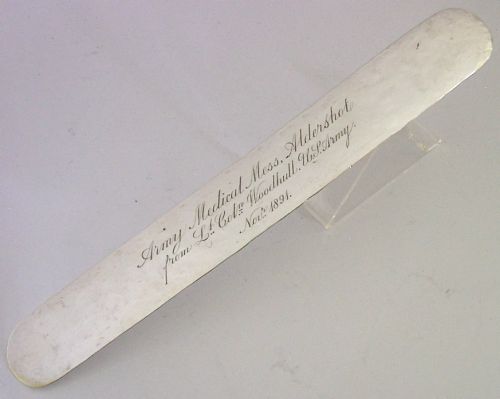
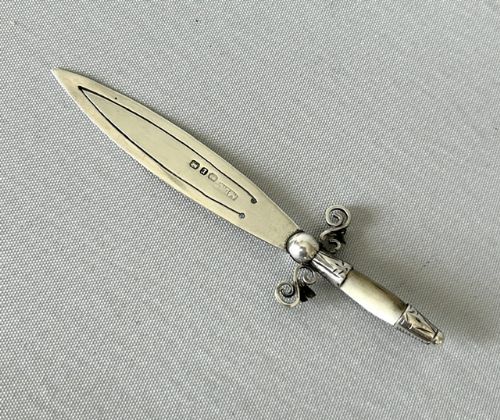
Silversmiths and metalworkers contributed sterling silver, pewter, and brass elements, frequently applied as mounts on book slides or fashioned independently into bookmarks and page turners. Bone, mother-of-pearl, and agate also appear as contrasting handle materials on smaller handheld implements.
Decorative techniques recorded across the selection include ecclesiastical and floral carving, ebonising, Tunbridge inlay, and painted plaques inset into wood. Leather binding and faux book constructions demonstrate the period interest in disguising storage containers as volumes.
Materials documented across these listings include sterling silver, brass, walnut, mahogany, leather, oak, bone, tortoiseshell, and exotic woods such as coromandel and olive wood.
Standards of Execution
The distinction between standard utility items and finer library pieces rests on the precision of the joinery and the integration of metal mounts. Superior extending book slides operate smoothly on their brass actions without binding, while lesser examples show looseness in the sliding mechanism.
Material selection dictates the grade of the piece, with solid exotic hardwoods and heavy gauge sterling silver marking the upper tier of production. Finer works incorporate decorative details such as finely painted ceramic plaques, banded agate, or intricate carved relief rather than plain finished surfaces.
Attribution to known makers or patented mechanisms, such as Betjemanns or registered silversmiths, elevates an item beyond anonymous workshop production. The clarity of hallmarks on silver components and the crispness of carved details in wood indicate the original hand of execution.
Sampson Mordan·Gillows·Stevens of Coventry·Crisford and Norris·Ludwig Krumm·Betjemanns
The Victorian Book Accessories Glossary
- Book slide
- An adjustable rack designed to hold a row of books upright on a desk or table. These typically feature expanding wooden sides connected by a central metal scissor action.
- Page turner
- A handheld implement with a long, flat blade used to turn paper pages without creasing them. They are frequently mounted with silver handles or carved from bone and wood.
- Gothic Revival
- An architectural and decorative style drawing inspiration from medieval forms. Pieces in this category often display pointed arches, ecclesiastical tracery, and heavy carved oak.
- Tunbridge ware
- Woodwork decorated with mosaic patterns created from tiny tinted wood prisms arranged to form geometric or pictorial designs. This technique appeared frequently on small Victorian boxes and book racks.
- Chatelaine accessory
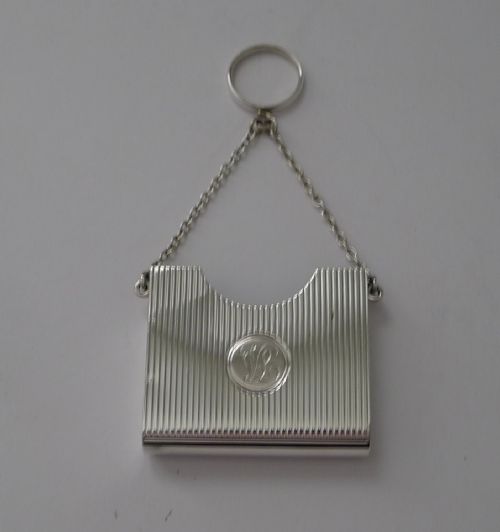
- A small item suspended from a waist belt hook, such as a purse or pocket tool. These domestic implements were carried on the person during the nineteenth century.
Victorian Book Accessories: Frequently Asked Questions
How do extending book slides work?
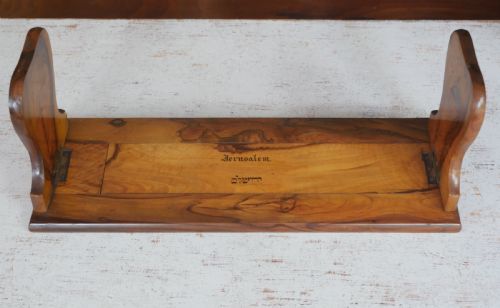
Extending book slides use a central wooden or brass linkage that allows the two end pieces to pull apart or push together. This mechanism lets the user adjust the length of the rack to fit a changing number of volumes.
Most surviving examples rely on a scissor action concealed beneath the base or between the upright ends. When placing books on the slide, the weight rests on the base boards while the ends keep the volumes upright.
What were page turners used for?
Page turners allowed nineteenth-century readers to turn the pages of heavy books, newspapers, or journals without soiling the paper with oils from their fingers. They were standard accessories in formal drawing rooms and libraries.
The flat blade slipped easily between leaves of paper, while the decorative handle provided a secure grip. Materials varied from sterling silver and ivory to carved wood and pewter.
Are faux book boxes actual books?
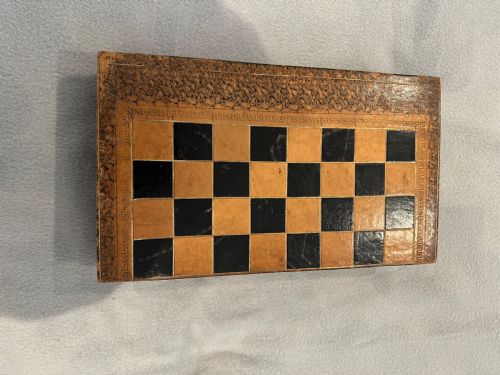
Faux book boxes are hollow containers shaped and bound to resemble sets of leather-covered volumes. They served as decorative storage items on library desks for games boards, stationery, or writing implements.
The spines and covers feature realistic tooling and titling to fool the eye when shelved alongside genuine literature. Opening the box reveals a lined interior rather than printed paper pages.