


Victorian Blush Ivory Vase
These Victorian blush ivory vase examples bring soft, creamy ceramic grounds and delicate floral hand-painting straight to a mantelpiece.
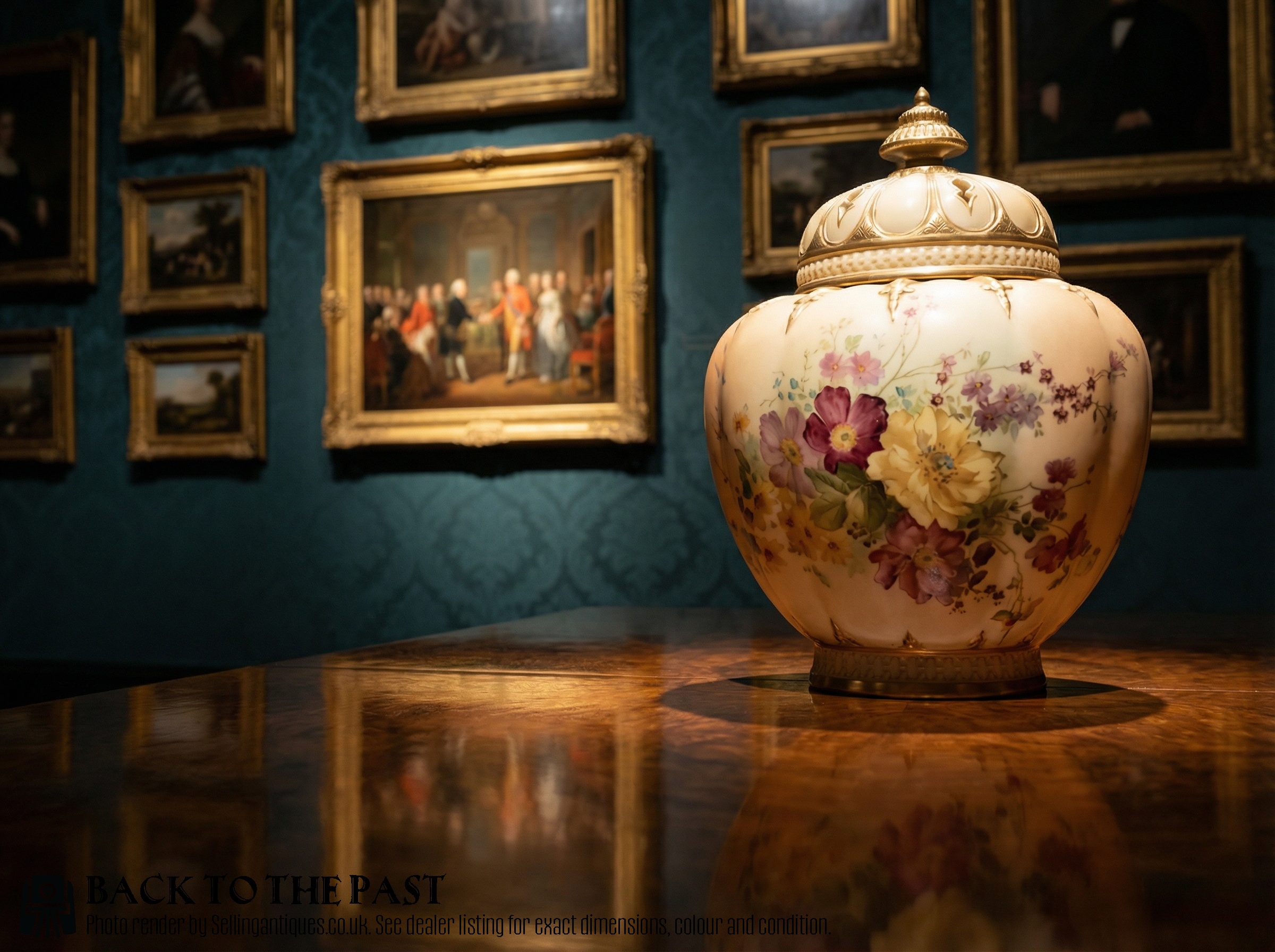
Victorian Blush Ivory Vase
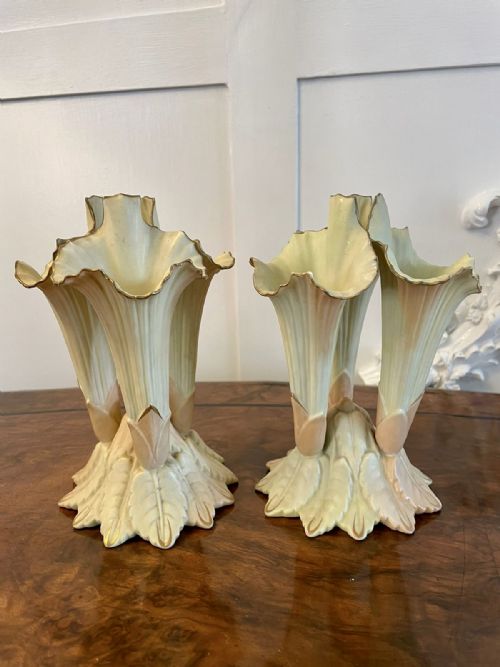
When you search for a victorian blush ivory vase, you encounter delicate porcelain pieces originating mainly from the late nineteenth century and the Edwardian era. The selection centres heavily on Royal Worcester creations alongside works associated with Locke and Co, spanning utilitarian shapes and decorative display items.
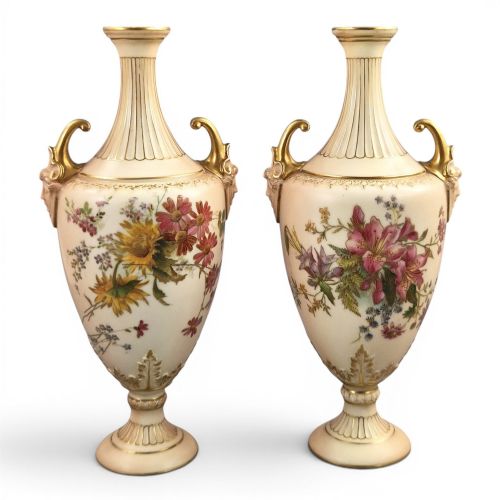
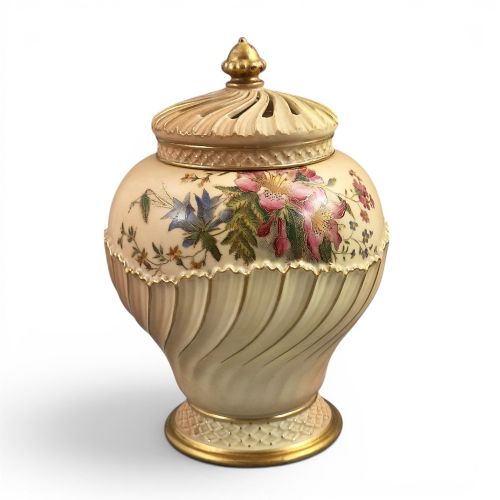
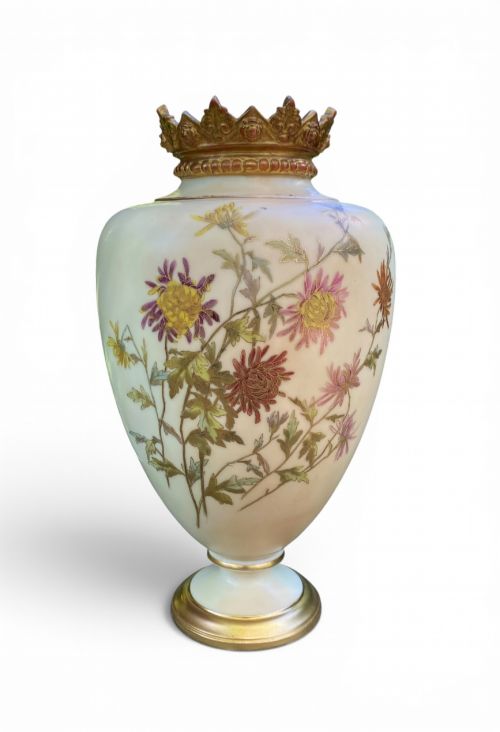
Most examples take the form of spill vases, ovoid jars, handled ewers, and pedestal urns complete with covers. Floral motifs dominate the surface decoration, often complemented by gilt handles and enamel detailing that reflect late Victorian aesthetic tastes.
Materials and technique
Potters shaped these vessels from fine ceramic porcelain, applying a distinctive tinted glaze that produced the signature matte blush ivory ground. Artisans then hand-painted floral subjects directly onto the porous surface before firing.
Makers finished the pieces with applied gilding, gold leaf, and ceramic enamel accents, sometimes incorporating pierced handles and intricate crown covers into the structural design.
Listings feature porcelain vessels spanning the nineteenth century, the Edwardian period, and the 1920s, utilising gilding, enamel, and gold leaf.
Judging quality and execution
Quality rests primarily on the finesse of the hand-painted flora and the crispness of the moulded porcelain form. Superior pieces display subtle tonal blending in the enamel flowers and precise, unblemished gilding along the handles and rims.
The weight and balance of the vessel, alongside the clarity of the maker mark stamped to the underside, separate standard production ware from exceptional studio output.
Royal Worcester·Locke and Co
The Victorian Blush Ivory Vase Glossary
- Blush ivory
- A specific matte ceramic glaze developed in the late nineteenth century that produces a soft, creamy pink-toned surface resembling human skin.
- Pot-pourri jar
- A decorative vessel featuring a pierced or crown cover designed to hold dried scented plant materials for perfuming a room.
- Ewer
- A large jug with a wide spout and scrolled handle, often produced as a decorative ornamental piece rather than for pouring liquids.
- Spill vase
- A tall, slender ceramic holder designed specifically to store wooden spills used for lighting fires and candles.
Victorian Blush Ivory Vase: Frequently Asked Questions
Are these vases marked with dates?
Many pieces feature factory codes, pattern numbers, and specific dots or symbols stamped onto the base that indicate the exact year of production.
Consulting manufacturer reference guides helps decode these impressed marks to place the vessel within the late nineteenth or early twentieth century.
Can I use these vases for fresh flowers?
Most of these historic vessels were intended primarily as decorative display items rather than functional containers for water and stems.
Using them for fresh arrangements risks moisture damage to the interior glaze and the delicate porcelain body over time.
What styles influenced this pottery?
The design draws heavily from the Victorian Aesthetic Movement, which favored natural subjects, Japanese artistic influences, and refined decorative surfaces.
Traditional floral motifs combined with ornate gilded handles to create an opulent look suited to formal nineteenth-century drawing rooms.