

Victorian Blue Glass
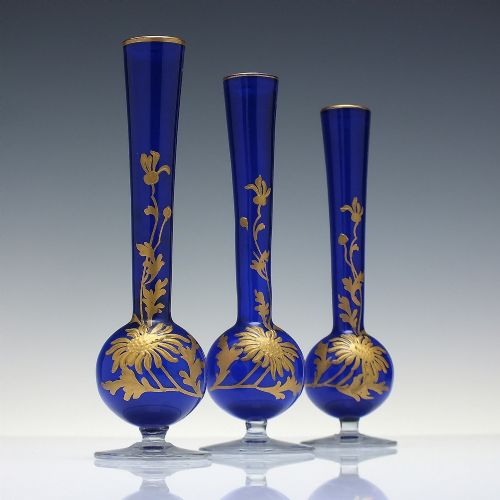
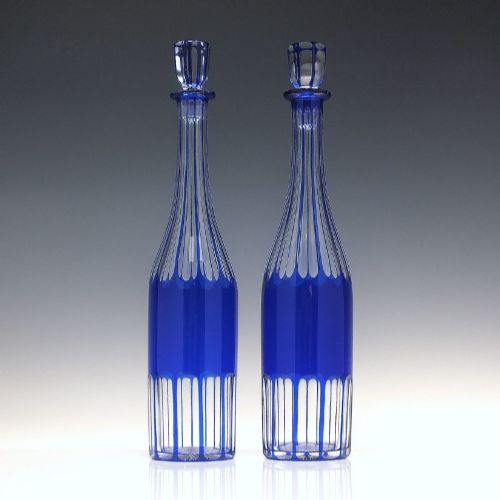
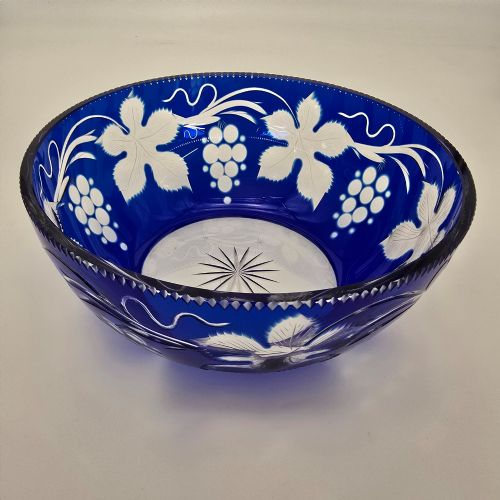
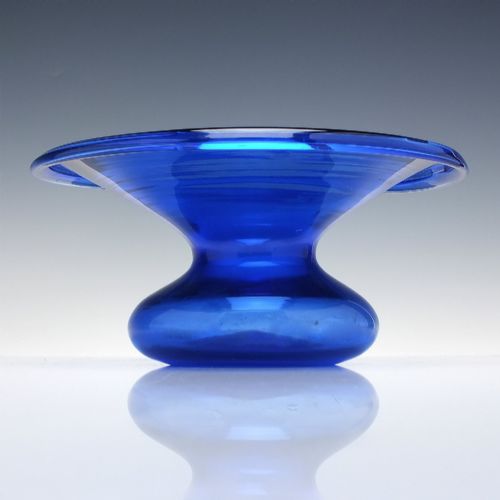
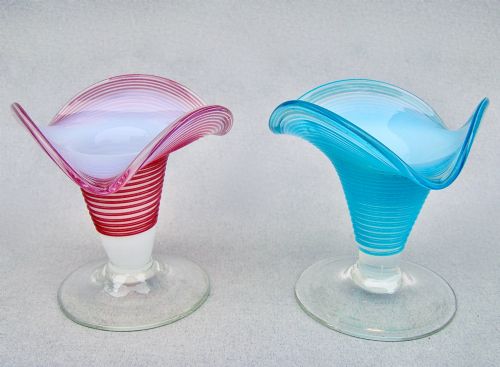
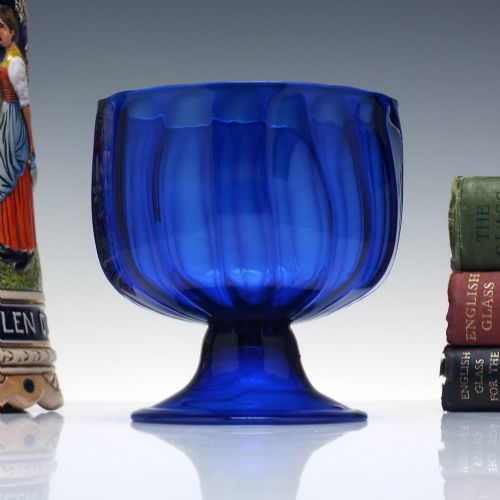
Victorian blue glass comprises deeply coloured vessels and table wares valued for their rich cobalt tones and sterling silver mounts.
Victorian Blue Glass
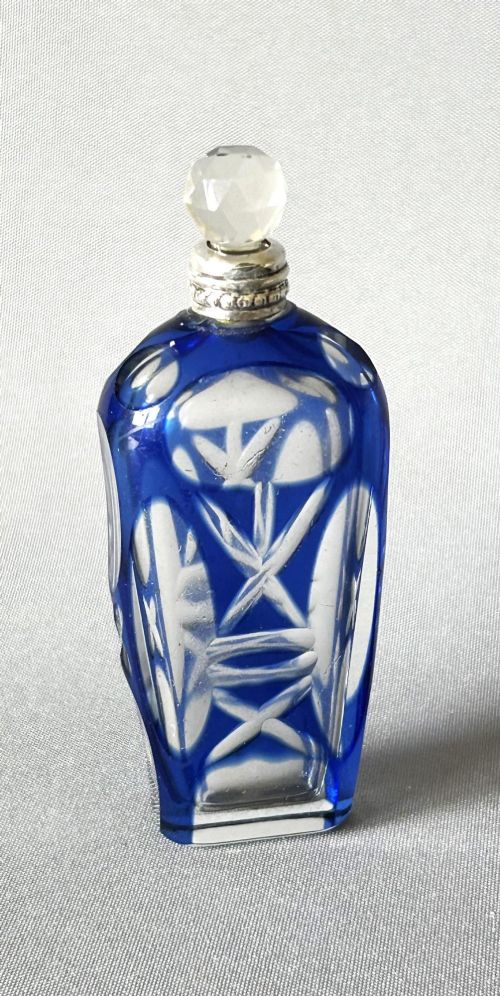
Many examples incorporate contrasting materials, pairing the deep blue glass with sterling silver mountings, brass frames, or enamel decoration. Pieces originate from British makers, including Nailsea and Bristol workshops, as well as continental centres such as Bohemia and France.
How they were made
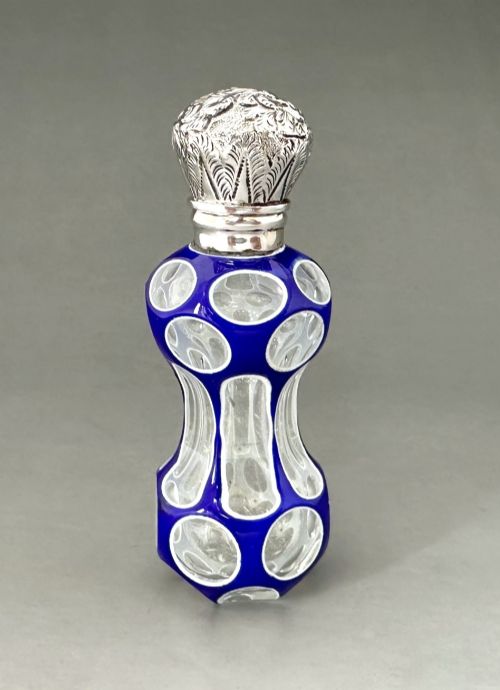
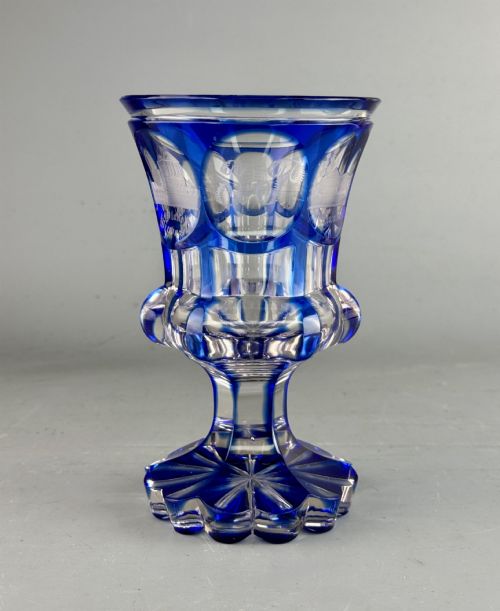
The distinct colour of these objects is achieved through the addition of cobalt oxide to the molten glass batch during production. Artisans shaped the vessels using traditional blowing and moulding techniques before applying hand-cut facets, enamel painting, or overlay methods where clear glass is cased over blue layers.
Metalwork components such as silver lids, hinged collars, and pierced baskets were frequently fashioned by silversmiths to secure or display the glass elements. Decorative touches like applied white enamel figures, gilt bands, or threaded glass canes complete the manufacture.
Victorian Blue Glass Retail Price Guide 2026
Typical asking prices for victorian blue glass among the pieces listed under this phrase on Sellingantiques today, from the lower quarter to the upper quarter. They describe what is for sale here now, not the wider market.
The recorded object forms range from scent bottles and decanters to table salts, oil lamps, and jewellery caskets.
What varies in quality
The distinction between standard utility items and exceptional pieces rests upon the depth of the metalwork and the precision of the glass finishing. Superior examples feature heavy-gauge sterling silver mounts by recognised makers, intricate hand-engraving, or complex casing and cutting that reveals sharp light refractions.
Simpler production wares display thinner glass, plain brass fittings, or minimal decoration. The crispness of the mould seams, the saturation of the cobalt hue, and the integration between metal mounts and glass bodies determine the overall standing of an individual piece.
Nathan and Hayes·Sampson Mordan·Griffith and Co·Davidson·Webb
The Victorian Blue Glass Glossary
- Bristol blue
- A deep cobalt-tinted glass historically associated with production in the Bristol region during the eighteenth and nineteenth centuries. The rich hue became a standard descriptor for dark blue nineteenth-century glassware.
- Nailsea glass
- Glassware characterised by looped, pulled, or splashed white or coloured cane decorations embedded in the body. The style originates from the Nailsea glassworks near Bristol.
- Vinaigrette
- A small ornamental box featuring a perforated internal grille, designed to hold a sponge soaked in aromatic vinegar. These scent containers were frequently mounted in silver and paired with coloured glass bodies.
- Overlay glass
- A technique involving two or more distinct layers of glass, where an outer coloured layer is partially cut away to expose the contrasting colour beneath. This method creates pronounced relief patterns on decanters and scent bottles.
- Mary Gregory
- Glassware decorated with white enamel silhouettes depicting children in pastoral settings. The technique gained popularity during the late nineteenth century on blue and cranberry glass grounds.
Victorian Blue Glass: Frequently Asked Questions
Were these glass items used daily?
Many items served practical functions in nineteenth-century households, including decanters for wine, tableware for dining, and chemist bottles for apothecary storage. Scent bottles and vinaigrettes were carried daily in ladies travelling sets and reticules for personal freshening.
Larger decorative objects and oil lamps remained stationary in drawing rooms and parlours. Table salts and mustard pots saw regular service during formal dining occasions.
How can I tell Bristol blue from later glass?
Examine the base of the vessel for pontil marks left by the punty rod during hand-blowing. Nineteenth-century pieces typically exhibit irregular thickness, tiny air bubbles trapped within the metal, and expected surface wear from handling.
Inspect the colour saturation, as genuine nineteenth-century cobalt glass possesses a deep, dense tone without modern chemical tints. The presence of period hallmarks on attached silver mounts helps confirm the dating.
Can I display these pieces in sunlight?
Direct, prolonged exposure to harsh sunlight can occasionally cause chemical shifts in older glass or degrade delicate enamel and gilt decorations over time. Position your collection away from south-facing windows where thermal shock or fading might occur.
Ambient room lighting highlights the rich cobalt tones effectively without risking material damage. Ensure shelves are stable and lined with protective material to prevent scratching the bases.