



Victorian Biblical Art
These Victorian biblical art pieces capture sacred narratives through fine oil painting and intricate needlework, offering both historical depth and traditional craftsmanship for any interior.
Victorian Biblical Art
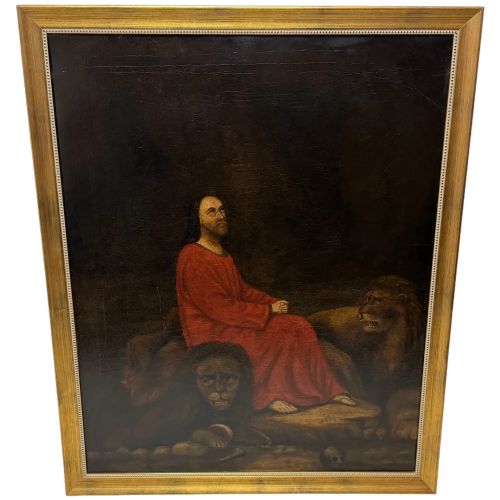
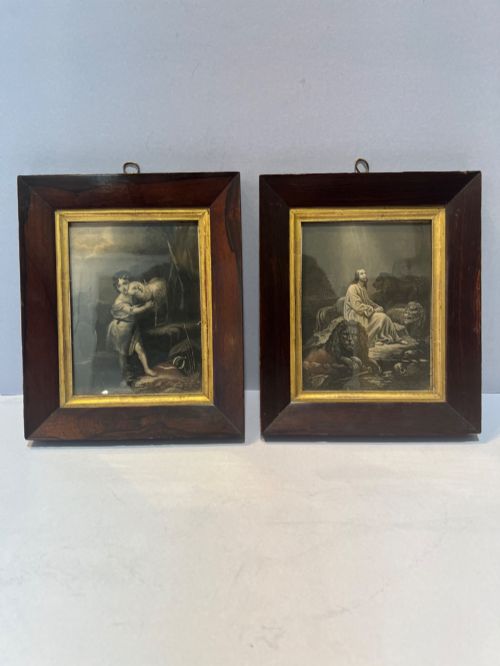
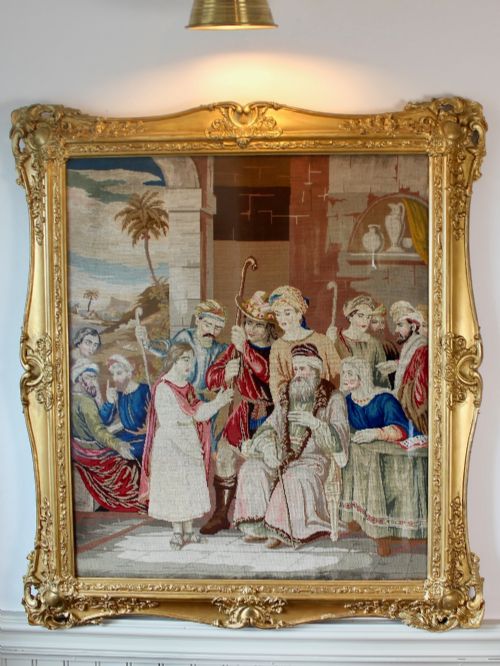
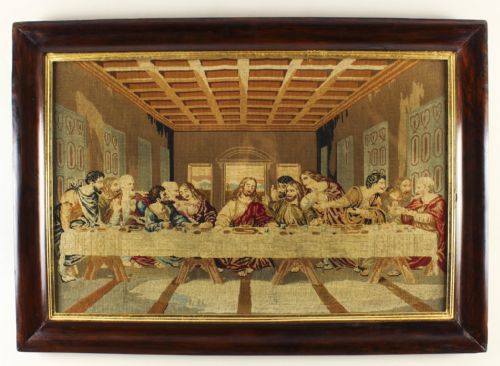
Victorian biblical art encompasses devotional works produced during the nineteenth century, ranging from academic oil paintings on canvas to large framed Berlin woolwork pictures and textile wall hangings. These pieces reflect the deep religious and moral currents of the Victorian era, depicting significant figures and moments such as Daniel in the lions' den, Pharaoh's dream, and the Last Supper.
Buyers browsing this selection most frequently encounter framed textile art and Berlin woolwork panels alongside nineteenth-century engravings and traditional oil paintings. These works often retain their original giltwood framing or wooden surrounds, preserving the domestic devotional display methods of the period.
Materials and construction
Makers utilised oil paint on stretched canvas for fine art representations, employing gold leaf to enhance the religious iconography within giltwood frames. Textile pieces rely on wool worked onto canvas grids, creating dense pictorial tapestries.
Framing techniques of the nineteenth century involved heavy wood structures finished with gilt, designed to support both heavy canvas paintings and delicate woolwork wall hangings.
The listings span the nineteenth century, incorporating Victorian academic art, folk art, and Edwardian painted pine signage alongside traditional oil on canvas.
Judging quality in religious works
Quality in these works rests upon the precision of the draughtsmanship in painted examples and the complexity of the colour shading in textile pieces. Finer woolwork pictures demonstrate intricate stitch control that renders facial expressions and drapery with notable clarity.
The preservation of the original gilt framing and the stability of the canvas or backing fabric further distinguish superior examples, as does the clarity of the printed line in nineteenth-century engravings.
Gustave Doré·Adolphe Pannemaker·Eugene Hindle
The Victorian Biblical Art Glossary
- Berlin woolwork
- A type of counted-thread embroidery popular during the nineteenth century, charted on squared paper. This technique allowed makers to produce richly coloured pictorial scenes of biblical subjects.
- Engraving
- A printmaking process where an image is incised into a metal plate, transferring fine lines to paper under pressure. These prints made complex religious imagery widely accessible during the Victorian period.
- Giltwood
- Wood that has been treated with a thin layer of gold leaf or gold paint. This finish frequently borders nineteenth-century religious paintings and textile panels to impart a sense of reverence.
- Tapestry
- A form of textile art woven on a loom or executed as needlepoint. These wall hangings often depict grand narrative scenes from scripture for domestic display.
Victorian Biblical Art: Frequently Asked Questions
How were these religious pieces displayed?
Victorian households typically hung these framed oil paintings and textile works in primary reception rooms or private studies as focal points for daily contemplation. Their substantial gilt frames were designed to complement period interior decoration.
Larger woolwork pictures and tapestries also served to insulate domestic spaces while simultaneously declaring the piety and cultural literacy of the homeowner.
What subjects are most common?
Common narratives include Old Testament episodes like Daniel in the lions' den and Pharaoh's dream, alongside New Testament scenes such as the Last Supper. Depictions of saints holding traditional attributes also appear frequently in needlepoint.
These subjects reflect the Victorian appetite for moral instruction and dramatic storytelling rendered through traditional fine art and domestic craft.
How should I care for textile pieces?
Textile art and woolwork require protection from direct sunlight to prevent the fading of natural dyes within the wool and canvas. Maintaining a stable environment away from excess moisture preserves the integrity of the fibres.
Glazing with appropriate conservation glass can further protect delicate needlework and paper engravings from airborne dust and atmospheric pollutants.
How do I distinguish oil paintings from prints?
Oil paintings display visible brushstrokes and texture upon the canvas surface, reflecting the direct hand of the artist. Engravings and printed works present a flat surface under magnification, revealing regular patterns of ink within the paper fibres.
Examining the work under raking light often clarifies whether the surface holds the raised impasto of paint or the smooth characteristics of a printed edition.