


Victorian Bedroom Standing Mirror
A victorian bedroom standing mirror brings practical dressing height and movement to a room, usually taking the form of a swiveling cheval frame.
Victorian Bedroom Standing Mirror
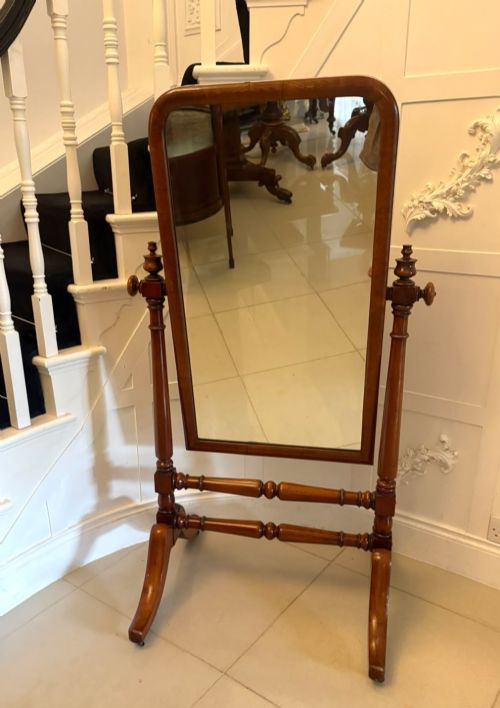
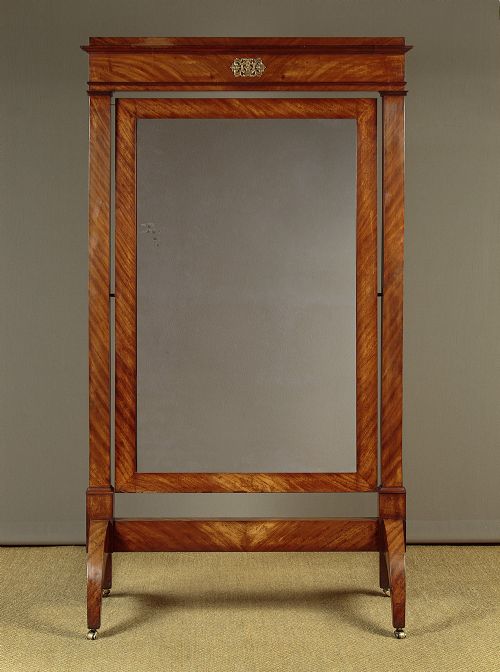
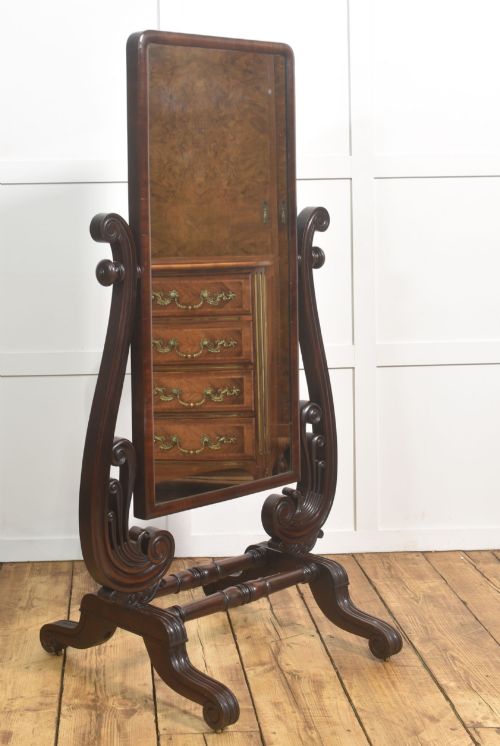
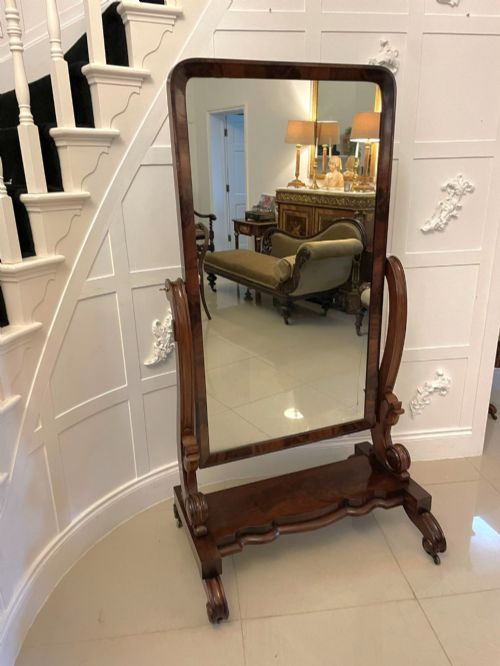
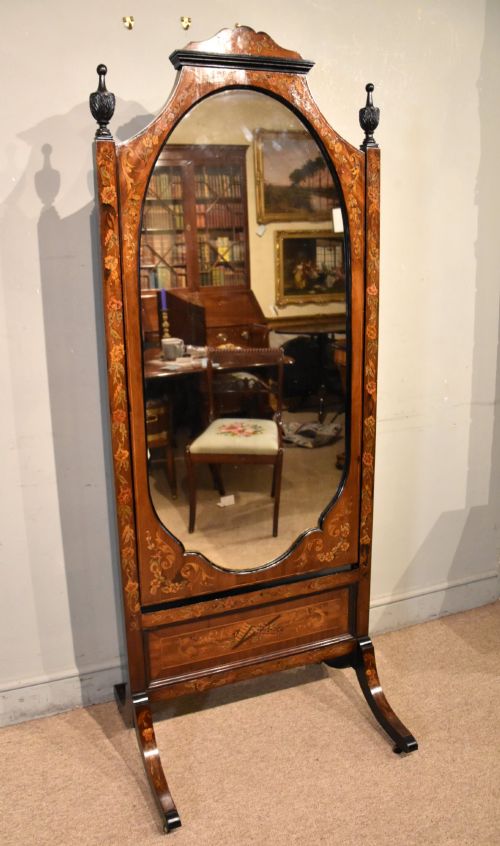
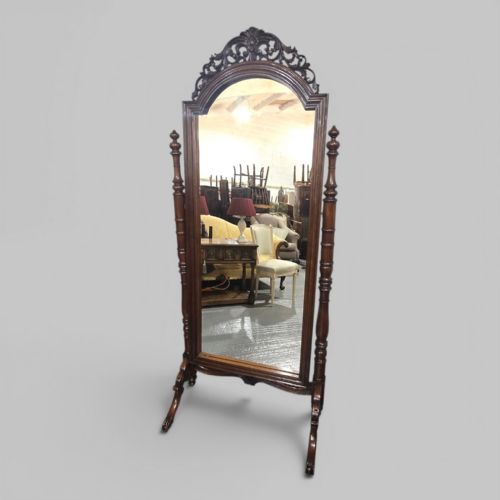
A victorian bedroom standing mirror is typically encountered as a freestanding cheval mirror designed for full-length viewing in a bedroom or dressing space. These pieces span the nineteenth century, including specific iterations from the Victorian and Edwardian eras alongside William IV and Regency styles.
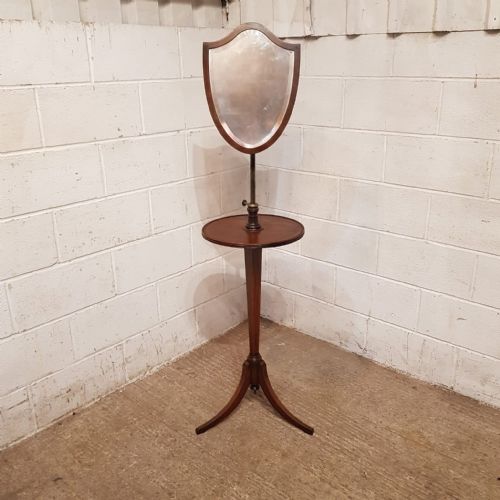
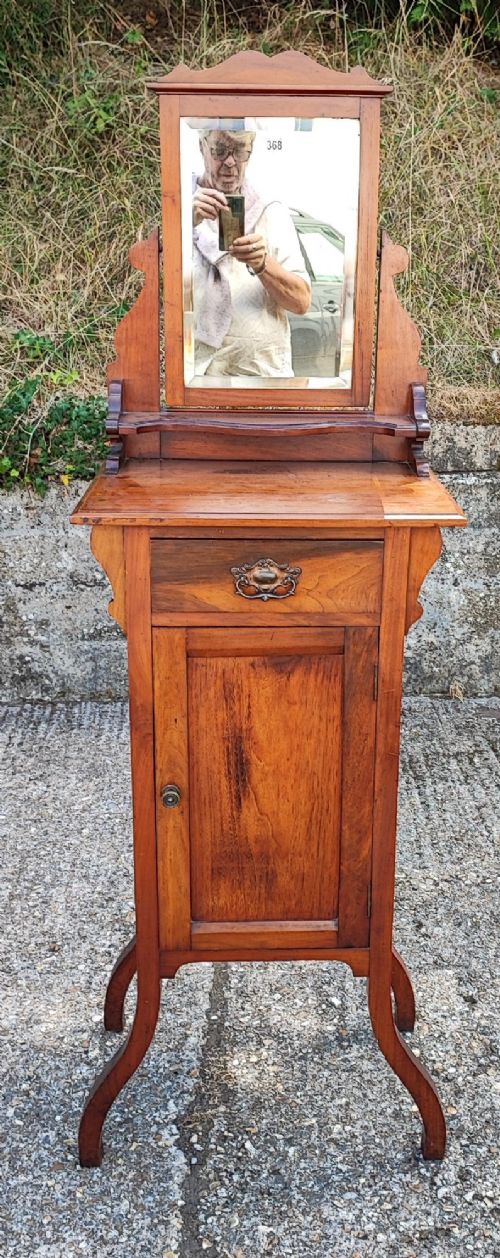
The primary forms found here are tall cheval mirrors that tilt on floor-standing side frames, alongside smaller dressing table mirrors, shaving stands, and occasional wash stands incorporating glass. Timber frames dominate the selection, providing substantial weight and stability for the pivoting glass plate.
Materials and construction
Makers relied heavily on solid timber and veneered surfaces, with mahogany forming the majority of the frames alongside oak, ebonised wood, and satinbirch. Marquetry inlay, gilt lacquer, and carved decorative details frequently adorn the structural uprights and feet.
The mirror glass is held within an adjustable frame that pivots on brass pins or screws, allowing the user to alter the angle of reflection. Heavier floor-standing examples utilise sturdy side supports connected by floor stretchers or cross-bars to balance the weight of the glass.
Safe cabinets occasionally share the floor with these dressing mirrors, proving that Victorians liked to keep their jewellery close at hand.
Assessing quality and craftsmanship
Quality shows in the selection of the timber grain, particularly in flame mahogany panels or precise marquetry inlay, which elevates standard utilitarian furniture into decorative furnishing. Heavier, larger frames demonstrate superior stability and joinery compared to lighter, plain alternatives.
The refinement of the turning on the upright supports and the finish of the brass pivoting hardware indicate the care taken during manufacture. Original mirror glass with clear beveling and minimal silver degradation sits at the upper end of the range.
Harrods
The Victorian Bedroom Standing Mirror Glossary
- Cheval mirror
- A large freestanding mirror suspended on a frame that allows it to swing or tilt vertically. This form became popular in bedrooms during the nineteenth century for full-length attire checks.
- Dressing glass
- A smaller mirror designed to sit upon a dressing table or chest of drawers rather than stand on the floor. These often feature small drawers incorporated into the base plinth.
- Flame mahogany
- A decorative veneer cut from timber where the branches join the main trunk, producing a distinctive rippled flame pattern. Cabinet makers used this on prominent surfaces of high-status bedroom pieces.
- Ebonised wood
- Timber treated with a chemical stain or paint finish to imitate expensive ebony. This dark, formal surface treatment appeared frequently on nineteenth-century decorative items.
- Shaving stand
- A specialised piece of bedroom furniture combining an adjustable mirror with a small table surface and storage compartments. Gentlemen utilised these for morning grooming routines.
Victorian Bedroom Standing Mirror: Frequently Asked Questions
How do I choose the right height?
Consider the proportions of your bedroom and whether you require a full-length floor standing cheval mirror or a smaller dressing table version. Taller frames demand adequate floor space and clearance for the swinging plate.
Measure the intended wall space between furniture pieces to ensure the frame's footprint does not crowd the room. Floor-standing variants naturally dominate a corner or wall better than table-top alternatives.
How do the pivoting mechanisms work?
Most standing mirrors use brass screw pins or threaded bolts inserted through the side supports into the mirror frame. Tightening these fixings holds the glass at your preferred angle.
Over decades of use, these brass fittings can loosen or require careful adjustment to prevent the glass from slipping forward. Original hardware remains a positive indicator of an untouched period piece.
Where should I place a standing mirror?
Position the piece near a window or light source to maximise the reflection and brighten darker corners of a bedroom. Ensure the floor surface is level so the heavy timber frame rests evenly on all feet.
Avoid placing the wood directly against damp walls or in areas subject to extreme temperature swings, which can affect the timber and the silvering behind the glass.
Are these mirrors suitable for daily use?
These nineteenth-century pieces were built for active daily dressing and grooming, making them robust enough for modern bedroom environments. The heavy timber construction provides durable structural integrity.
Treat the pivoting joints and original mirror glass with care during daily positioning to preserve the antique materials. Regular dusting keeps the mahogany or oak frames in sound condition.