




Victorian Art Pottery Jug
A victorian art pottery jug brings tactile heft and experimental surface decoration to a room, drawing the eye with rich glazes and incised patterns.
Victorian Art Pottery Jug
A victorian art pottery jug represents the shift from industrial factory production to expressive studio and studio-influenced pottery during the nineteenth century. These vessels combine functional forms with the artistic ambitions of the period, ranging from domestic pitchers to decorative ewers.
Most examples found here hail from the late nineteenth century, reflecting periods such as the eighteen-eighties and eighteen-nineties. Forms include classic jugs, pitchers, and larger ewers designed as display pieces rather than simple kitchenware.
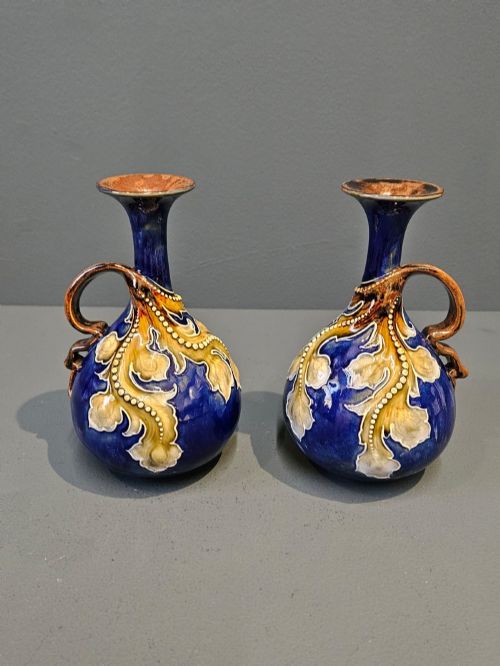
Stylistically, these pieces draw upon Victorian Arts and Crafts ideals and Art Nouveau curves, sometimes touching upon folk art traditions. Stoneware and earthenware bodies dominate the selection, often carrying elaborate surface treatments.
Materials and construction
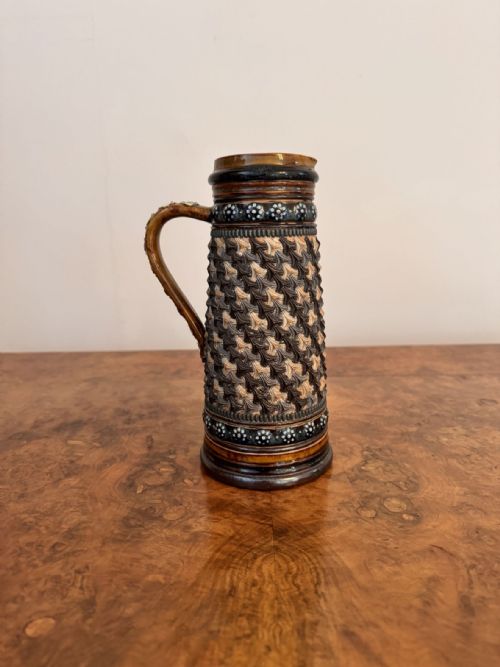
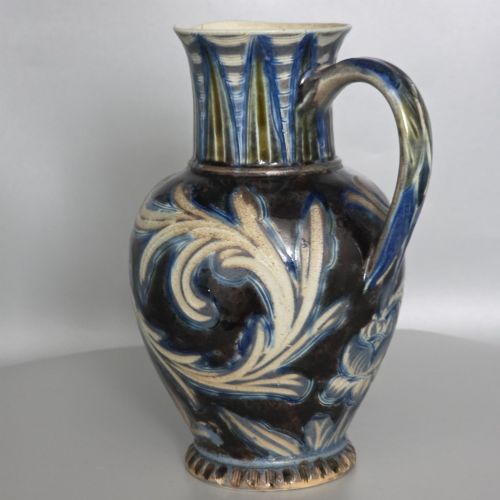
Potters shaped these vessels using stoneware, earthenware, and clay, employing throwing and moulding techniques to achieve robust forms. Salt glaze finishes and glossy applied glazes seal the porous bodies while adding texture and sheen.
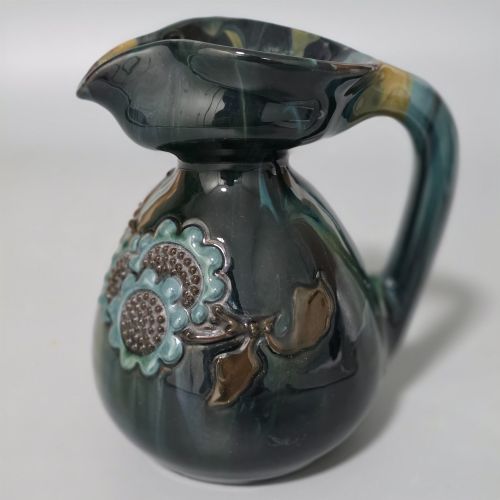
Decoration relied heavily on incised patterns, applied slips, and sculptural motifs worked directly into the damp clay before firing. Studios also utilised specialised slip glazes, such as the distinctive metallic finishes seen on Elton ware.
Victorian Art Pottery Jug Retail Price Guide 2026
Typical asking prices for victorian art pottery jug among the pieces listed under this phrase on Sellingantiques today, from the lower quarter to the upper quarter. They describe what is for sale here now, not the wider market.
Some Victorian pottery jugs feature sporting scenes and leaping cranes, proving that nineteenth-century artisans appreciated a touch of action with their tea.
Evaluating quality and execution
Quality reveals itself in the crispness of the incised ornament and the control shown in the glaze firing. Stronger pieces display deliberate, assured hand-workmanship rather than mechanical repetition.
The reputation of the maker or studio heavily influences standing, with named artists and established potteries demonstrating superior technical execution in their thrown forms and chemical glazes.
Doulton Lambeth·Sir Edmund Elton·Emma Shute·Minton·Staffordshire Pottery
The Victorian Art Pottery Jug Glossary
- Stoneware
- A robust, vitrified ceramic fired at high temperatures until non-porous. It accepts salt glazes and deep incisions particularly well.
- Earthenware
- A porous pottery body fired at lower temperatures which requires a protective glaze to hold liquids. It forms the base for much decorative nineteenth-century colourful ware.
- Ewer
- A large jug with a flared spout and a shaped handle, traditionally used for washing or formal service. Victorian makers often treated them purely as decorative objects.
- Slip
- Liquid clay applied to the surface of a pot for decoration or to change the colour before firing. It can be trailed, painted, or incised through.
- Art Nouveau
- A design style of the late nineteenth century characterised by flowing, organic lines and floral motifs. It heavily influenced the curvature and patterning of later Victorian jugs.
Victorian Art Pottery Jug: Frequently Asked Questions
How do I identify a Victorian art pottery jug?
Look for characteristic nineteenth-century stylistic cues such as Arts and Crafts incised patterns or Art Nouveau vegetal forms. Base markings, studio stamps, and the weight of the stoneware or earthenware body also help confirm the period.
Examine the glaze texture and handle construction, as Victorian makers used distinct throwing techniques and chemical finishes that differ from later twentieth-century studio pottery.
Were these jugs used for serving drinks?
While many pieces originated as functional water jugs, pitchers, or tea vessels, numerous examples served decorative roles as ewers or display items. Stoneware jugs with salt glazes were certainly sturdy enough for daily service.
More elaborate studio art pieces with delicate metallic glazes or complex handles were generally intended for visual appreciation on mantelpieces or sideboards rather than heavy dining table use.
What is the difference between stoneware and earthenware jugs?
Stoneware is fired at a much higher temperature until the clay vitrifies and becomes naturally impermeable to water, frequently finished with a distinctive salt glaze. Earthenware remains more porous and requires a complete glass-like glaze coating to hold liquids.
In practical terms, stoneware jugs tend to feel heavier, denser, and more resilient, whereas earthenware allows for brighter, warmer surface colours under the glaze.
How should I display and care for these pieces?
Keep ceramic and stoneware jugs out of direct sunlight to protect surface enamels and glazes from fading over time. Place them on stable, secure surfaces away from high-traffic areas where they might be knocked.
Clean them gently with a dry or barely damp soft cloth, avoiding harsh modern chemical cleaners that could harm historic glazes or exposed earthenware bodies.