
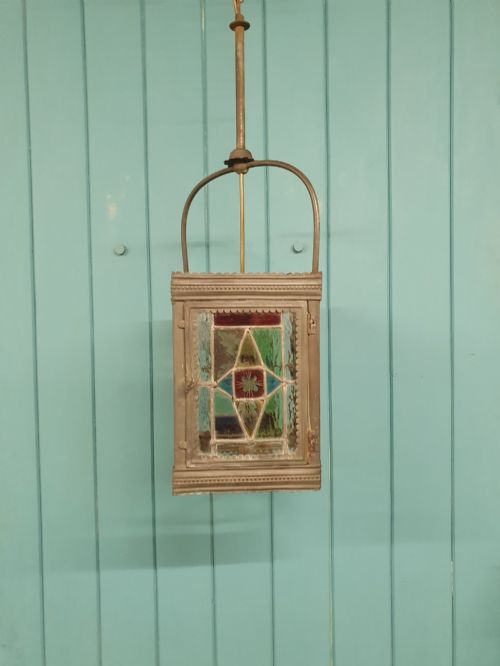


Victorian Art Glass Light
A victorian art glass light brings distinctive colour and period form to a room, combining rich glass shades with brass, bronze or copper fittings.
Victorian Art Glass Light
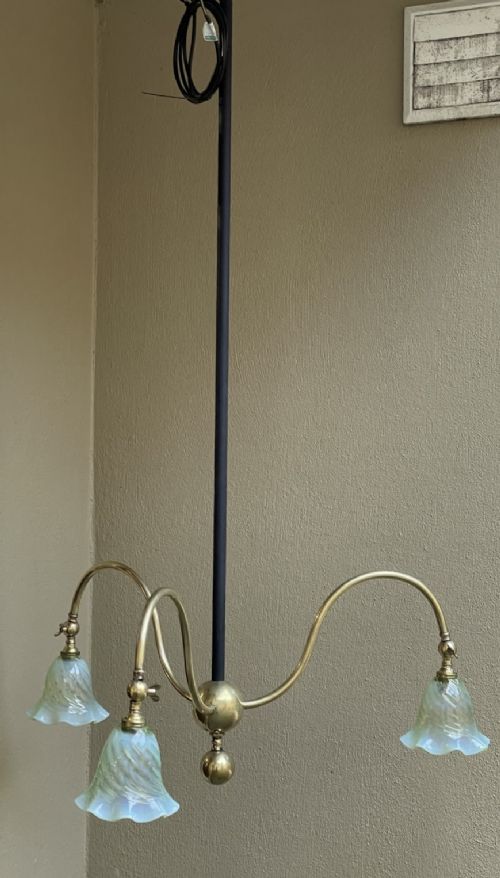
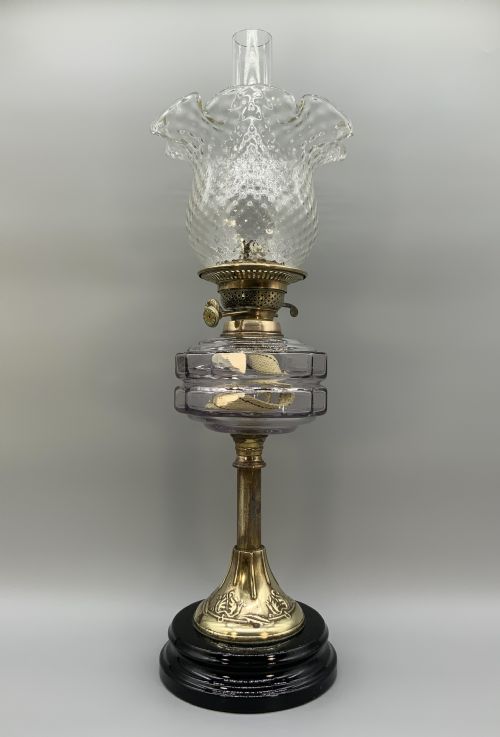
A victorian art glass light encompasses a varied selection of hanging fixtures, table lamps and wall lights originating primarily from the nineteenth century and the early decades of the twentieth century. Buyers encounter oil lamps, ceiling lights, pendants and hall lanterns alongside stained glass windows and panels.
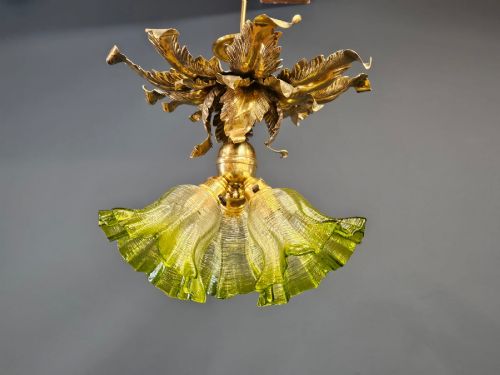
The aesthetic bridges several movements, featuring prominently in Victorian, Art Nouveau, Arts and Crafts and Edwardian forms. Many examples incorporate hand-blown or etched glass shades paired with metal frames in brass, bronze, copper and lead.
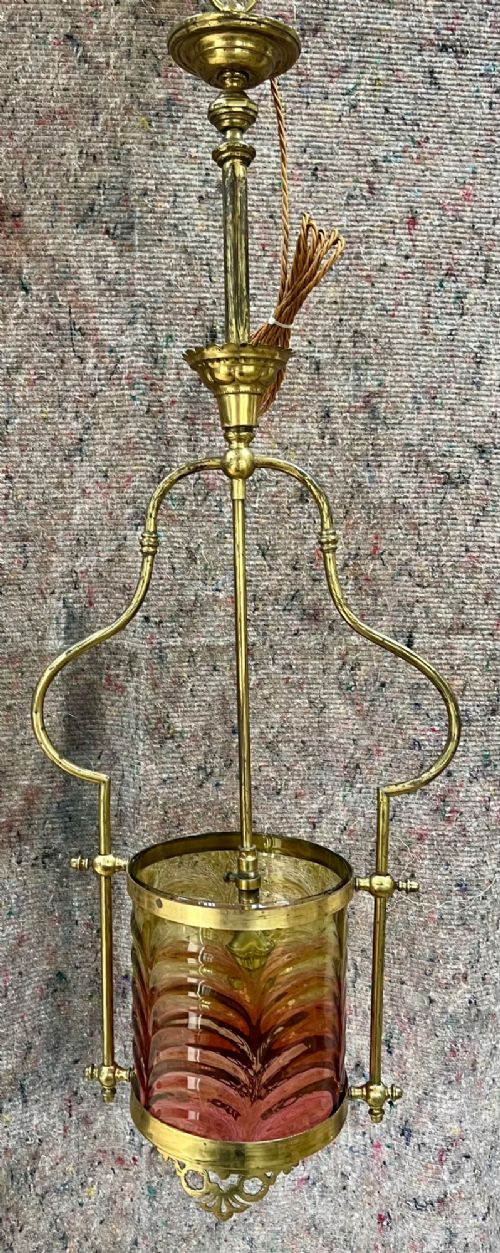
Table lamps and oil lamps often retain decorative painted bowls or twin-burning configurations, while ceiling fittings utilise opalescent, cranberry or amber glass. Windows and panels introduce hand-painted countryside, winter and bird scenes set within leaded frameworks.
How they were made
Glassmakers utilised techniques such as hand-blowing, etching and enamelling to create shades and windows with deep colour and visual texture. Opalescent, blue spiral and amber glass catch the light differently depending on these foundational methods.
Metalworkers constructed structural components from brass, bronze, copper and lead, soldering individual pieces of stained glass together for panels and hanging hall lanterns. Ceramic and faience elements occasionally supplemented the metal and glass bodies.
Several windows feature painted birds on flight alongside winter scenes, bringing the outdoors indoors through leaded glass.
What varies in quality
The artistry of the hand-painted details on glass shades and windows establishes the upper tier of pieces, distinguishing standard production from finer individual works. The weight and casting quality of the brass, bronze and copper mounts also indicate the standard of manufacture.
Integrity of the original glass components, whether opalescent shades or leaded panels, dictates desirability. Pieces retaining their original matching fittings and uncompromised blown or etched glass demonstrate superior historical completeness.
The Victorian Art Glass Light Glossary
- Art Nouveau
- A style characterised by flowing, organic lines and floral motifs prevalent around the turn of the twentieth century. It heavily influenced the design of metal mounts and glass shades.
- Opalescent glass
- Glass exhibiting a milky, iridescent appearance that diffuses light softly. It appears frequently in pendants and ceiling lights from the period.
- Leaded glass
- Pieces of glass held together by strips of leadcame to form windows, panels and hall lanterns. This technique allows for complex pictorial designs.
- Cranberry glass
- A rich red-pink transparent glass created by adding gold chloride to the molten batch. It is often paired with brass in wall and ceiling light fittings.
- Faience
- Tin-glazed earthenware used in decorative lamp bases and bodies. It introduces colourful ceramic detail alongside bronze and brass.
Victorian Art Glass Light: Frequently Asked Questions
How do I clean a glass lampshade safely?
Wash the glass gently in lukewarm water with mild soap, avoiding harsh abrasives that might damage etched or enamelled surfaces. Dry the shade thoroughly with a soft cloth before rehanging.
Keep metal mounts dry during cleaning to protect brass, copper and bronze patinas from unnecessary moisture exposure.
Were these lights originally wired for electricity?
Many lighting fixtures started as oil lamps or candle-lit lanterns before being converted to electricity later in their lifespan. Original oil lamp fonts and burners are frequently adapted to house modern electrical wiring.
Ceiling pendants and wall lights designed specifically around the turn of the century often utilised early electrical configurations or gas connections.
How do I date a stained glass panel?
Examine the style of the hand-painted imagery, such as countryside scenes or bird motifs, which often align with Victorian or Art Nouveau aesthetic movements. The construction of the lead cames and the composition of the glass itself provide clues to the period.
Compare the framing materials and subject matter against documented pieces from the nineteenth and early twentieth centuries.
Can I hang a heavy hall lantern from a standard ceiling?
Large hall lanterns and multi-light chandeliers require secure joist fixings due to the substantial weight of their brass, bronze and leaded glass construction. Professional installation ensures the ceiling structure safely supports the combined weight of the metal and glass.
Check the suspension chains and hanging loops for structural soundness before mounting any antique fixture.