

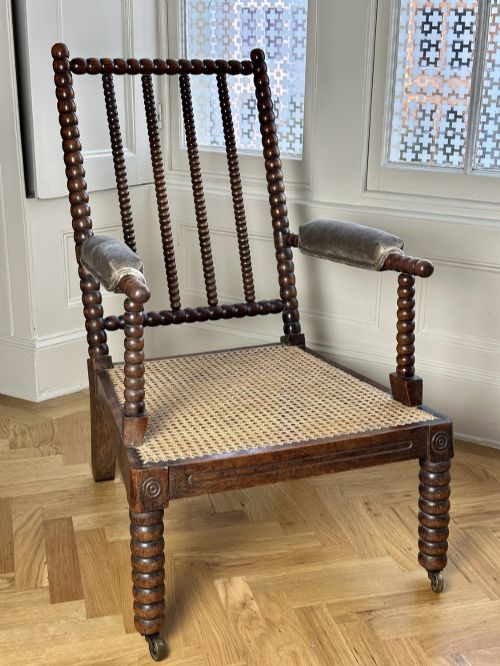
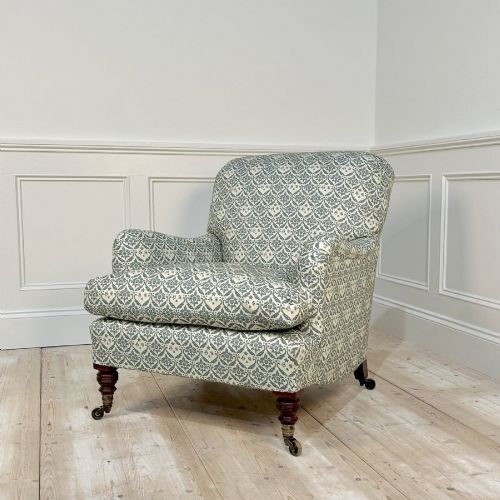
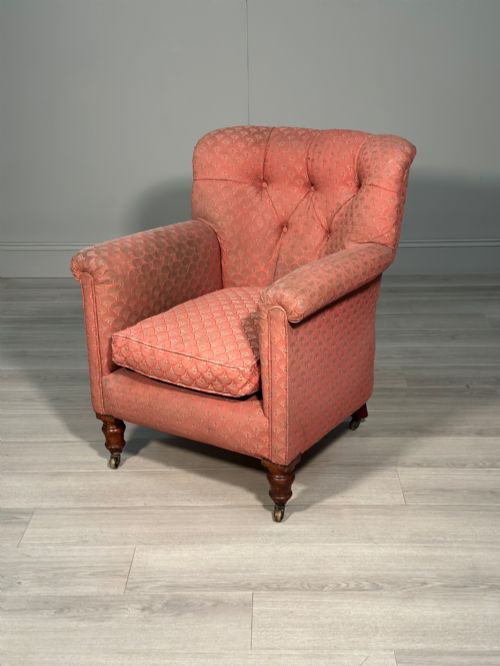
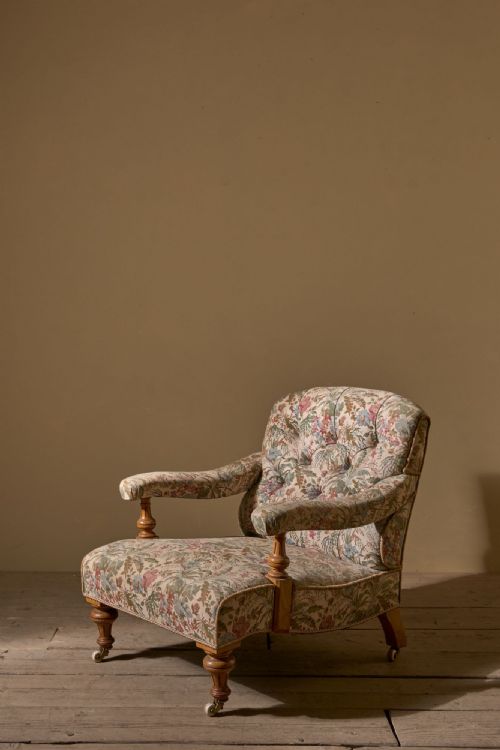
Victorian Arm Chair Castors
Victorian arm chair castors sit beneath nineteenth-century seating, providing mobility and support for heavy upholstered frames.
Victorian Arm Chair Castors
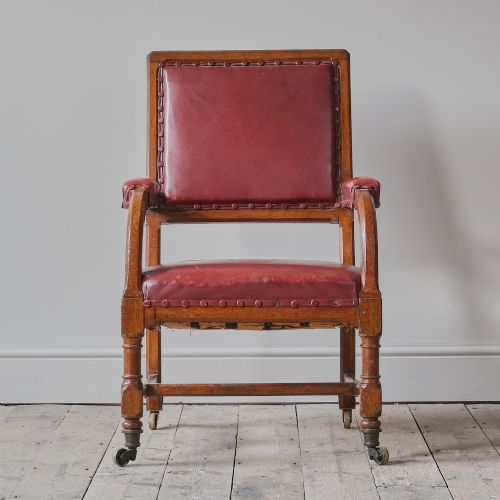
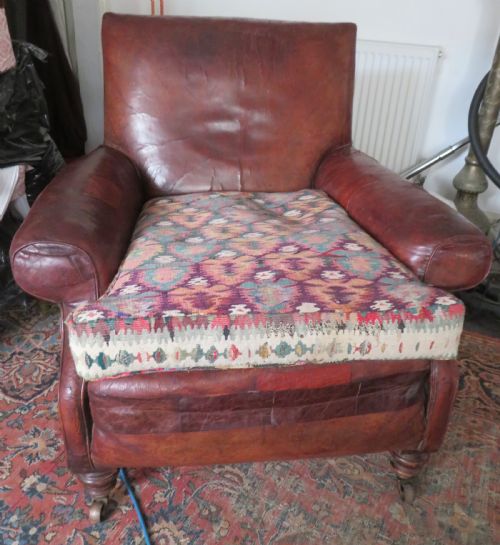
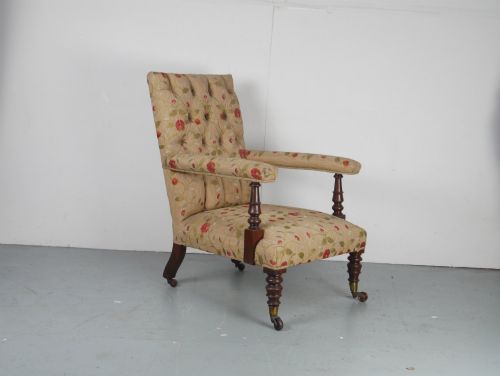
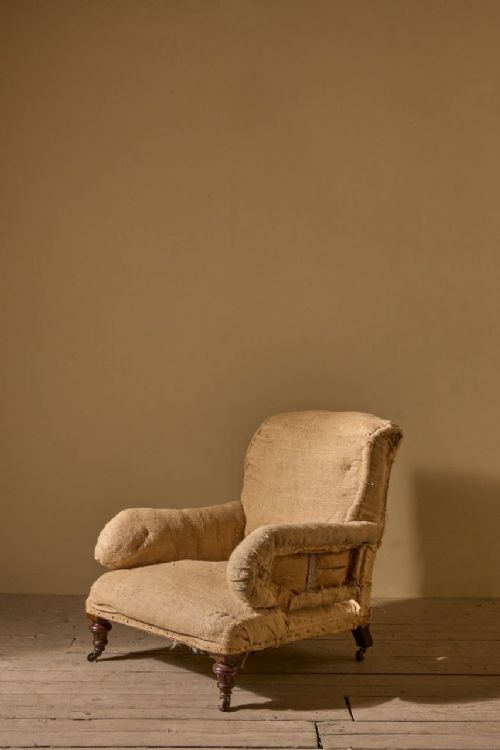
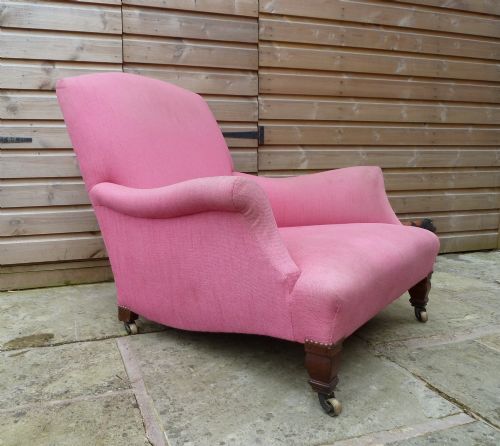
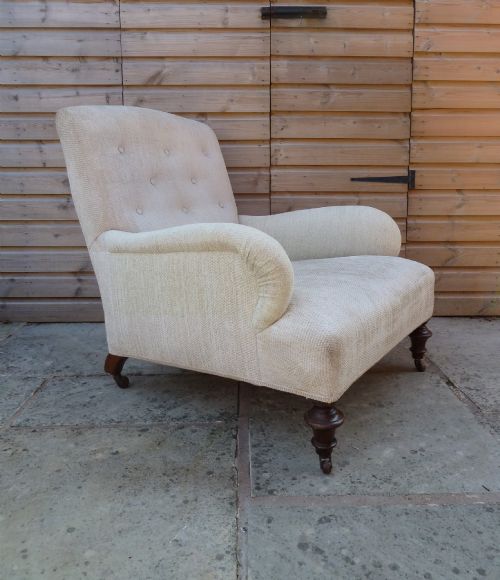
Victorian arm chair castors are hardware components attached to the base of nineteenth-century seating to allow movement across floors. The listings on this page predominantly feature armchairs, library chairs, and deep-seated country house chairs originating from the nineteenth century and the Edwardian period.
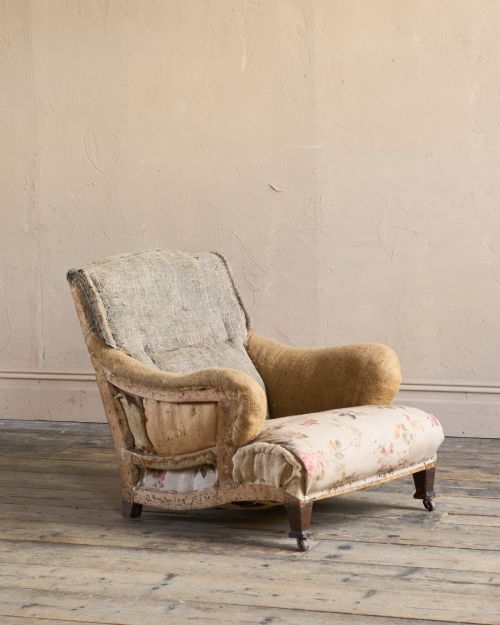
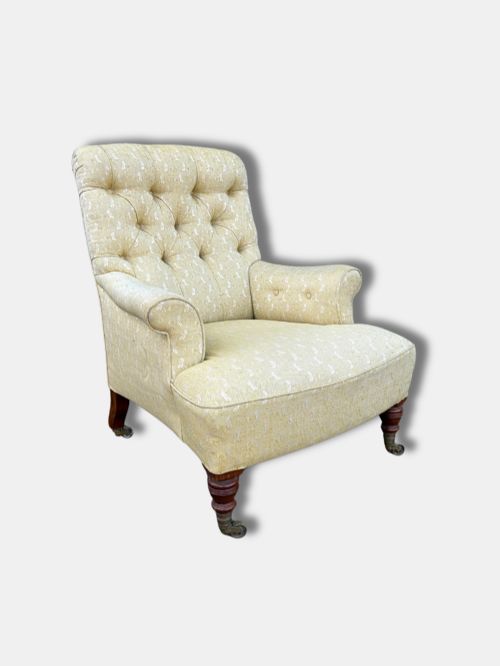
Buyers encounter various styles ranging from plain mahogany and walnut frames to upholstered button back designs and Howard style armchairs. The structural framework often relies on hardwoods like mahogany, walnut, and oak, supporting fabric, velvet, and hessian upholstery.
Makers and workshops of the period, such as John Taylor of Edinburgh and Howard and Sons, created distinct forms that influence the character of these pieces. Pieces span multiple decades within the nineteenth century, including William IV examples and late Victorian productions.
Materials and construction methods
The physical structure of these chairs relies on durable hardwoods including mahogany, walnut, oak, and rosewood for the show frames and internal supports. Craftsmen shaped these timbers to create button back designs, open arm structures, and deep-seated lounging forms.
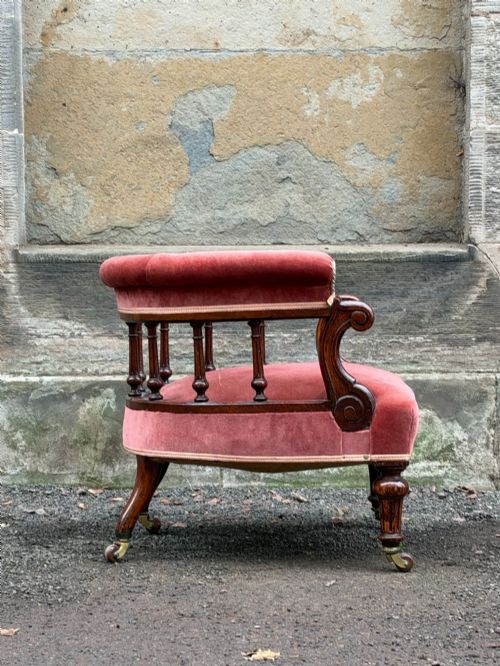
Upholstery techniques involved traditional stuffing materials covered in fabrics such as velvet, hessian, and needlework. Metal hardware components, including brass, were fitted to the legs to create the castors that enabled easy repositioning of heavy seating.
Victorian Arm Chair Castors Retail Price Guide 2026
Typical asking prices for victorian arm chair castors among the pieces listed under this phrase on Sellingantiques today, from the lower quarter to the upper quarter. They describe what is for sale here now, not the wider market.
Listings feature nineteenth-century and Edwardian seating built from mahogany, walnut, oak, and rosewood, incorporating brass hardware and various fabric coverings.
Distinctions in craftsmanship and design
The caliber of a piece often depends on the refinement of the timber frame and the sophistication of the upholstery work. Items produced by notable makers display superior joinery and more balanced proportions in styles like the Howard armchair or the Victorian Rococo Revival.
The integrity of the original show frame, whether in walnut, mahogany, or oak, dictates the longevity and structural stability of the seating. Finer examples retain their original castors and integrated decorative elements without compromising the historical fabric of the chair.
John Taylor of Edinburgh·Howard and Sons
The Victorian Arm Chair Castors Glossary
- Castor
- A small wheel on a swivel attached to the bottom of a leg to allow smooth rolling across floors. These fittings are commonly made of brass in nineteenth-century designs.
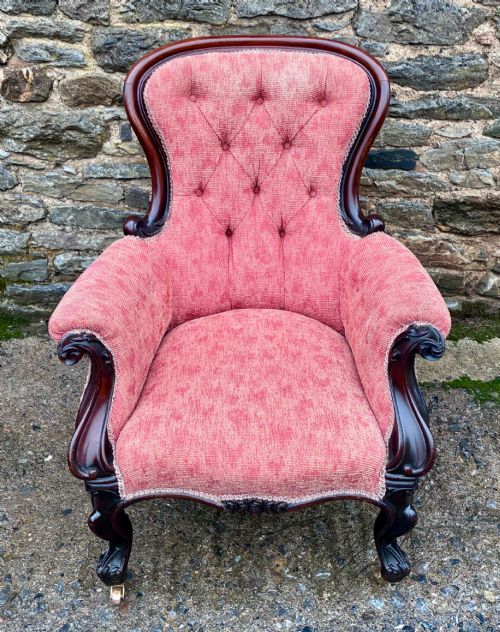
- Button back
- An upholstery style where depressions are formed in the padding by pulling tightly secured buttons through the fabric. This technique creates a distinct geometric pattern on the backrest.
- Show frame
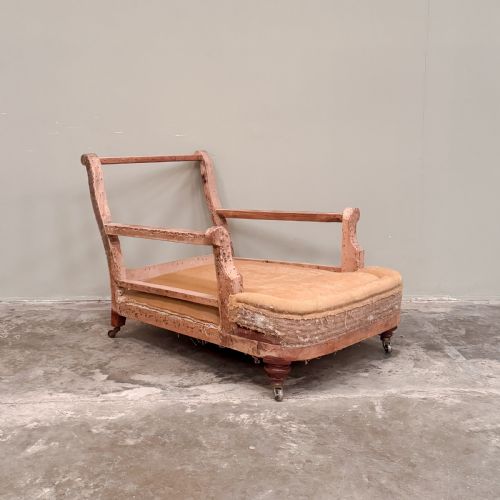
- The exposed wooden structural skeleton of an upholstered chair that remains visible around the back and arms. Mahogany and walnut are frequent choices for this visible woodwork.
- Library chair
- A heavy, substantial armchair designed for reading rooms and studies, often featuring deep seating and sturdy wooden frames. These pieces frequently incorporate sturdy castors for movement.
- Rococo Revival
- A nineteenth-century design style characterised by asymmetrical flowing curves, naturalistic ornamentation, and elaborate carved woodwork. It heavily influenced Victorian parlour seating.
Victorian Arm Chair Castors: Frequently Asked Questions
What defines a Victorian armchair?
Victorian armchairs are nineteenth-century seating options characterised by robust wooden frames made of mahogany, walnut, or oak. They frequently feature upholstered backrests, deep seats, and decorative elements tied to specific revival styles.
Many incorporate functional hardware such as brass castors on the feet to assist with movement across heavy carpets. The forms range from button back bedroom chairs to large library and country house seating.
How do I identify Howard style chairs?
Howard style armchairs are recognised by their deep, comfortable proportions, low profiles, and rolled arms. They often feature low wooden legs fitted with brass castors.
These chairs gained prominence for their emphasis on relaxation and high-quality upholstery. Makers like Howard and Sons set a standard for this specific form of domestic seating.
Were castors standard on nineteenth century chairs?
Castors were commonly fitted to heavier nineteenth-century armchairs and library chairs to make moving them across heavy floor coverings easier. They were typically secured directly to the base of the wooden legs.
The presence of original brass or wooden castors adds to the historical completeness of the piece. Their design often matches the period and style of the chair frame.
What woods were used for chair frames?
Nineteenth-century chair makers primarily utilised hardwoods such as mahogany, walnut, oak, and rosewood for structural frames. These timbers provided the necessary strength to support deep upholstery and heavy daily use.
Some frames were left exposed as show wood, while others were entirely covered in fabric, velvet, or hessian. The choice of timber often reflects the manufacturing period and the intended setting for the furniture.