



Tufted Upholstery Armchair
A tufted upholstery armchair offers deep buttoned comfort and historic character, making it a focal point in any traditional or period room.
Tufted Upholstery Armchair
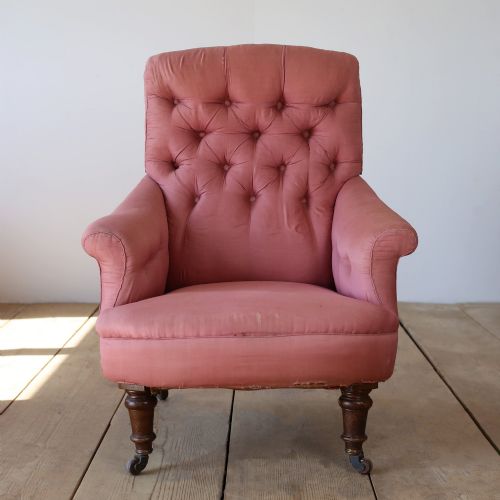
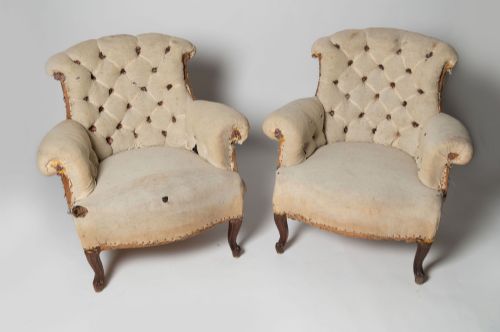
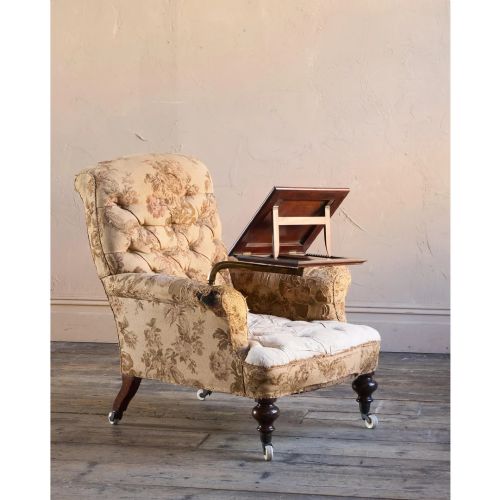
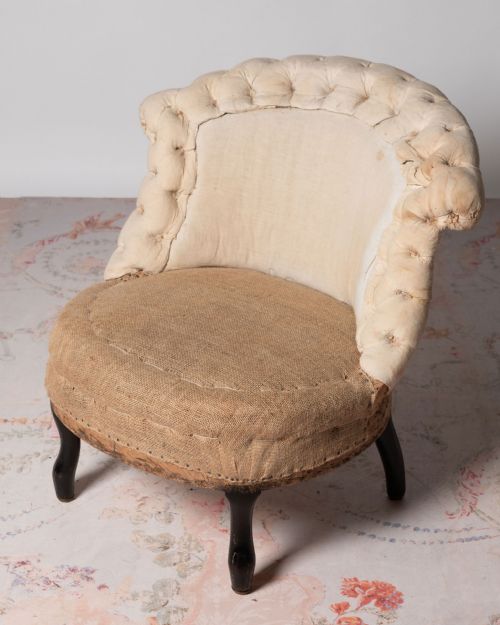
When you search for a tufted upholstery armchair, you are looking at seating defined by its padded back pulled into geometric patterns with buttons. These pieces span the 19th Century, Victorian, Edwardian, and Regency periods, alongside later Victorian Revival designs from the 1930s. You will encounter country house styles, French Napoleon III models, and specialised library chairs equipped with reading stands.
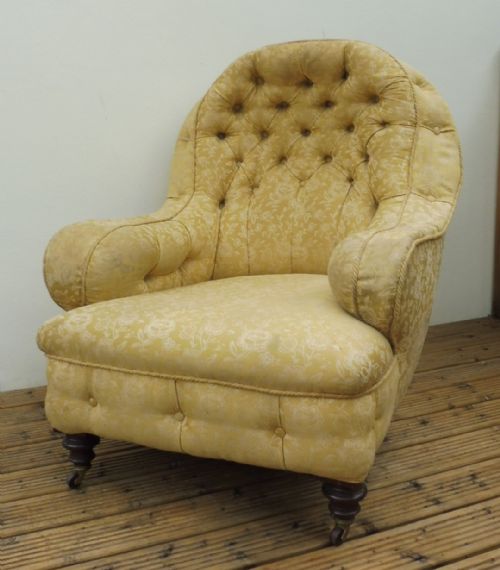
The versions you are most likely to meet on this page include Victorian button back armchairs and Edwardian occasional armchairs. Many examples arrive upholstered in velvet, ticking, linen, or red and pink fabrics. Makers such as Howard and Sons and Cornelius V Smith appear alongside pieces attributed to Gillows.
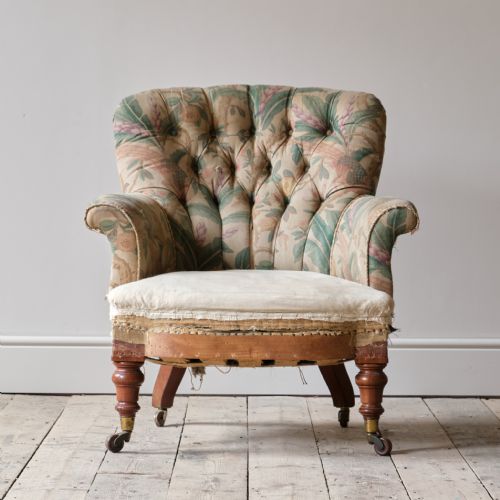
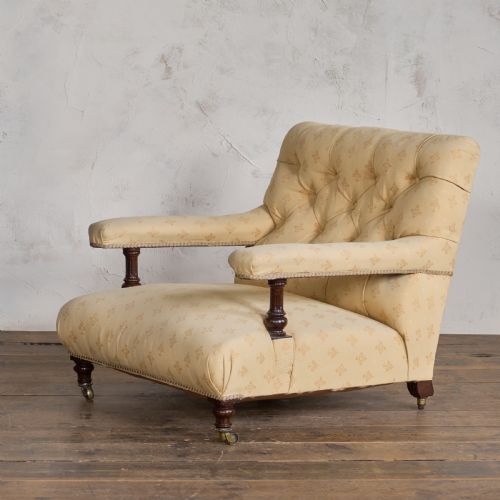
Formations range from open armchairs with exposed wooden frames to library chairs built for extended reading. Frames take various structural shapes, utilising iron or timber builds depending on the era. The selection balances intimate occasional seating with substantial armchairs designed for country houses and libraries.
How they were made
Makers constructed the foundational frames of a tufted upholstery armchair using hardwoods such as mahogany, walnut, beech, and rosewood. These timbers provided the structural integrity required for heavy sprung seating and elaborate carved details. Iron frames also appear in specific Victorian iterations to increase frame rigidity.
Upholstery techniques involved securing deep padding through systematic buttoning across the backrest, creating the characteristic tufted surface. Outer coverings utilised durable textiles including heavy linen, woven ticking, and plush velvet. Details were frequently finished with brass tacks securing the fabric edges to the timber frame.
At least one library chair comes equipped with its own reading stand for the dedicated scholar.
What varies in quality
The standard of a tufted upholstery armchair rests upon the precision of the frame carving and the integrity of the underlying timber. Walnut and rosewood frames with detailed hand-carved elements represent a higher grade of craftsmanship compared to simpler hardwood structures. The attribution to notable makers like Gillows or Howard and Sons elevates the standing of a piece.
Quality also shows in the depth and execution of the buttoning and the choice of covering material, such as thick velvet versus standard linen or ticking. The survival of original elements, including reading stands on library chairs, determines the desirability of the piece. Restored examples vary according to how faithfully the traditional upholstery methods were maintained.
Howard and Sons·Cornelius V Smith·Gillows
The Tufted Upholstery Armchair Glossary
- Button back
- A style of upholstery where buttons are pulled tight through the padding to form a diamond pattern. This method secures the internal stuffing while creating a decorative texture.
- Library chair
- A substantial armchair designed for reading rooms, sometimes featuring integrated components like reading stands. These chairs prioritize ergonomic support for extended periods.
- Open armchair
- A chair design featuring open sides without upholstered arm panels, exposing the structural wooden arm supports. This form lightens the visual weight of the seating.
- Ticking
- A tightly woven, durable cotton or linen fabric traditionally used to contain feather or down fillings. It appears as the primary covering on specific country house armchairs.
Tufted Upholstery Armchair: Frequently Asked Questions
What is a tufted upholstery armchair?
A tufted upholstery armchair is a seating piece featuring padded upholstery pulled tight with buttons across the backrest. These chairs date primarily from the 19th Century through the Edwardian era.
They encompass styles like the French Napoleon III, Victorian library chairs, and country house designs. Each piece combines functional comfort with traditional period aesthetics.
How were these armchairs used?
These armchairs served as comfortable seating in private libraries, drawing rooms, and country house sitting spaces. Library variants often included reading stands for holding books.
Occasional armchairs were placed in bedrooms or parlours for relaxed sitting. Their sturdy construction allowed for daily domestic use over generations.
How do I live with one?
Living with a tufted upholstery armchair involves placing it as a focal point in a traditional or eclectic interior. Pair it with appropriate side tables and adequate reading light.
Protect delicate fabrics like velvet or antique linen from direct sunlight to preserve their colour. Regular gentle brushing keeps the buttoned tufts free from dust accumulation.
How do I tell periods apart?
You can distinguish periods by examining the wood types, frame silhouettes, and upholstery styles. Regency and William IV pieces often display rosewood and classical carved motifs.
Victorian examples frequently feature walnut frames with deep buttoning and iron structural elements. Edwardian occasional chairs tend to show lighter construction and simplified upholstery lines.