



Victorian Anniversary Ring
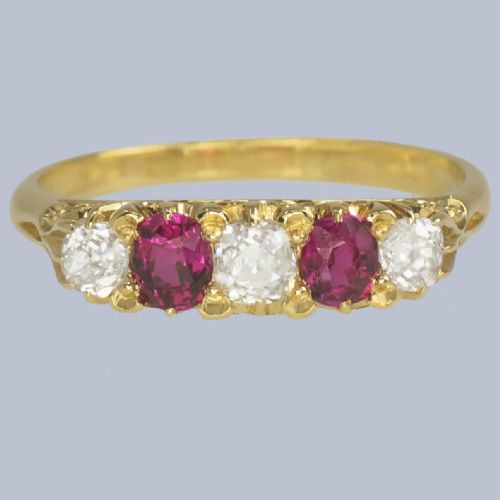
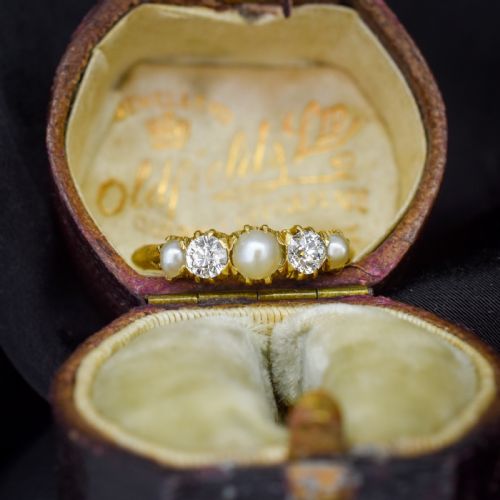
These victorian anniversary ring examples unite rubies, diamonds and pearls in gold bands intended to mark significant milestones.
Victorian Anniversary Ring
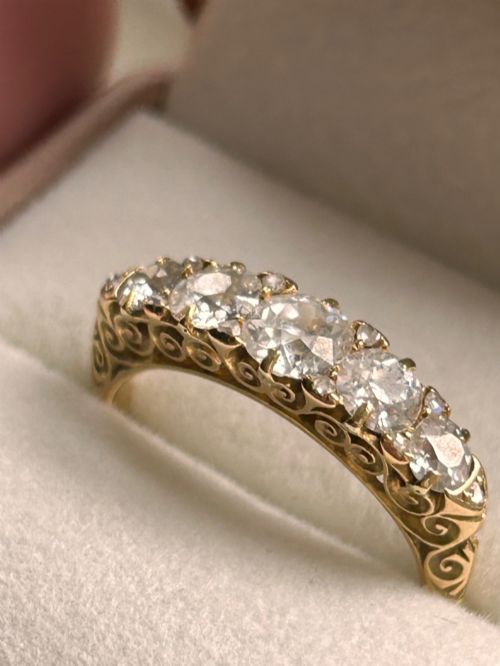
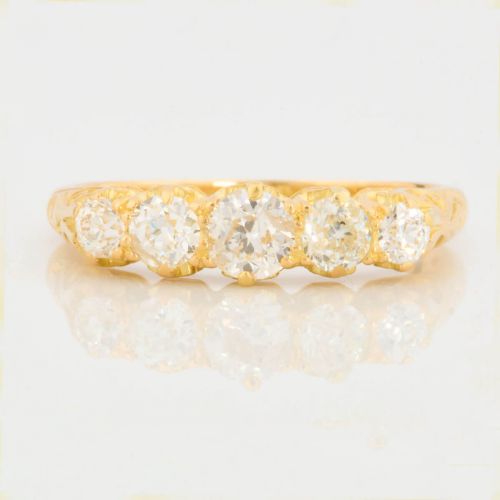
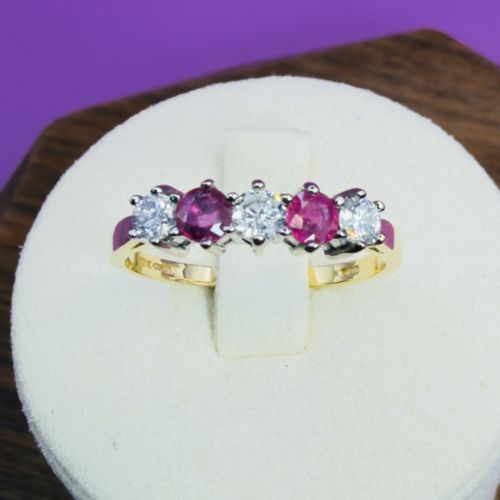
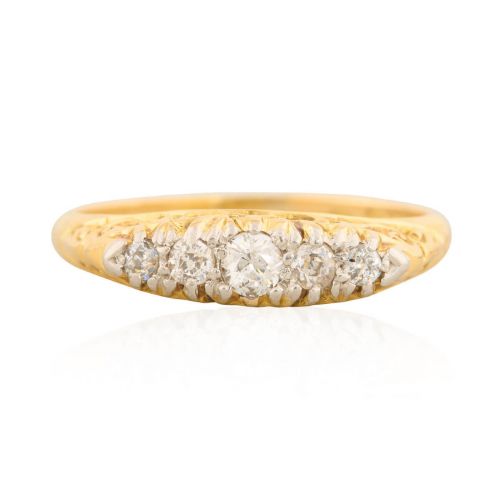
A victorian anniversary ring typically takes the form of a band or a five stone arrangement featuring old cut diamonds, rubies, garnets or pearls. These pieces span the nineteenth century into the Edwardian era and later decades, utilising traditional ring designs meant for daily wear.
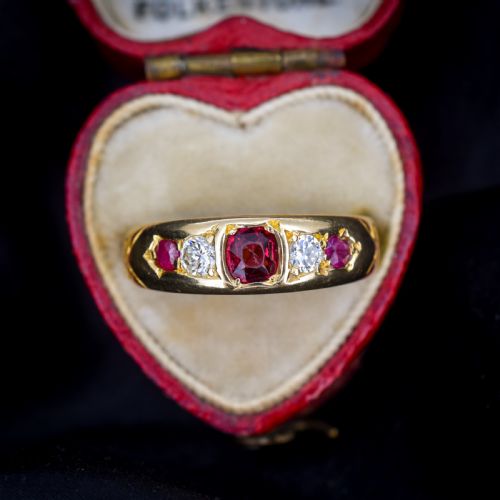
The version most commonly encountered on this page pairs rubies and diamonds or presents a patterned band in gold. Many examples incorporate five stones set across the finger in the manner characteristic of late nineteenth century jewellery.
How they were made
Makers fashioned these rings using 15ct gold, 18ct gold and 18ct yellow gold, shaping them into solid bands or half hoop settings. Stones are secured by claw settings or flush gypsy settings embedded directly into the metal band.
Gems such as old mine cut diamonds, natural rubies, garnets and pearls are selected to fit linear five stone layouts or patterned band surfaces. Hallmarks stamped inside the shank often record the assay office and date of manufacture.
One stubborn nineteenth century ring refuses to reveal its exact age to the human eye, preferring to keep its secrets locked in the gold.
What varies in quality
The calibre of a victorian anniversary ring rests upon the weight and cut of the diamonds, the saturation of the rubies, and the integrity of the gold band. Older stones display hand-cut facets that differ from modern faceting.
Workmanship shows in the crispness of patterned band engravings and the secure placement of each gem within its mounting. Substantial gold weight and clear hallmarks distinguish the more robust examples.
The Victorian Anniversary Ring Glossary
- Old mine cut
- A diamond cut from the nineteenth century featuring a cushion outline, high crown and deep pavilion. This cut predates modern brilliant faceting.
- Gypsy set
- A stone flush-set directly into the metal band so that the surface of the gem sits level with the surrounding gold. This technique provides security for daily wear.
- Half hoop
- A ring setting where stones are arranged in a gentle curve across the top half of the band. It remains a traditional design for multiple stone rings.
- Keeper ring
- A sturdy band originally worn to secure a more valuable ring on the finger. Examples from the archive show hallmarked gold construction.
- Trilogy ring
- A ring featuring three stones set side by side. The arrangement typically signifies past, present and future.
Victorian Anniversary Ring: Frequently Asked Questions
How do I wear a victorian anniversary ring?
These rings suit daily wear either alone on the hand or stacked beside a wedding band. Their low profile settings sit comfortably against other finger bands.
Take care to remove them during heavy manual tasks to protect the older gold settings and softer gems like pearls.
What stones are in these rings?
The listings show combinations of diamonds, rubies, garnets and pearls mounted in gold. Old cut diamonds and natural rubies appear frequently in five stone configurations.
Coloured stones are often alternated with diamonds or paired with pearls within patterned band designs.
How can I date a ring?
Assay hallmarks stamped inside the band provide specific years and assay office locations such as London or Chester. Stylistic clues like gypsy settings or old mine cut diamonds also point to nineteenth century or early twentieth century origins.
Comparing the gold purity marks, such as 15ct or 18ct, helps narrow down the period of manufacture.
Were these used for engagements?
While many pieces serve as anniversary markers, historical hallmarking records show similar band rings functioned equally as engagement or wedding tokens. The five stone and band formats accommodated various personal milestones.
Their durable gold construction made them practical choices for lifelong wear.