


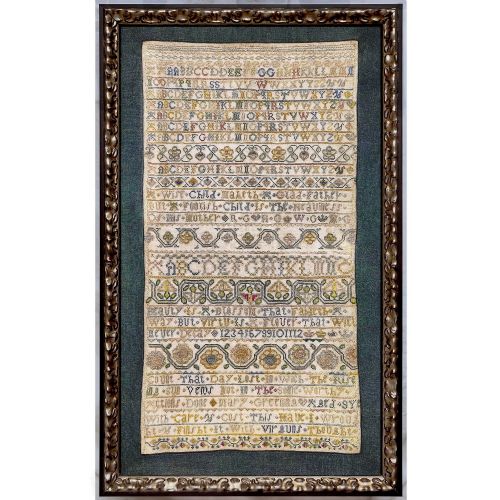


Verse Needlework Sampler
A verse needlework sampler is a framed textile piece stitched with alphabets, moral verses, and maker details, offering a direct window into domestic education.
Verse Needlework Sampler
A verse needlework sampler combines stitched lettering, pious verses, and decorative motifs onto a woven ground, traditionally produced by young makers to demonstrate their proficiency. These works range from late seventeenth-century band formats to nineteenth-century pictorial compositions governed by strict educational standards.
The selections available here lean heavily into eighteenth and nineteenth-century examples, alongside occasional folk art interpretations and later twentieth-century revivals. Makers frequently recorded their names, ages, and specific dates, anchoring each textile to a precise moment in time.
Framed behind glass within wooden surrounds, these textiles function primarily as wall art rather than functional household items. They preserve the individual hand of makers such as Mary Greening, Jane Wettmore, and Ann Hodson across varied styles spanning Georgian and Victorian periods.
What varies in quality
The standard of execution depends on the precision of the needlework, the regularity of the stitching, and the complexity of the verse or pictorial border chosen by the maker. Finer execution often reveals itself in the balance of the layout and the crispness of the lettering.
The inclusion of specific genealogical details, such as the maker's full name, age, and precise date, elevates the historical interest of the textile beyond standard schoolroom exercises.
Verse Needlework Sampler Retail Price Guide 2026
Typical asking prices for verse needlework sampler among the pieces listed under this phrase on Sellingantiques today, from the lower quarter to the upper quarter. They describe what is for sale here now, not the wider market.
Young maker Louiss Elkins thoughtfully recorded her age as 12 yeas, leaving a permanent spelling charm in the linen for modern admirers.
The Verse Needlework Sampler Glossary
- Band sampler
- An early format where horizontal bands of various decorative stitch patterns are worked across a long strip of linen. This style predates the pictorial composition layout.
- Cross stitch
- An X-shaped embroidery stitch executed on an even-weave fabric like linen, forming the primary structural unit for most lettering and motifs.
- Linen
- A strong, durable fabric woven from flax fibres that serves as the traditional ground fabric for needlework practice.
- Folk art
- Work produced outside the formal academic tradition, often characterised by naive perspective and personal expression rather than strict adherence to prevailing design rules.
- Georgian
- The design period spanning the reigns of the four Georges, reflected in samplers through specific architectural borders and formal verse layouts.
Verse Needlework Sampler: Frequently Asked Questions
What is a verse needlework sampler?
A verse needlework sampler is a piece of textile art featuring stitched alphabets, numbers, and moral or religious verses created by young makers.
These panels served as proof of a girl's domestic education and needle skills before being framed for display in the home.
How do I date a sampler?
Many pieces include the maker's name, age, and a specific year stitched directly into the linen ground.
When dates are absent, stylistic clues such as the framing materials, the type of verse, and the textile ground help assign the work to periods like the Georgian or Victorian eras.
How should I hang textile art?
Samplers require protection behind glass to prevent atmospheric dust and grease from settling on the fragile silk and wool threads.
Keep them away from direct sunlight to protect the natural dyes from fading over time.
Why do some samplers have no names?
Unsigned pieces often result from incomplete schoolroom exercises or the loss of accompanying documentation over the centuries.
Even without a maker's name, the stitching techniques and materials still provide clear evidence of their period of origin.