





Vernacular Country Bench
A vernacular country bench is a utility seat born of domestic trade and farm life, offering honest timber construction and daily utility.
Vernacular Country Bench
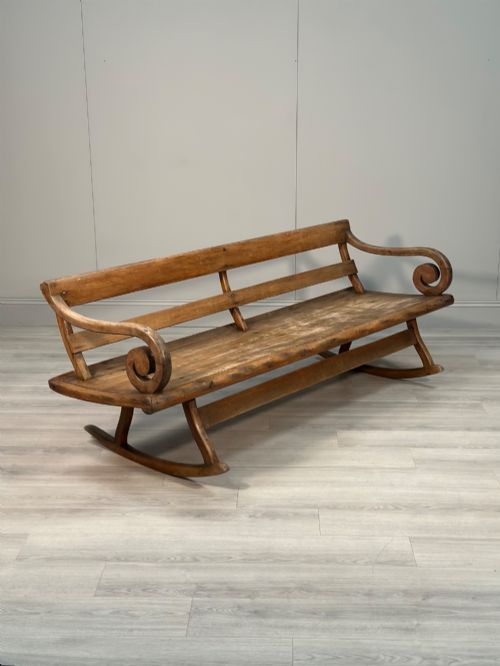
A vernacular country bench covers a broad family of utilitarian domestic seating shaped by regional craft and local timber supplies rather than London cabinet-makers. These pieces encompass low stools, tavern benches, high-back settles, and box settles spanning from the seventeenth century through the twentieth century.
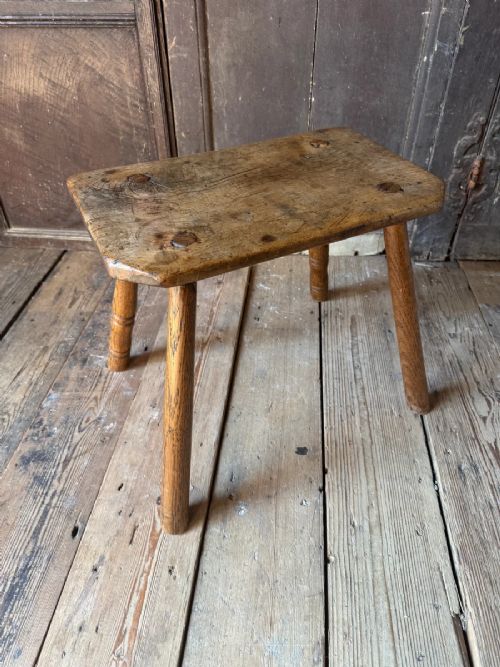
The versions most commonly met on this page include robust oak and pine box settles, simple milking and work stools in ash or elm, and painted tavern benches from English, Welsh, French, and Swedish traditions. Each object reflects the direct functional needs of rural households, workshops, and alehouses.
Forms range from diminutive child-sized seats and cobbler's stools to magnificent high-back settles designed to shield occupants from draughts. They appear in native hardwoods and softwoods, frequently showing traces of original paint, natural grain patination, or primitive joinery.
How They Were Made
Makers utilised native timbers available close to hand, combining oak, elm, ash, pine, sycamore, and yew within a single piece depending on structural demands. Seats often employ thick plank construction or sculpted round tops, supported by turned legs or pegged joints.
Construction techniques rely on traditional joinery such as mortise and tenon frames, dovetails for storage boxes, and pegged underpinnings. Many examples display scratch-built or primitive framing methods that prioritize immediate utility over ornamental refinement.
Listings feature native timbers including oak, ash, elm, pine, sycamore, walnut, and yew across pieces dated from the seventeenth to the twentieth century.
What Varies in Quality
Quality in a vernacular country bench rests upon the integrity of the original construction and the survival of honest surface patination. Pieces that retain their early or original paint layers, untouched timber surfaces, and original structural pegging stand apart from heavily restored examples.
Proportion and domestic character also separate standard items from superior survivals. A balanced silhouette, harmonious integration of mixed native woods, and uncompromised structural depth define the higher tier of these regional seats.
The Vernacular Country Bench Glossary
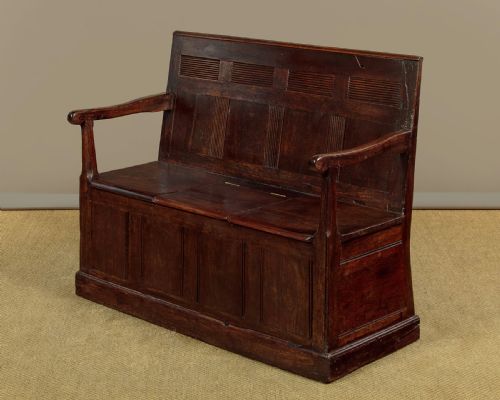
- Box settle
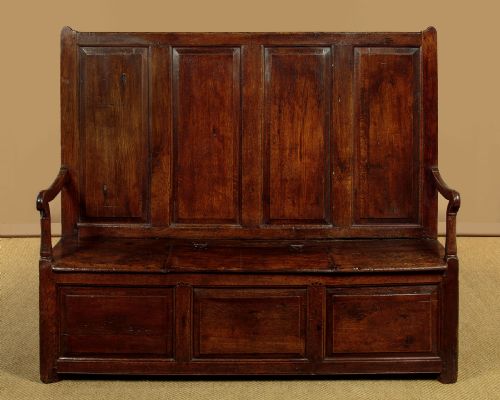
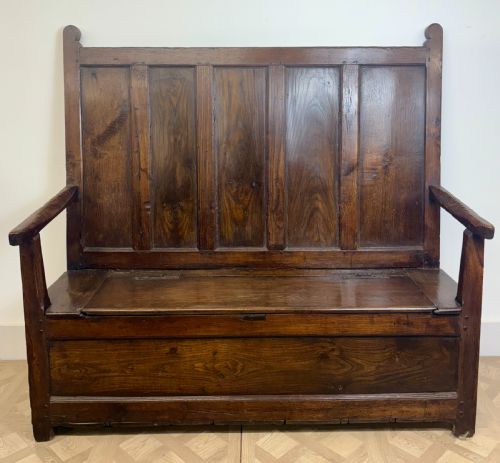
- A high-backed wooden seat incorporating a enclosed storage box beneath the hinged seat or base. This form provided draught protection by the hearth alongside secure household storage.
- Vernacular
- Objects designed and built by local artisans using regional traditions and materials rather than following academic architectural styles. These pieces respond directly to local domestic and working requirements.
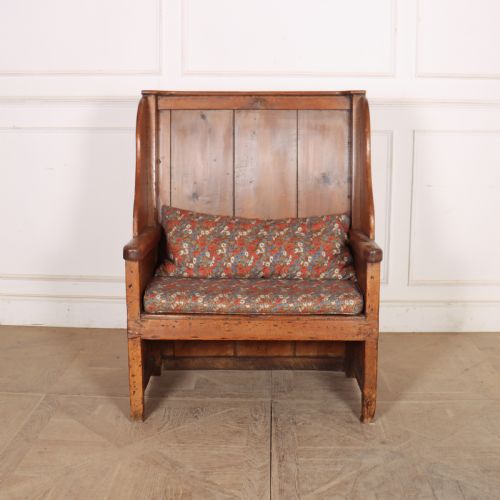
- Settle
- A long wooden bench with a high back, solid arms, and often a closed base to keep out cold air. They were standard fixtures in farmhouse kitchens and public tavern rooms.
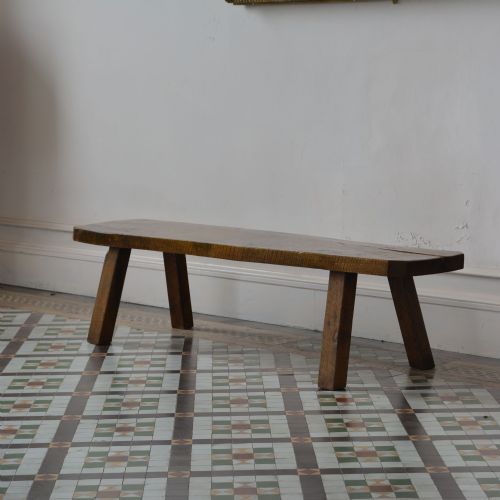
- Pig bench
- A low wooden bench historically utilised for farm work and butchery preparation. Their sturdy low profiles frequently find modern reuse as low coffee tables.
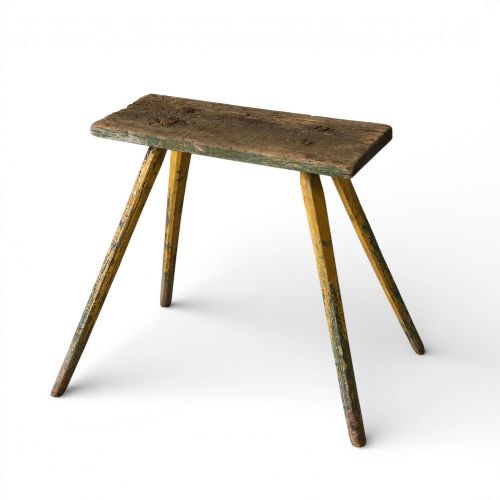
- Stick stool
- A primitive seat formed by inserting shaped legs directly into a thick wooden slab or seat board. The construction relies on simple tapered tenons secured with wedges.
Vernacular Country Bench: Frequently Asked Questions
What is a box settle?
A box settle is a high-backed wooden bench featuring an enclosed compartment beneath the seat for storage. These pieces were positioned near hearths to block cold draughts while keeping blankets or household goods close at hand.
They combine a supportive backrest and solid sides with practical box construction, often joined with wooden pegs and thick planking.
How do I date a vernacular bench?
Dating relies on examining the tool marks, timber selection, joinery methods, and the degree of wear on the wood. Earlier seventeenth and eighteenth-century examples frequently show hand-riven timber, heavy oak framing, and early peg construction.
Later nineteenth-century pieces may incorporate machine-sawn elements, softer pine timbers, or different fastening techniques alongside original painted finishes.
Were these benches painted originally?
Many country benches and settles received coats of protective paint or pigmented washes during their working lives. Original paint surfaces survive on pieces from tavern, farmhouse, and regional European traditions.
Traces of early pigment add significant character and historical depth to the timber beneath, showing how the furniture was maintained and adapted over generations.
How do I use a work stool at home?
Work stools and milking stools offer compact seating or display surfaces suitable for living rooms, hallways, and kitchens. Their sturdy three or four-legged frames fit easily into smaller spaces.
Lower forms function well as occasional side tables or plant stands, while maintaining their distinct primitive aesthetic and tactile wooden surfaces.