






Verdure Wall Tapestry
These verdure wall tapestry pieces bring deep botanical foliage and quiet woodland scenes straight into a room.
Verdure Wall Tapestry
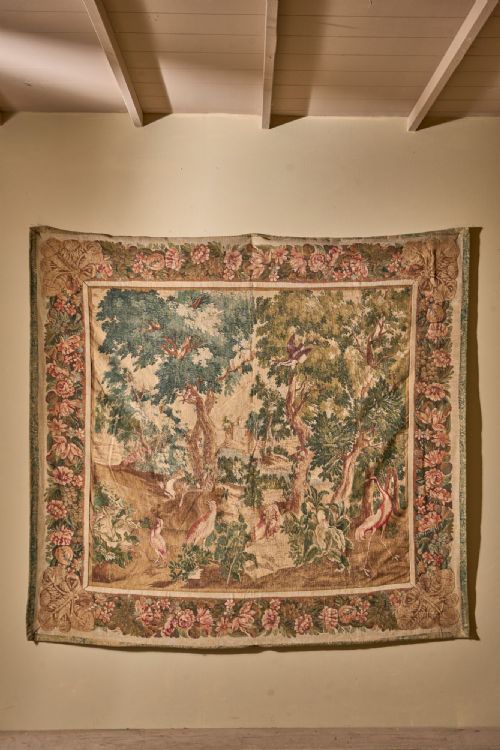
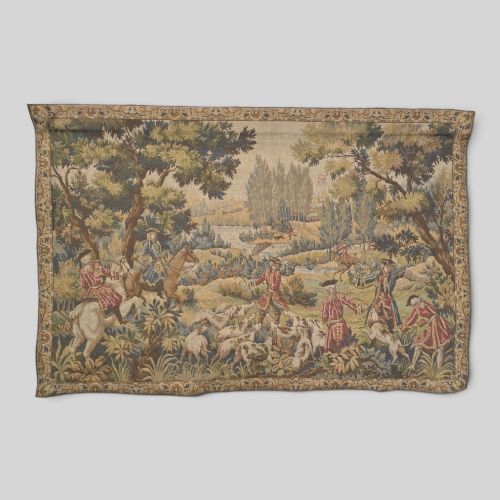
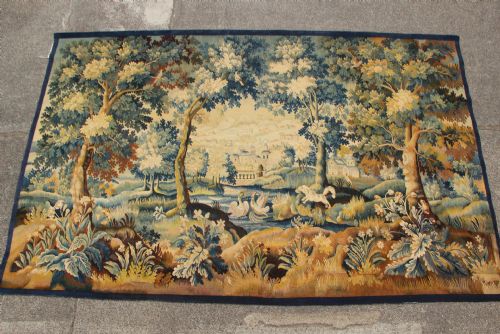
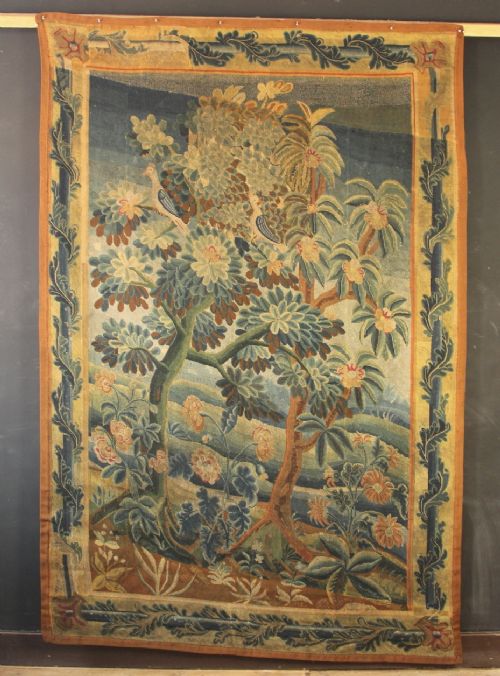
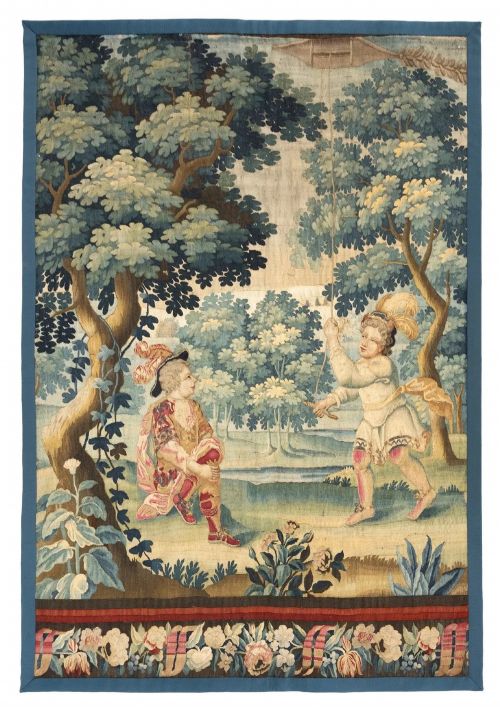
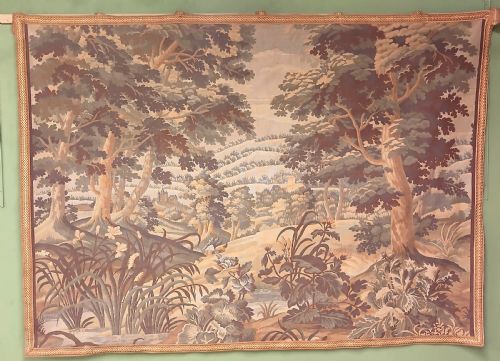
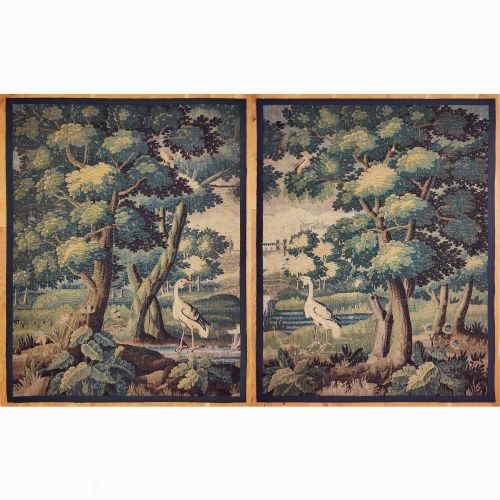
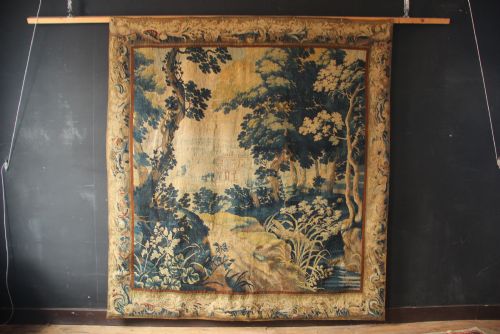
A verdure wall tapestry depicts dense garden foliage, leafy trees, and distant architecture or game birds as the primary subject. These textiles function as large wall hangings, framed panels, or narrow borders mounted on linen.
Most examples originate from Flemish and French workshops, spanning from the seventeenth century through to the nineteenth century. Common formats range from expansive pastoral room-sized layouts down to long, slender decorative panels.
How they were made
Weavers constructed these textiles using wool, silk, cotton, and linen fibres on vertical or horizontal looms. The interplay of these specific threads created varied texture and depth within the leafy canopies and pastoral landscapes.
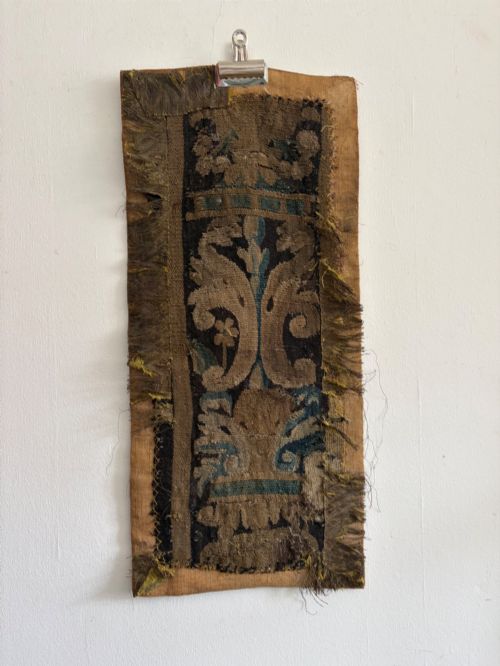
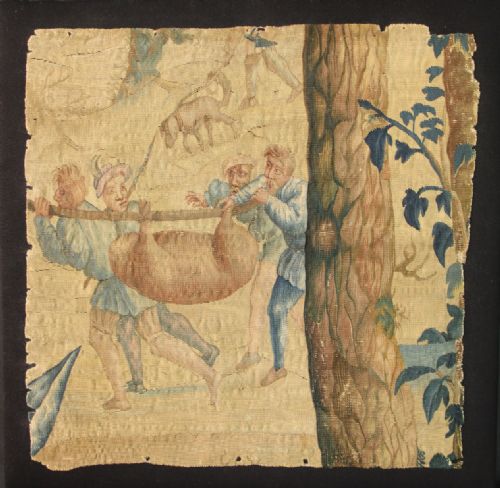
Many historical pieces utilise mounted wood or linen backings to support heavy woven panels during display. Textile fragments and borders frequently receive conservation mounting onto a simple linen ground for safe hanging.
What varies in quality
The sophistication of the botanical drawing and the complexity of the landscape perspective define the visual success of the weaving. Finer wool and silk threads permit subtle tonal shifts across the foliage and shadowed groves.
Survival of the original border elements and the overall structural integrity of the textile weave distinguish complete room-scale panels from fragmentary remnants or later nineteenth-century interpretations.
The Verdure Wall Tapestry Glossary
- Verdure tapestry
- A woven wall hanging dominated by plant motifs, trees, leaves, and woodland scenery rather than human figures. These compositions often feature muted greens and browns.
- Aubusson
- A historic French town renowned for its woven tapestries and carpet production. Pieces from this origin often display lighter pastoral and floral palettes.
- Flemish Baroque
- A robust artistic style originating in Flanders during the seventeenth century. Tapestries from this tradition emphasise dramatic depth, rich foliage, and theatrical movement.
- Border fragment
- A surviving section cut or separated from the main decorative margin of a larger textile. These portions frequently feature repeated floral or architectural motifs.
- Needlework tapestry
- A textile created by stitching yarn onto an open-weave canvas rather than traditional loom weaving. Such pieces replicate the visual style of woven verdure designs through surface embroidery.
Verdure Wall Tapestry: Frequently Asked Questions
How do I hang a heavy tapestry?
Large textile panels require even weight distribution along the upper edge to prevent distortion of the weave. Attaching a hidden linen sleeve or support batten allows the piece to hang flat against a wall.
Smaller fragments mounted on linen often use traditional picture hanging wire secured to a wooden backing frame. Ensure the display location avoids direct, harsh sunlight to protect the natural fibres.
Are these pieces French or Flemish?
Origin attribution relies heavily on the stylistic characteristics of the foliage, border designs, and historical weaving centres. Flemish examples from the seventeenth century often employ deep, moody verdant tones and architectural backgrounds.
French workshops, particularly those in Aubusson, frequently transitioned into lighter pastoral scenes during the eighteenth and nineteenth centuries. Archival records and regional weaving techniques help narrow down the likely place of origin.
What is the difference between a panel and a fragment?
A complete panel retains its original proportions, central landscape composition, and surrounding decorative borders largely intact. These substantial works were designed to cover entire sections of castle or chateau walls.
A fragment represents only a portion of a once-larger textile, such as a salvaged section of foliage or a surviving border edge. Many fragments are subsequently mounted onto linen or framed for modern display.