
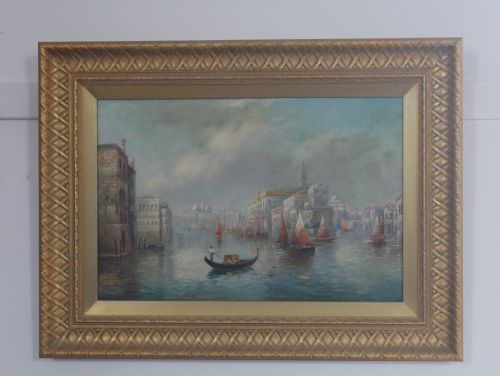


Venice Canal Painting
A venice canal painting captures the enduring appeal of the lagoon city, depicting grand palazzos and quiet waterways through the eyes of Victorian and later artists.
Venice Canal Painting
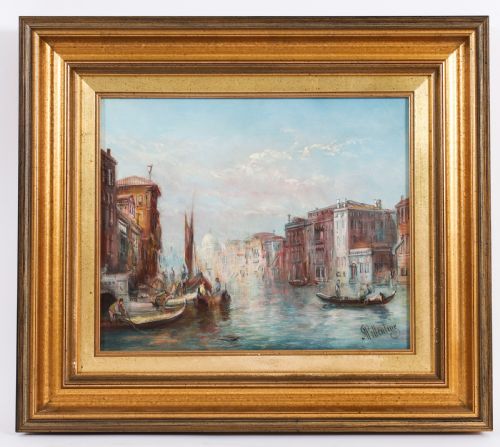
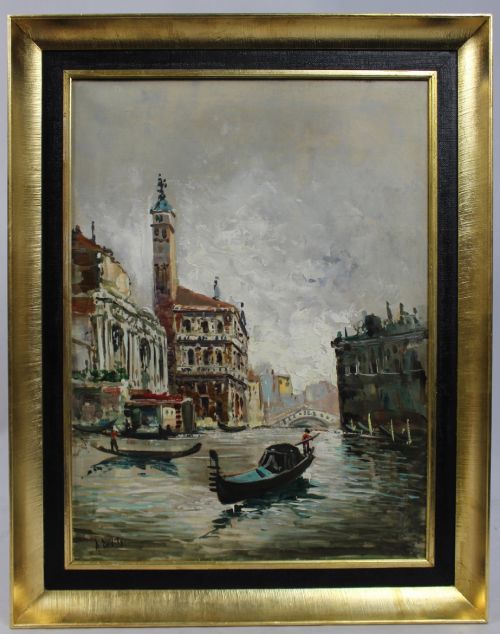
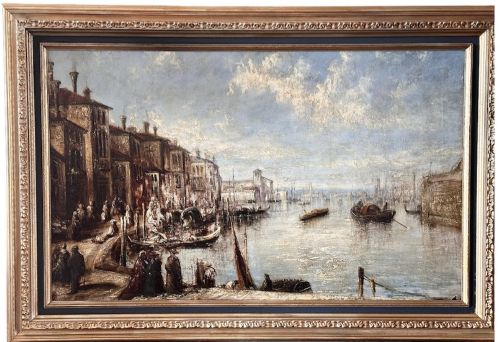
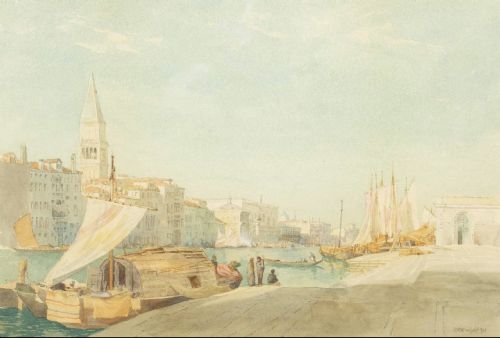
A venice canal painting typically portrays iconic sights such as the Grand Canal, the Doge's Palace, and the Bridge of Sighs under changing light and atmosphere.
The selection ranges from Victorian and 19th-century works to mid-century impressionist interpretations.
Common formats include framed oil paintings on canvas and delicate watercolours on paper depicting gondoliers and historic architecture.
Evaluating Quality
Quality rests in the handling of light and water reflection, distinguishing skilled architectural perspective from rigid composition.
The sensitivity of the brushwork and the clarity of the atmosphere separate master works from standard topographical records.
Original framing, particularly period giltwood surrounds, adds historical integrity to the piece.
Listings feature works spanning the nineteenth century through to mid-century impressionism, executed in oil on canvas and watercolour on paper.
Alfred Pollentine·Antoine Bouvard Senior·Francis Moltino·Antonietta Brandeis·Hercules Brabazon Brabazon
The Venice Canal Painting Glossary
- Giltwood
- Wood carved and coated with gold leaf or a gold-coloured finish. This material is frequently found on period picture frames enclosing nineteenth-century canvases.
- Watercolour
- A painting method where fine pigment is suspended in a water-soluble binder on paper. It offers translucent washes suitable for capturing the shifting light over the lagoon.
- Gouache
- An opaque water-based paint that provides denser highlights than traditional watercolour. Artists utilise it to add solid areas of light to Venetian scenes.
- Impressionism
- A style focused on accurate depiction of light in its changing qualities. Mid-century examples apply this approach to traditional canal views.
- Townscape
- An artistic representation of urban scenery and architecture. These views focus on palaces, bridges, and bustling waterways.
Venice Canal Painting: Frequently Asked Questions
How do I identify the period?
Examine the canvas preparation, stretcher frames, and stylistic clues within the brushwork. Victorian and nineteenth-century works often employ tighter academic perspectives, while later pieces lean towards impressionist freedom.
The framing and signature styles also provide reliable clues to the exact decade of execution.
Were these painted on location?
Many artists created initial watercolours and sketches on site in Venice. They then used these studies to complete larger oil paintings back in their studio.
This explains the existence of both swift plein-air watercolours and highly finished exhibition canvases.
How should I hang them?
Keep works away from direct sunlight and excessive humidity to protect oil paint and fragile watercolours on paper. Ensure the weight of heavy giltwood frames is supported by appropriate wall fixings.
Pairing similar nineteenth-century townscapes creates a cohesive display in traditional rooms.
What subjects appear most often?
The Grand Canal, Santa Maria della Salute, and the Doge's Palace dominate the compositions. Gondolas and figures passing beneath bridges also feature prominently.
Artists returned repeatedly to these specific viewpoints because of the dramatic interplay between architecture and water.