




Turn of Century Watercolour
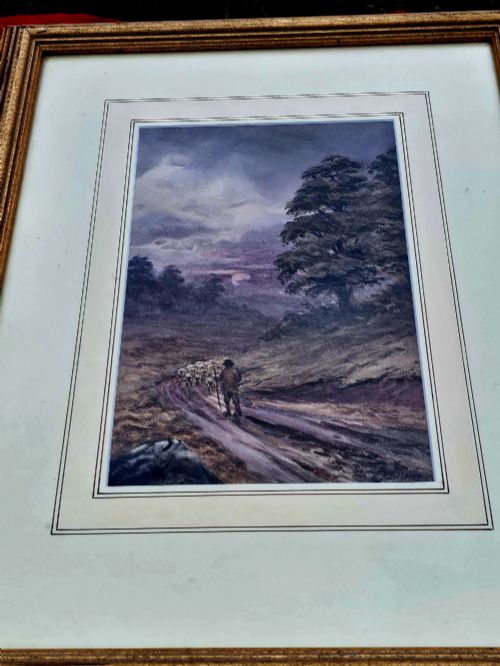
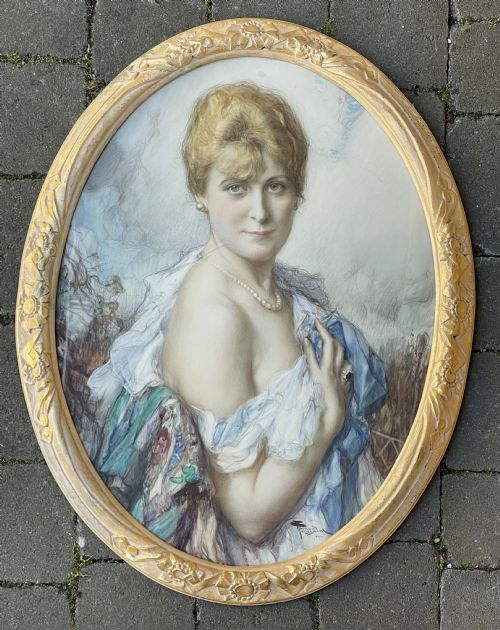
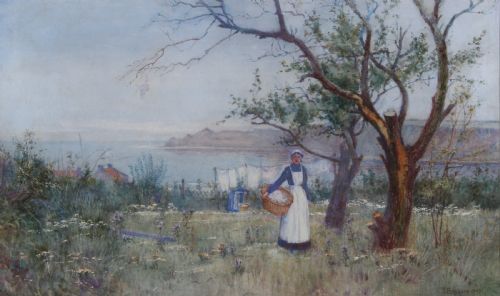
A turn of century watercolour captures an era of impressionistic brushwork and delicate pigment, offering the collector a direct window into the Edwardian and late Victorian world.
Turn of Century Watercolour
When you search for a turn of century watercolour, you examine works executed predominantly around nineteen hundred, the Edwardian epoch, and the nineteen tens. These paintings record street scenes, harbour views, and character studies created in British and European fine art traditions.
The version you meet most frequently on this page is the Edwardian landscape or coastal view, often framed behind glass in wood or gilt wood mouldings. Subjects range from Whitby dockyards and Yorkshire coastal scenes to bustling London squares and Venetian canals.
How they were made
Artists of this period applied watercolour pigment and wash onto paper supports, sometimes combining pencil underdrawing with fluid paint layers. Works rely on the white of the paper to provide luminosity and highlight areas within the composition.
Framing typically involves glass to protect the delicate watercolour paint from moisture and light damage, housed within wooden or gilt wood frames that complement the fine art aesthetic of the era.
Current selections feature works executed on paper using watercolour pigment, housed in wood and gilt wood frames behind glass.
What varies in quality
Quality rests upon the confidence of the brushwork and the clarity of the composition, distinguishing accomplished plein air observation from stiff academic exercise. Hand-signed sheets by established artists carry stronger art historical documentation.
Condition of the paper support and the vibrancy of the pigment determine the longevity of the visual impact. Works protected properly behind glass retain their original tone without excessive fading or foxing.
EJ Letheren·Alfred George Morgan·Charles James Lauder·Jules Evarist van Biesbroeck·Frederick William Booty·Fernand Toussaint·Charles Prosper Sainton·Edwin Bagshaw·Helen Donald-Smith
The Turn of Century Watercolour Glossary
- Watercolour pigment
- The finely ground colour particles suspended in a water-soluble binder used by artists on paper.
- Edwardian
- The historical period spanning the reign of King Edward VII, noted in art for impressionistic landscapes and refined portraiture.
- Gilt wood
- Timber frames finished with a thin layer of gold leaf or metallic gilding, typical of fine art presentation.
- Wash
- A thin, fluid layer of watercolour paint spread evenly across the paper to create skies or atmospheric backgrounds.
Turn of Century Watercolour: Frequently Asked Questions
How do I hang a watercolour?
Hang your painting away from direct sunlight to prevent the pigment from fading over time. Direct exposure to strong natural light degrades the delicate washes on paper.
Ensure the room maintains stable humidity levels to protect both the paper support and the wooden frame. Professional framing with acid-free backing boards secures the longevity of the piece.
Are these works signed?
Many examples feature signatures or monogram initials applied by the artist directly onto the paint surface. Signatures often appear in the lower corners of the sheet.
Unsigned works still attribute to specific periods through stylistic analysis and framing evidence. Documentation from past exhibitions provides further context for attribution.
What subjects are most common?
Coastal scenes, fishing harbours, and rural landscapes dominate the compositions from this timeframe. Artists frequently travelled to capture specific topographical views in Yorkshire and along the south coast.
Urban street scenes and architectural studies in London and Venice also appear frequently. Portrait studies of Edwardian ladies represent the figurative side of the medium.
How are watercolours protected?
Glass serves as the primary barrier protecting the delicate paper and pigment from atmospheric dust and physical contact. The glazing prevents airborne pollutants from settling directly onto the painted surface.
Traditional framing methods incorporate a mount to keep the paper separated from the glass surface. This air gap stops moisture condensation from damaging the watercolour wash.