

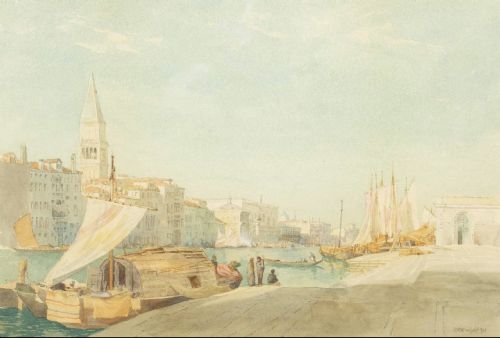


Venice Architectural Painting
A venice architectural painting captures the enduring appeal of the lagoon city through period watercolours, oils, and mixed media works.
Venice Architectural Painting
A venice architectural painting brings the classic vistas of the floating city into the interior, recording canals, bridges, and historic palazzos. The selection ranges from Victorian fine art watercolours to mid-century expressionist oils on canvas.
Buyers encounter familiar landmarks such as the Grand Canal, the Bridge of Sighs, and Santa Maria della Salute across various periods including the Edwardian era and the early twentieth century. These works capture the shifting light and atmosphere of the lagoon through traditional Italian and impressionist styles.
The category spans small ink pen drawings and pastels alongside large framed oil paintings and mixed media views. Works by named nineteenth and twentieth-century painters sit alongside atmospheric depictions by period artists.
How they were made
Artists record the lagoon using oil paint on canvas or wood panels, building rich textures for architectural facades and water reflections. Watercolours utilise pigment on paper, sometimes combined with ink pen, pastel, and gouache to capture transient light effects.
Supports range from traditional canvas stretched over wooden frames to heavy paper sheets suited for delicate watercolour washes. Framing often involves period wood mouldings that complement the palette and subject matter.
The listings feature works executed in oil, watercolour, gouache, pastel, and ink across Victorian, Edwardian, and mid-century periods.
What varies in quality
The distinction lies in the artist's handling of perspective, atmospheric light, and architectural detail within the urban landscape. Stronger examples demonstrate confident brushwork and precise draughtsmanship that anchor the famous monuments and waterways.
Subtlety in colour harmony and the management of reflective surfaces across the lagoon separate accomplished works from routine topographical views. The integration of paper supports, pigments, and protective framing further defines the execution of each piece.
Thomas Ellison·Richard Henry Wright·Vittore Zanetti Zilla·Benedetto Salviati·Hercules Brabazon Brabazon·David Law·Emanuele Cappello·Wilfred Knox·Alfred Pollentine·John D. Walker·Helen Donald Smith
The Venice Architectural Painting Glossary
- Watercolour
- A painting method where fine pigment is suspended in a water-based solution and applied to paper. It allows for translucent washes that suit the atmospheric skies and waterways of the lagoon.
- Oil Paint
- A slow-drying medium composed of pigments mixed with drying oils such as linseed. This technique permits rich blending and textured applications suitable for architectural facades and grand canal views.
- Gouache
- An opaque water-based paint that includes a binding agent and white pigment fillers. Artists use it alongside watercolour and pastel to add solid highlights to architectural details.
- Mixed Media
- An artwork incorporating more than one medium or material on the same support. Such pieces combine elements like oil paint, pastel, ink, and gouache to build texture.
- Impressionism
- A nineteenth-century painting style characterised by relatively small, thin, yet visible brush strokes and an open composition. It emphasises accurate depiction of light in its changing qualities.
Venice Architectural Painting: Frequently Asked Questions
What periods do these paintings cover?
The works span from the nineteenth century through the Edwardian period and the early twentieth century, extending into the nineteen-sixties.
Victorian and Edwardian watercolours share wall space with mid-century expressionist oils and mixed media pieces.
Which subjects appear most frequently?
Landmarks along the Grand Canal dominate the selection, including the Salute church and the Bridge of Sighs.
Gondolas, market scenes, and quiet canals also feature prominently across different artistic mediums.
How should I frame a period watercolour?
Period watercolours require conservation framing with acid-free mounts to protect delicate paper and pigments from light damage.
Traditional wood frames often complement the historic nature of these lagoon views.
Are these works signed by the artists?
Many pieces carry signatures or attributions to period painters, while others remain records of nineteenth and twentieth-century urban scenes.
Documentation often links specific watercolours and oils to known exhibiting artists of the era.