



Venetian Pedestal Table
These venetian pedestal table pieces combine carved wood figures with functional display surfaces, bringing dramatic Italian craftsmanship into your home.
Venetian Pedestal Table
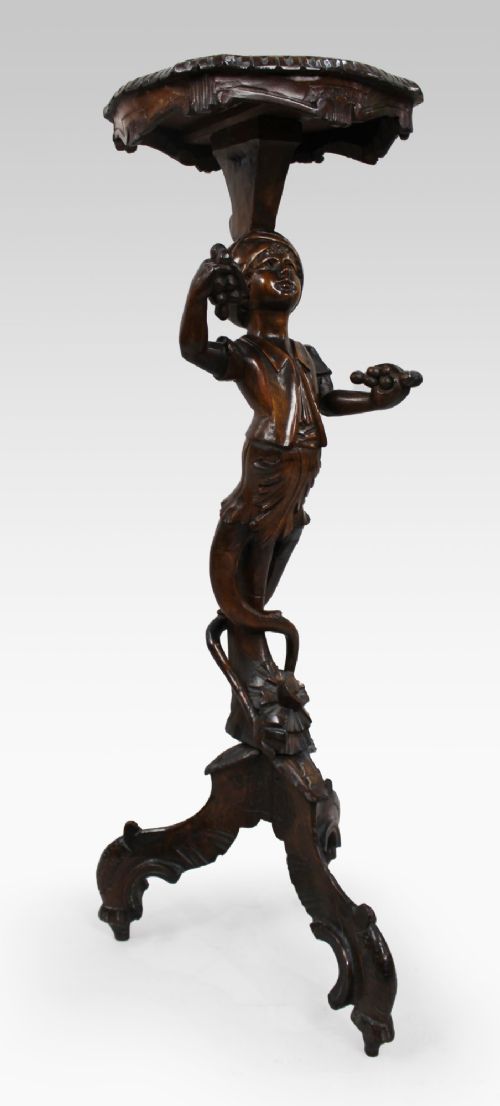
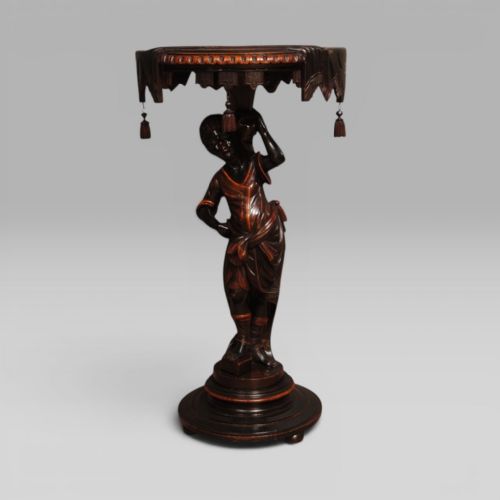
A venetian pedestal table serves primarily as a decorative stand, plant support, or side table within a room. These items frequently take the form of figural stands, such as Blackamoor figures carved in wood.
The pieces on this page span several decades, stretching from the early nineteenth century through to the twentieth century. They draw upon styles like Venetian Baroque, Venetian Revival, and Italian Rococo Revival.
Makers utilised various object types, including side tables, plant stands, and sculptural pedestals. The visual impact relies heavily on the integration of carved human figures holding trays or tabletops.
How they were made
Craftsmen shaped these items from carved wood, walnut, and ebonised wood to form the structural bodies and detailed figures. Wood carving formed the foundational technique for every sculptural element.
Several figures hold their trays aloft with permanent expressions of polite, unwavering helpfulness.
What varies in quality
The refinement of the carving distinguishes finer examples from simpler workshops, particularly in the rendering of facial expressions, drapery, and hands. Dynamic posture and anatomical accuracy elevate the sculptural presence.
The application and preservation of surface decoration also set pieces apart. Original polychrome paint and intact gold leaf create a more compelling visual texture than later repainting.
The Venetian Pedestal Table Glossary
- Blackamoor
- A decorative sculptural figure, often depicted in exoticised costume holding a tray, torchiere, or table. These figures form the structural support for many pedestal tables.
- Polychrome
- Painted in several colours. This finish highlights the intricate details of garments and ornaments on wooden sculptures.
- Gesso
- A plaster-like mixture applied to wood as a base for gilding or painting. It provides a smooth surface for detailed decorative work.
- Ebonised wood
- Timber treated to resemble ebony. This dark finish creates a dramatic contrast with gilt or polychrome highlights.
Venetian Pedestal Table: Frequently Asked Questions
What is a venetian pedestal table used for?
These pieces function as decorative side tables, plant stands, or sculptural display surfaces within a room. Their integrated tabletops hold small objects, lamps, or decorative plants.
Historically, they served both utilitarian and theatrical purposes in grand interiors. Today, they act as focal points in hallways, drawing rooms, or living spaces.
What materials are used in these tables?
Makers constructed the primary bodies from carved wood, walnut, and ebonised wood. These timbers provided the strength needed for figural supports.
Surfaces were frequently embellished with gesso, gold leaf, gilt, and polychrome paint. These finishes added colour and metallic brilliance to the carved details.
How do I date a venetian pedestal table?
Dating relies on examining the stylistic cues, such as the transition from Venetian Baroque to later Revival styles. The selection of materials and the wear on the gesso and paint also provide chronological clues.
Pieces range across the nineteenth and early twentieth centuries. Comparing the carving technique with documented examples from specific periods helps narrow down the origin.
How do I care for a painted wooden figure?
Keep the piece away from direct sunlight and steady heat sources to protect the delicate polychrome paint and gold leaf. Fluctuating humidity can cause the underlying wood and gesso to crack.
Dust the carved surfaces gently with a soft, dry cloth. Avoid using liquid cleaners or harsh chemicals that might damage the historical finishes.