



Gilded Pedestal Accent Table
A gilded pedestal accent table brings brilliant surface reflection and sculptural presence to a room, offering a compact surface for a lamp or decorative object.
Gilded Pedestal Accent Table
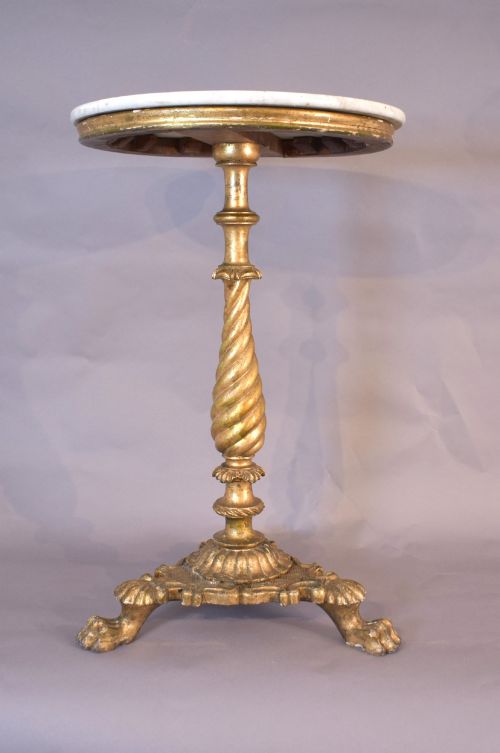
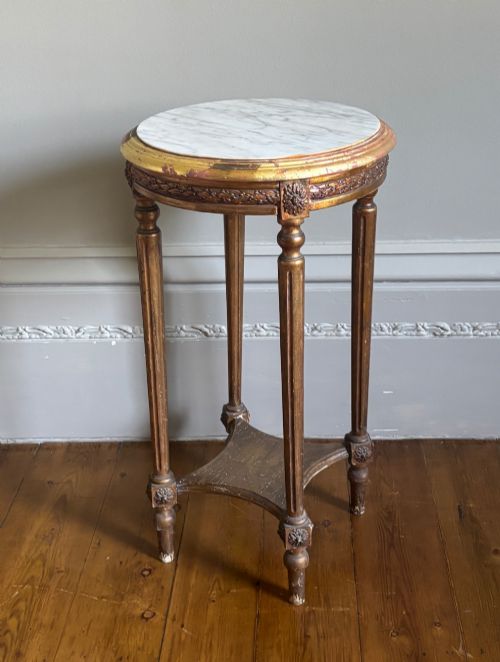
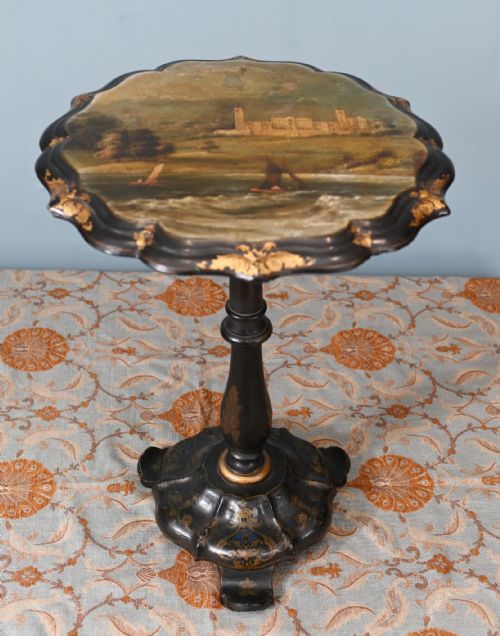
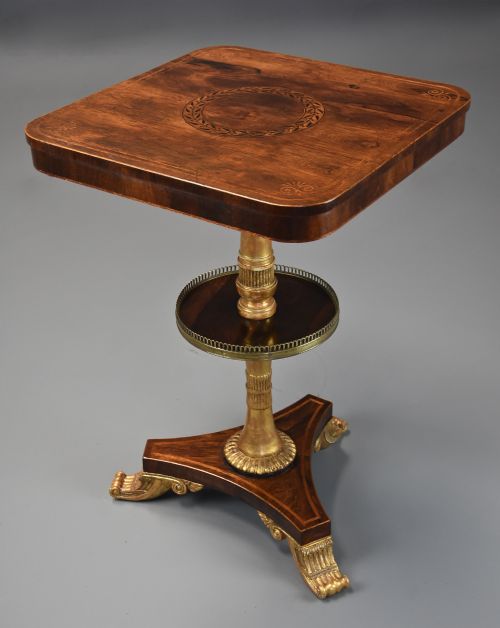
A gilded pedestal accent table serves as a decorative support surface, frequently taking the form of a side table, occasional table, tilt-top table, or a combined pedestal and plant stand. These pieces emerge across the nineteenth century, Regency period, and into the early twentieth century, drawing on French Chateau, French Neoclassical, Grand Regency, Victorian, and Baroque Revival styles.
The version most commonly met on this page combines a slender central column or tripod support with a polished stone top, often executed in white or coloured marble or onyx. Giltwood, gesso, and gold leaf provide the principal surface finish, frequently paired with mahogany, rosewood, amboyna, walnut, or lime wood.
Design vocabulary leans heavily toward continental European aesthetics, particularly French and Italian workshops. Forms range from simple circular tripod tables to elaborate creations featuring carved dolphins, blackamoor figures, or detailed flower mouldings.
How they were made
Makers built the structural carcases from dense hardwoods such as mahogany, walnut, rosewood, and lime wood, sometimes applying veneers or intricate hand-painted lacquer work. Turnings, carved pedestals, and tripod legs provided stable foundations for heavier stone tops.
Surface ornamentation relied on traditional gilding techniques involving gesso applied over wood and finished with gold leaf or gilt. Accents of gilded brass and gilt-bronze mounts added structural definition and metallic contrast to the painted or polished wooden elements.
Materials recorded across the inventory include solid marble, onyx, giltwood, gesso, brass, and hand-painted woods.
What varies in quality
The refinement of the carving separates standard production from exceptional work, particularly evident in figures like dolphins or blackamoors, and in the crispness of flower mouldings and giltwood enrichment. Hand-painted decorative details and the depth of the gold leaf application define the visual presence of the piece.
Materials dictate the upper tier of the range, where solid exotic woods, finely figured amboyna, or thick slabs of matched marble and onyx replace secondary timbers and simpler painted finishes. The integration of quality cast bronze mounts rather than pressed brass further distinguishes master workshops from provincial production.
George Bullock·Thomas Hope·Zwiener Jansen Sucesseur
The Gilded Pedestal Accent Table Glossary
- Giltwood
- Wood that has been coated with gold leaf or powder using a preparation of gesso and size. This finish creates a luminous metallic surface that catches interior light.
- Guéridon
- A small French occasional table supported by one or more central columns. The form developed in France during the seventeenth century and remained popular through the nineteenth century.
- Tripod table
- A small freestanding table supported by three legs radiating from a central pillar. This construction provides stable balance on uneven historic floors.
- Gesso
- A plaster-like mixture applied to wood surfaces to prepare them for gilding or painting. It allows craftsmen to carve intricate relief details before applying gold leaf.
- Onyx top
- A polished stone surface selected for its translucent banding and varied natural colouration. It frequently serves as a luxurious inset top on late nineteenth and early twentieth century occasional tables.
Gilded Pedestal Accent Table: Frequently Asked Questions
Where should I place a gilded pedestal accent table?
These compact tables function effectively beside an armchair or sofa where they provide a stable surface for a reading lamp or small decorative objects.
Their decorative gilt surfaces and marble tops also allow them to stand independently in a hallway or corner as a sculptural display point.
How do I clean a marble or onyx tabletop?
Dust the stone surface regularly with a soft, dry cloth to prevent microscopic grit from scratching the polished finish. Use only warm water and a mild, neutral soap for deeper cleaning, drying thoroughly immediately afterwards.
Avoid acidic cleaners like vinegar or lemon juice, which will permanently etch marble and onyx.
How do I tell a Regency table from a Victorian one?
Regency tables, dating from the early nineteenth century, typically feature restrained neoclassical lines, architectural proportions, and fine veneers like rosewood or amboyna influenced by designers such as Thomas Hope. They prioritize clean structural geometry and classical motifs.
Victorian pieces from the mid-to-late nineteenth century often display more exuberant carving, heavier proportions, and revivals of earlier French styles with rich giltwood and painted finishes.