



Venetian Carved Wood Figures
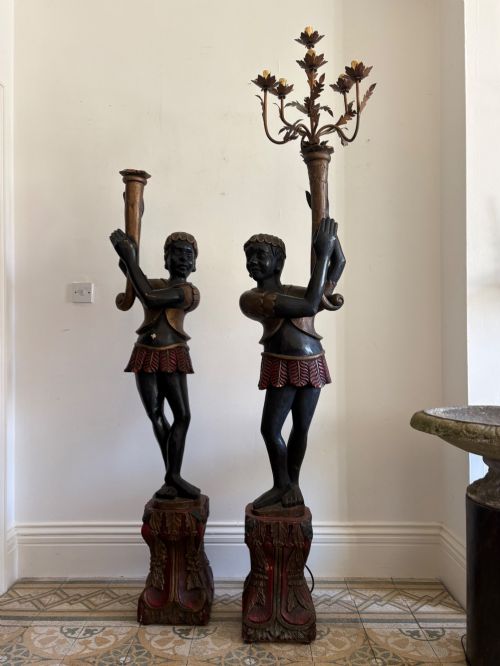
Venetian carved wood figures bring dramatic Italian presence into a room, typically taking the form of striking figures holding lights or trays.
Venetian Carved Wood Figures
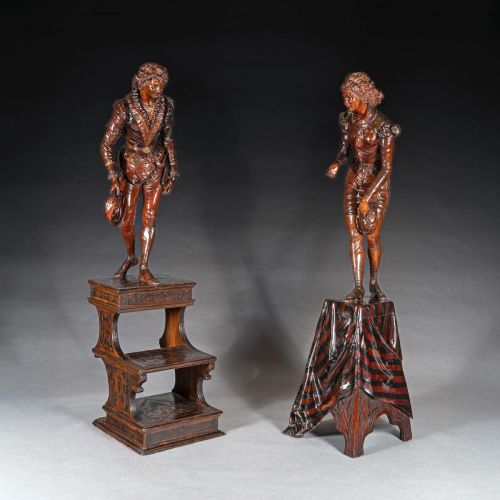
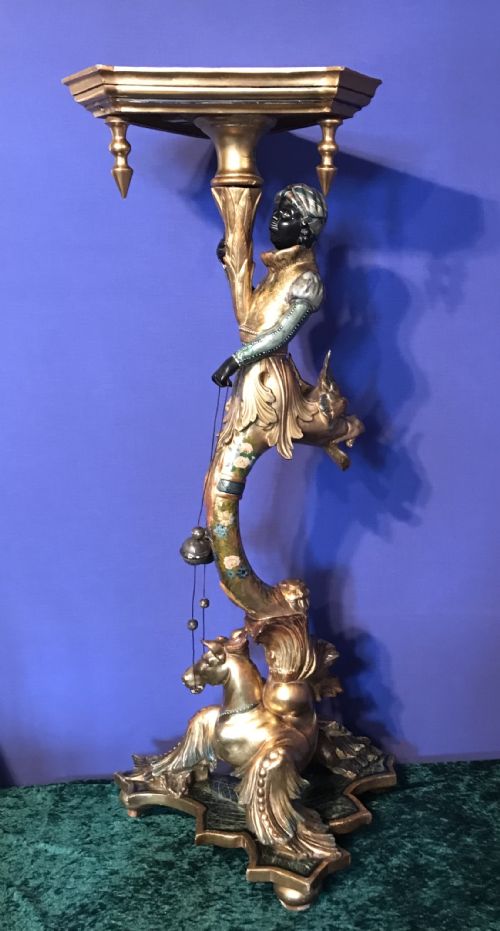
When you search for venetian carved wood figures, you encounter striking decorative works originating from Italy, most frequently created during the 19th century and the early decades of the 20th century. These pieces encompass various forms including sculptures, torcheres, floor lamps, and functional stands designed to hold candelabras, planters, or waiters.
The most common examples you meet on this page are blackamoor figures and gondoliers, often rendered at life size or as substantial pedestal-mounted objects. Alongside these, you find figures of young women and elaborate architectural supports that reflect historic Venetian design traditions.
How they were made
Maker workshops shaped these pieces primarily from carved wood, applying gesso layers to create smooth surfaces for detailed ornamentation. Artisans then employed polychrome paint, gold leaf, and parcel-gilt finishes to achieve the rich, decorative appearance characteristic of Venetian craftsmanship.
Certain items utilise ebonised wood or walnut foundations, combined with polychrome decoration and applied gilding. This mixture of carved timber and vibrant surface painting defines the physical makeup of these Italian works.
Venetian Carved Wood Figures Retail Price Guide 2026
Typical asking prices for venetian carved wood figures among the pieces listed under this phrase on Sellingantiques today, from the lower quarter to the upper quarter. They describe what is for sale here now, not the wider market.
Listings span the Victorian era into the early twentieth century, featuring materials such as walnut, ebonised wood, gold leaf, and polychrome paint.
What varies in quality
Quality in these figures depends heavily on the precision of the carving and the preservation of the original paint and gold leaf surfaces. Pieces that retain their early polychrome decoration and intricate detailing display a higher level of artistic execution than those with later repainting.
The complexity of the form also dictates the tier of the piece, with life-size pairs and multi-functional objects like torcheres or waiters demonstrating greater ambition in design and construction.
Valentino Besarel
The Venetian Carved Wood Figures Glossary
- Gesso
- A plaster mixture applied to wood as a base for paint or gold leaf. It allows carvers to achieve sharp details before surface decoration.
- Torchere
- A tall ornamental stand or floor lamp designed to hold a light source. In Venetian pieces, these often take the form of figures holding torch branches or platforms.
- Parcel-gilt
- A finishing method where only specific portions of an object are covered in gold leaf. This highlights particular details against painted wooden areas.
- Ebonised wood
- Timber treated to resemble ebony, creating a dark, uniform finish. Victorian makers utilised this technique to achieve dramatic contrast.
Venetian Carved Wood Figures: Frequently Asked Questions
What are venetian carved wood figures?
These pieces are decorative wooden sculptures and functional stands created in Italy, primarily depicting human figures in historic attire. They often incorporate platforms, candelabra arms, or trays into their design.
Originating largely from the 19th and early 20th centuries, they reflect the rich decorative traditions associated with Venetian craftsmanship and interior design.
How were these figures used originally?
Many of these objects served practical roles in grand interiors as floor lamps, torchere stands, and small tables or waiters. They illuminated rooms by holding candles or supported planters and serving items.
Others functioned purely as sculptural statues, placed upon pedestals to add dramatic presence and exotic narrative elements to nineteenth-century reception rooms.
How do I live with a figure?
Placing one of these substantial pieces requires a space that can accommodate its height and visual weight, such as a hallway or a drawing room. Because many act as light sources or stands, positioning them near seating or in corners allows their functional aspects to shine.
Keep them away from direct heat sources and strong sunlight to protect the original painted and gilded surfaces from drying out or fading.
How can I tell periods apart?
Mid-19th-century examples often lean towards Victorian tastes with ebonised finishes, while later pieces from around 1900 to 1920 frequently display brighter polychrome paints and parcel-gilt highlights. Stylistic references range from Renaissance revivals to exuberant Venetian Baroque and Rococo revivals.
Examining the underlying wood preparation, paint layering, and overall sculptural style helps connect a piece to its specific nineteenth or early twentieth-century era.