





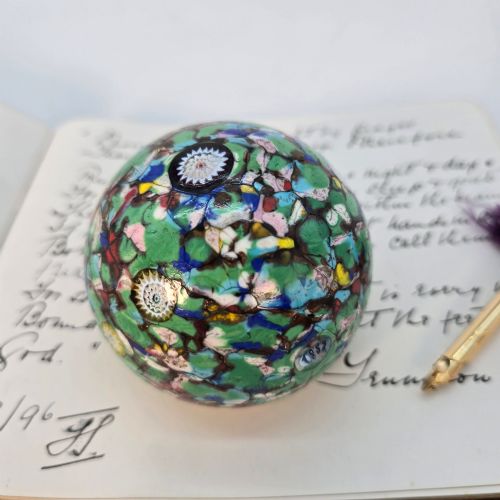


Venetian Art Glass
Venetian art glass pieces bring colour and pattern to a room, ranging from wall mirrors to paperweights made with blown glass.
Venetian Art Glass
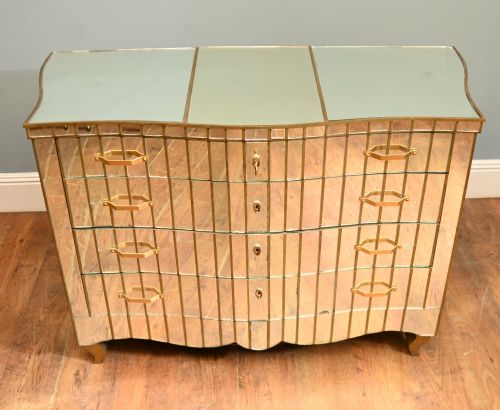
When you search for venetian art glass, you encounter objects spanning periods from the Victorian era through the 1950s, with a strong representation of 1930 examples. The selection includes wall mirrors, paperweights, vases, table lamps, trays, chandeliers, wall clocks, and decorative bowls.
You are most likely to meet pieces originating from Murano alongside broader Venetian workshops, incorporating styles such as Art Deco, Arts and Crafts, and Mid-Century Modern. The forms vary from functional household items like wine trays and decanters to purely decorative paperweights and sculptural animal figures.
What varies in quality
Quality in these pieces rests upon the precision of the glassblowing technique and the complexity of decorative inclusions such as millefiori canes or latticinio threads. Finer examples display a high degree of control in form and colour distribution, whether in a handkerchief vase or a multi-branch chandelier.
The integration of secondary materials, such as metal frames on mirrors or electrical fittings on lamps, also distinguishes standard production from more ambitious workshop output. Design attribution to specific artists or firms elevates the standing of individual pieces within the broader category.
Venetian Art Glass Retail Price Guide 2026
Typical asking prices for venetian art glass among the pieces listed under this phrase on Sellingantiques today, from the lower quarter to the upper quarter. They describe what is for sale here now, not the wider market.
An iridescent glass ibex stands ready among the vases and paperweights, gazing past the wall clocks.
Fratelli Toso·James Powell·Venini·Napoleone Martinuzzi·Pauly & Co.·Salviati·Vittorio Zecchin
The Venetian Art Glass Glossary
- Millefiori glass
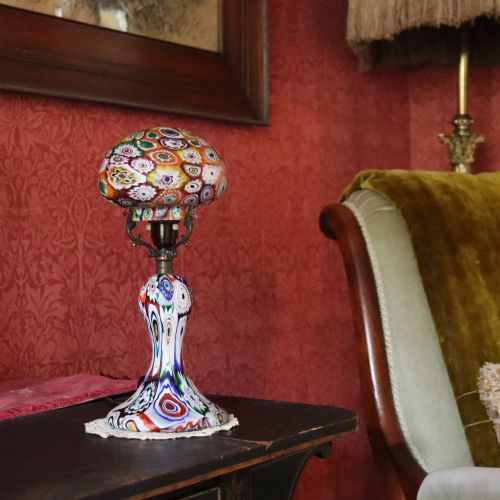
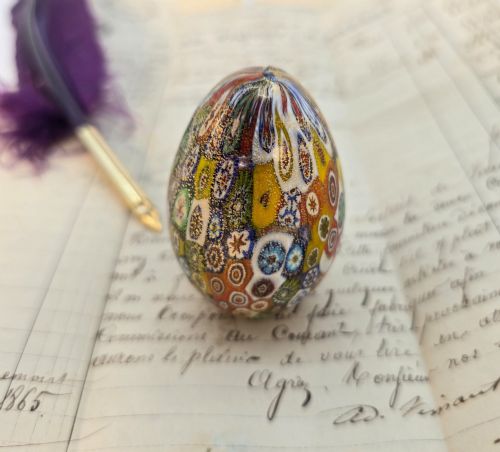
- Glasswork characterised by multicoloured flower-like patterns embedded within the material. These canes are sliced and fused together, frequently seen in paperweights and bowls.
- Latticinio
- A technique using fine white or coloured glass threads encased within clear glass to create net-like or lace patterns. This method appears on decanters and plates.
- Girandole
- A branched wall light or sconce fitted with candles or electric bulbs, often backed by a mirror to reflect light. These fixtures appear in pairs within Venetian lighting.
- Handkerchief vase
- A vessel blown and manipulated while hot into folded, organic shapes resembling a dropped cloth. This form is associated with mid-century designs by Venini.
Venetian Art Glass: Frequently Asked Questions
How do I date a venetian art glass mirror?
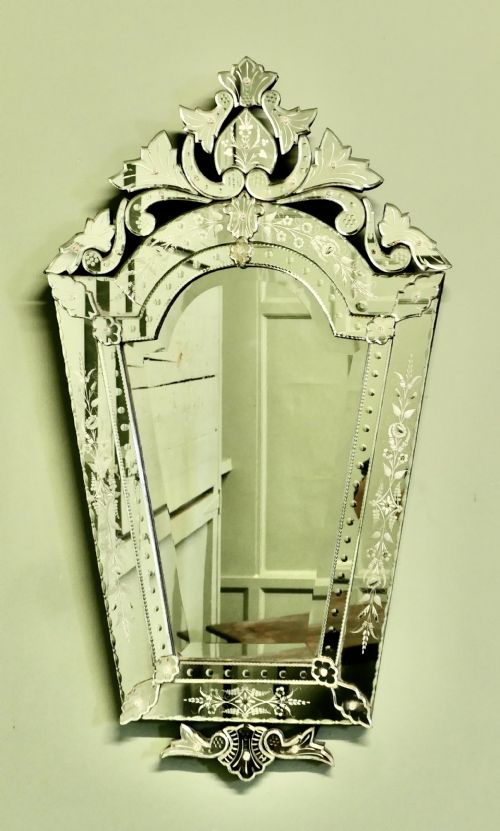
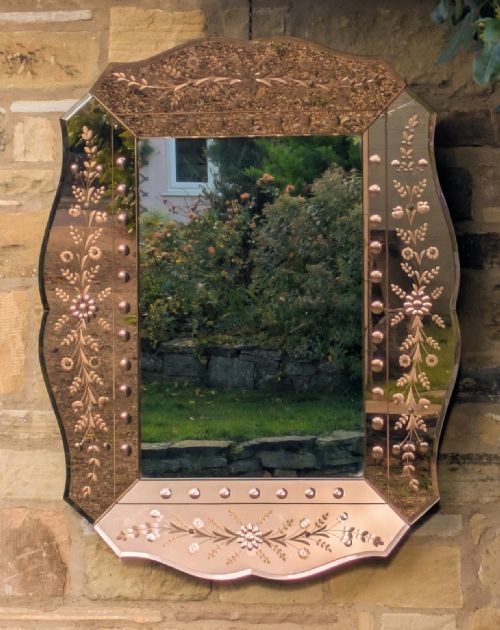
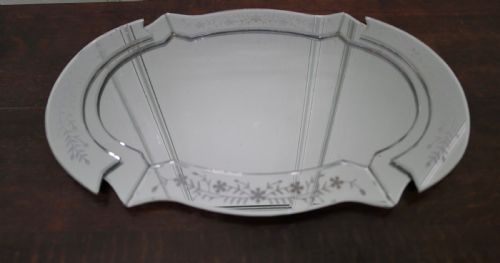
Dating relies on the style of the frame and the bevelling or etching techniques used on the glass plate. Victorian and early 20th-century examples often feature distinct decorative crests and simpler bevelling compared to later Art Deco designs.
Examine the backing materials and fixings where possible, as older pieces frequently use period wood, brass screws, or velvet coverings that correspond to the manufacturing era.
What is murano glass?
Murano glass refers to glass manufactured on the island of Murano, near Venice, which has been a centre of glassmaking for centuries. It encompasses various techniques, including blown glass, millefiori, and coloured or iridescent finishes.
Pieces from this tradition range from small decorative paperweights to large chandeliers and animal figures produced across different decades.
How were glass paperweights made?
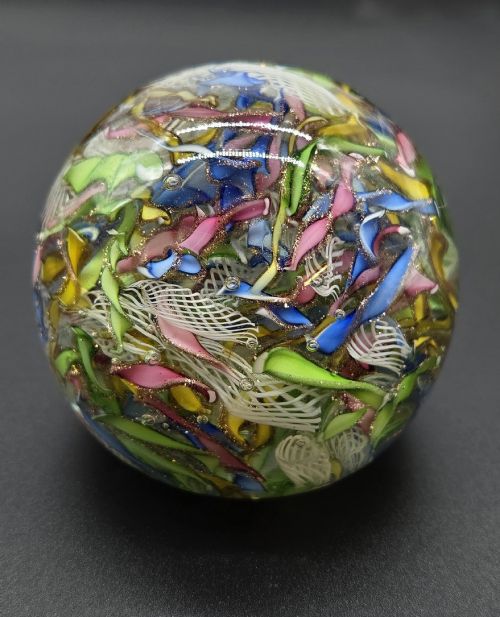
Glass paperweights are typically formed by gathering molten glass and arranging decorative elements like millefiori canes or coloured glass fragments inside a clear dome. The hot mass is then shaped, annealed, and polished to create a magnifying lens effect over the interior design.
Many examples date to the 1930 period and showcase dense arrangements of floral patterns or scrambled glass threads.
Where should I place a Venetian chandelier?
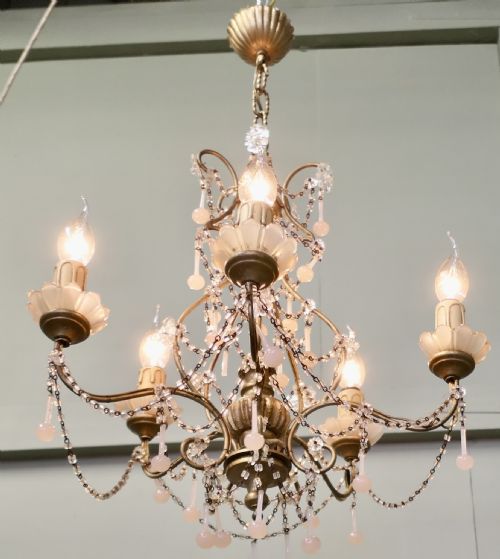
A Venetian chandelier suits spaces with sufficient ceiling height to accommodate multi-branch designs, such as dining rooms or drawing rooms. Their pink glass or coloured elements work well in rooms designed to highlight decorative lighting fixtures.
Ensure the electrical wiring is assessed by a professional before installation, particularly when dealing with vintage or antique lighting branches.