



Veneered Wood Desk
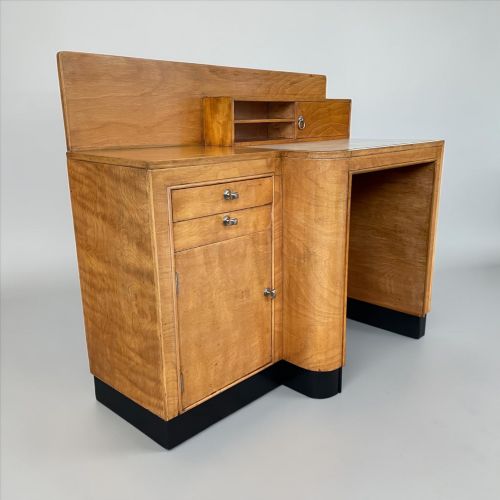
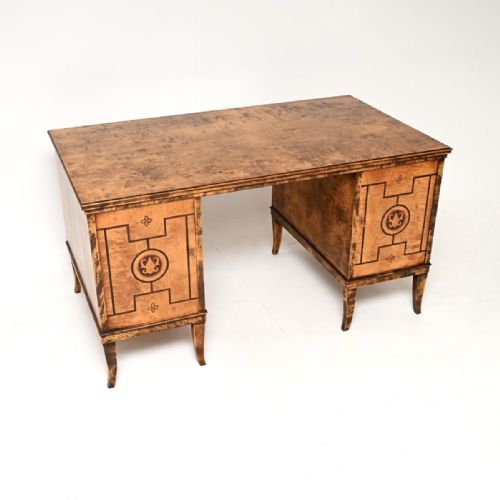
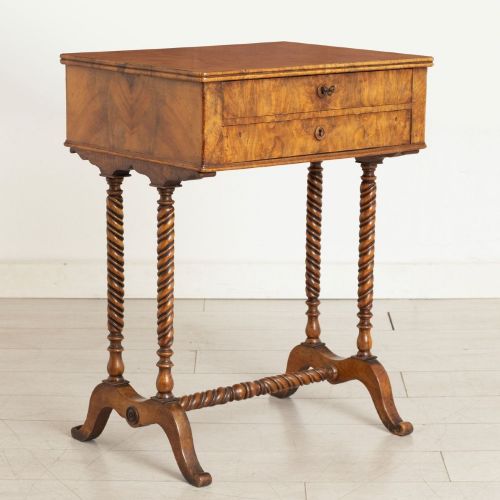
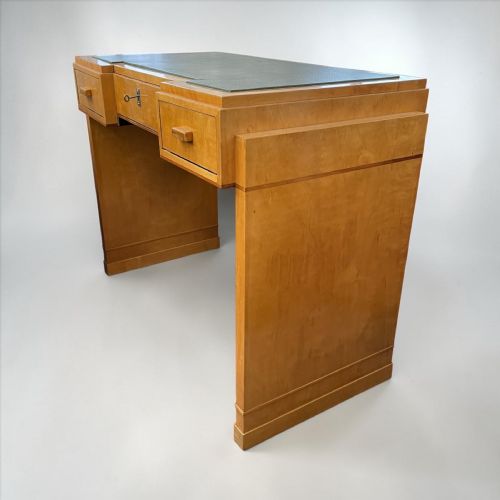
These veneered wood desk pieces bring figured grains and rich patination to a room, offering both a functional writing surface and a striking focal point.
Veneered Wood Desk
A veneered wood desk brings together centuries of cabinet-making skill, utilising thin slices of decorative timber applied to a stable core. Buyers seeking a veneered wood desk encounter pieces ranging from seventeenth-century oyster veneers to clean-lined art deco forms.
The assortment on this page reflects diverse regional workshops, incorporating English burr walnut, Swedish satin birch, and German art deco sensibilities. Each piece demonstrates how makers selected figured woods to create striking geometric patterns across writing flaps and drawer fronts.
Construction and materials
Cabinet-makers applied thin sheets of decorative hardwood veneer over secondary timbers, securing them with traditional animal glues. This technique allowed workshops to display complex grain patterns, such as flame mahogany, burr walnut, and oyster laburnum, that solid timber construction could not achieve efficiently.
Fine examples incorporate secondary decorative elements like featherbanding and brass hardware to frame the primary veneers. Surfaces often receive French polish or wax finishes to protect the wood while deepening the natural colour and figure.
Veneered Wood Desk Retail Price Guide 2026
Typical asking prices for veneered wood desk among the pieces listed under this phrase on Sellingantiques today, from the lower quarter to the upper quarter. They describe what is for sale here now, not the wider market.
Listings feature walnut, satin birch, and amboyna veneers spanning the seventeenth century through the art deco era of the 1930s.
Assessing quality
Quality rests upon the selection and matching of the veneer figures across the surface, where symmetrical grain alignment reveals the hand of a skilled maker. Superior execution is visible in the seamless integration of cross-banding and the careful preservation of original patination over the centuries.
Heal’S·Coxed & Woster·Hille
The Veneered Wood Desk Glossary
- Veneer
- A thin slice of decorative wood applied to a structural timber base. This technique permits the display of striking grain patterns while maintaining stability.
- Oyster veneering
- Small circular or oval pieces cut transversely from branches and arranged in patterns resembling oyster shells. It was particularly popular during the seventeenth century.
- Featherbanding
- A delicate inlay technique using small strips of veneer laid in a herringbone pattern to frame drawer fronts or desk tops. It highlights the geometric precision of the cabinet-maker.
- Secretaire abattant
- A tall writing cabinet featuring a drop-down flap that conceals fitted interior compartments and pigeonholes. It combines storage with a compact writing surface.
- Kneehole desk
- A formal pedestal desk featuring a central recess for the sitter's legs, flanked by banks of drawers. Eighteenth-century examples often incorporate figured walnut or yew timbers.
Veneered Wood Desk: Frequently Asked Questions
How do I care for a veneered desk?
Keep the wood away from direct sunlight and steady heat sources to prevent the glue underneath from drying out and the veneer from lifting.
Apply a traditional beeswax polish periodically to nourish the timber and maintain a soft sheen without building up synthetic residues.
Are these desks suitable for daily work?
Many historical desks offer sturdy writing surfaces, though modern laptop use may require mindful placement to protect older leather or polished wood inserts.
Consider the internal drawer dimensions and writing height to ensure the piece accommodates contemporary working habits comfortably.
What is burr walnut?
Burr walnut comes from a tree growth or deformity where the grain has grown in a distorted, swirling pattern. Cabinet-makers prize this timber for its complex, mottled appearance.
When sliced into veneers, burr walnut creates dramatic patterns across large desk surfaces and drawer fronts.
How do I identify seventeenth-century pieces?
Seventeenth-century pieces often feature specific decorative techniques like oyster cutting and intricate cross-banding in walnut or mulberry. Construction methods typically rely on solid oak or pine carcases beneath the detailed veneer work.
Hardware on pieces from this period generally includes hand-beaten brass drop handles and early dovetail joints.