


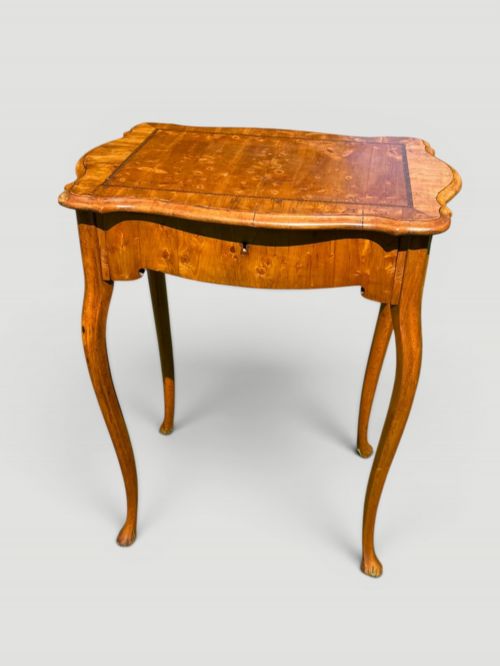


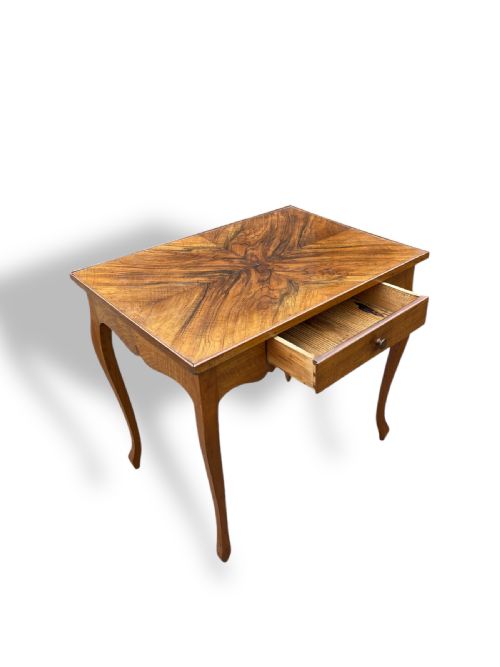


Veneered Walnut Lamp Table
These pieces of veneered walnut lamp table bring warmth and architectural grain to a corner, offering a stable surface with the distinct character of figured wood.
Veneered Walnut Lamp Table
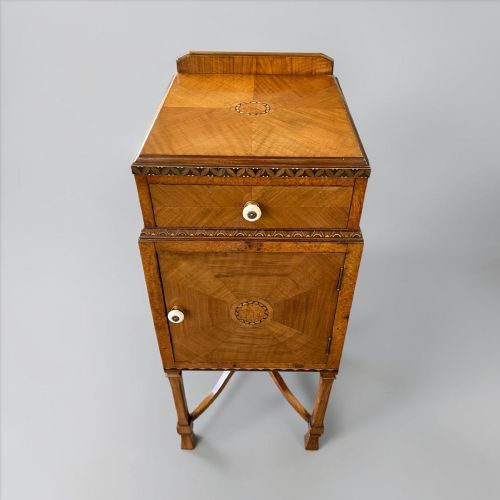
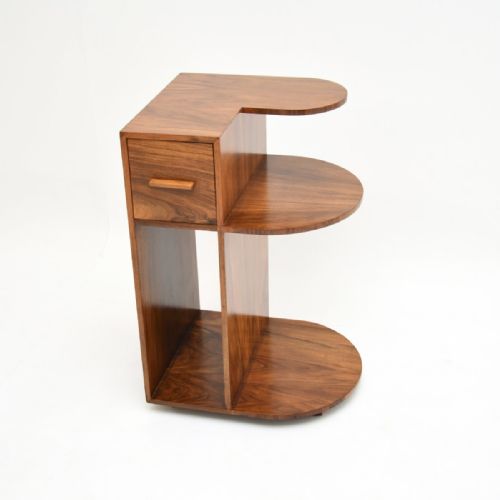
When you search for a veneered walnut lamp table, you encounter practical occasional pieces designed to sit beside seating or in corners to hold lighting and small objects. The selection here spans compact bedside surfaces, multi-tiered tiers, and wider centre tables.
Most examples originate from the early twentieth century, with a heavy concentration of Art Deco designs alongside Edwardian and nineteenth-century pieces. These items serve as functional surfaces while displaying rich timber patterns.
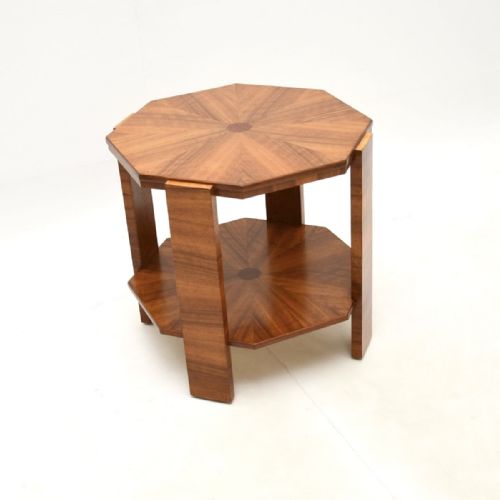
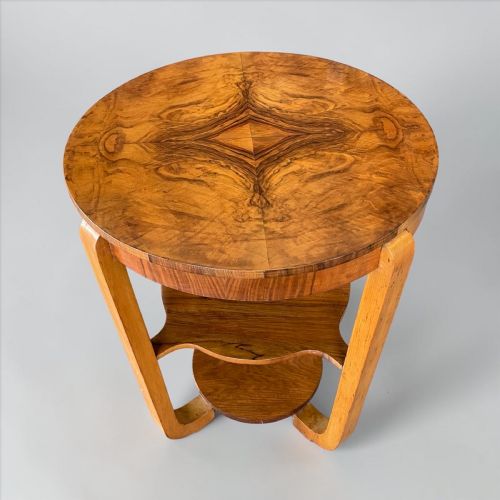
The forms range from octagonal tops and rectangular side tables to circular two-tier variations. Walnut and its burr variants dominate the silhouettes, often paired with maple or mirror glass.
How they were made
Cabinetmakers applied thin sheets of walnut veneer, particularly burr walnut and quartered sections, over stable secondary timbers to create dramatic, symmetrical grain patterns across the surface. This technique allowed workshops to display the swirling figures of the wood without relying on solid, heavy planks.
Many designs incorporate brass details, ebonised wood accents, or inset glass panels to contrast with the warm brown tones of the walnut. Construction methods reflect the prevailing cabinetmaking standards of their respective decades, from Edwardian revivalism to streamlined Art Deco geometry.
What varies in quality
The visual impact depends largely on the choice and matching of the veneer, where book-matched or quartered layouts create striking symmetry across the tabletop. Highly figured burr walnut commands attention through dense, organic patterns that simpler straight-grained panels lack.
Subtlety of form and the integration of secondary materials like maple or brass set finer examples apart from standard utility items. The crispness of the edges and the depth of the polished finish determine how well the piece catches the light.
The Veneered Walnut Lamp Table Glossary
- Burr walnut
- A growth deformity in the walnut tree that produces swirling, knotty grain patterns prized for decorative veneers.
- Veneer
- A thin slice of superior wood adhered to a base timber to create patterned surfaces without structural instability.
- Art Deco
- A design style from the early twentieth century characterised by geometric shapes, streamlined forms, and modern materials.
- Two-tier table
- An occasional table featuring an additional lower shelf for storage or display.
- Quartered walnut
- Timber cut in a specific direction to produce a straight, striped grain pattern often arranged in symmetrical quadrants.
Veneered Walnut Lamp Table: Frequently Asked Questions
Where should I place a lamp table?
These tables fit easily beside armchairs, sofas, or in unused corners where you need a compact surface for lighting or books.
Their modest footprint allows them to integrate into both traditional rooms and modern interiors without dominating the space.
How do I clean walnut veneer?
Dust the surface regularly with a soft, dry cloth to prevent particles from settling into the grain.
Avoid chemical polishes and excessive moisture, which can damage the thin veneer layers over time.
Are these tables from the Art Deco period?
A significant portion of the pieces date from the 1920s and 1930s, showcasing the geometric lines typical of Art Deco design.
Earlier examples from the nineteenth and early twentieth centuries also appear, offering more traditional revival styles.
What is the difference between side and occasional tables?
While both terms describe movable small tables, occasional tables are typically lightweight pieces designed to be shifted around a room as needed.
Side tables often stay anchored in one position next to furniture, though the functions frequently overlap.