





Veneered End Table
A veneered end table brings patterned grain and polished timber to a corner, combining practical surface space with decorative presence.
Veneered End Table
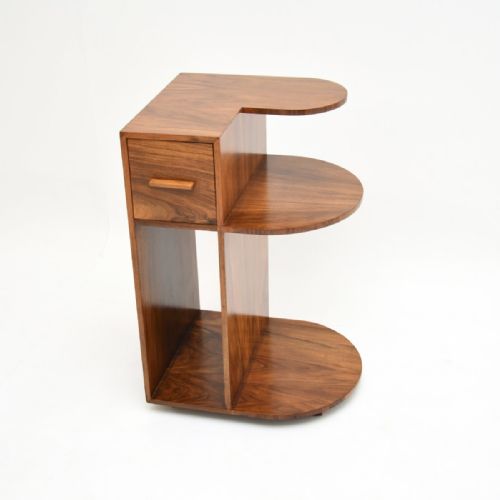
A veneered end table serves various roles around a room, appearing primarily as an occasional table, side table, bedside table, or compact side cabinet. These pieces bridge functional surface requirements and decorative display.
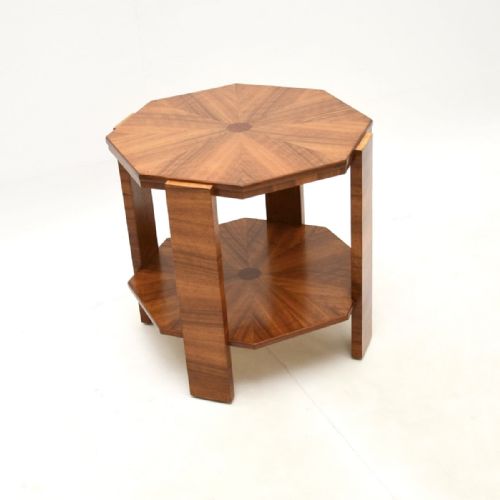
The selection ranges from early seventeenth-century olive wood examples through nineteenth-century mahogany and satinwood to prominent Art Deco walnut designs. Twentieth-century iterations dominate the selection, particularly geometric Art Deco forms utilising figured timbers.
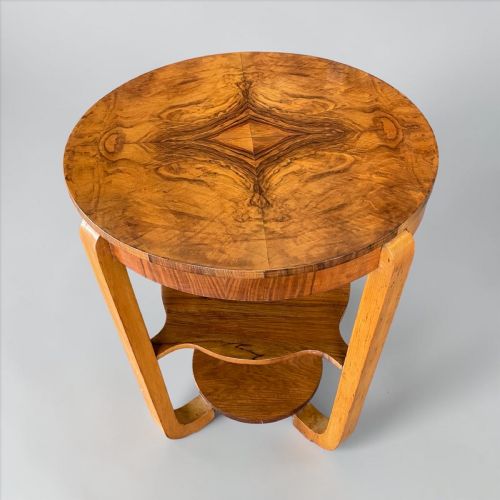
Origins span English workshops, French revival pieces, and Swedish roots, showing diverse regional interpretations of surface decoration. Buyers encounter varied footprints including octagonal, oval, kidney-shaped, and circular tops.
Materials and construction
Cabinetmakers applied thin slices of decorative timber such as walnut, burr walnut, rosewood, birds eye maple, and mahogany over solid secondary woods. This technique allowed workshops to display striking natural grain patterns across flat surfaces.
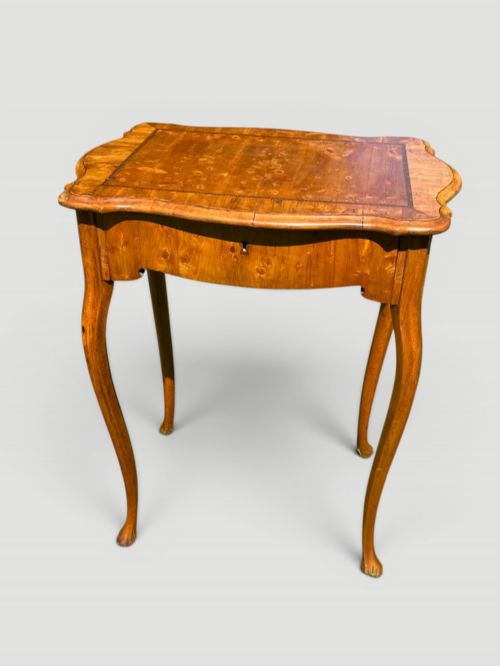
Inlay and stringing in contrasting woods or ebony often border the primary veneers, while brass framing appears in specific twentieth-century forms. Certain nineteenth-century and earlier pieces incorporate specialist treatments like oyster veneering and specimen wood marquetry.
Veneered End Table Retail Price Guide 2026
Typical asking prices for veneered end table among the pieces listed under this phrase on Sellingantiques today, from the lower quarter to the upper quarter. They describe what is for sale here now, not the wider market.
The listings span from the seventeenth century through Edwardian and Art Deco periods, showcasing walnut, mahogany, maple, and rosewood.
Assessing quality
Quality rests on the selection and matching of the timber veneers, where symmetrical book-matching or balanced quarter-veneering creates cohesive visual geometry. The underlying joinery must maintain stability so that timber movement does not compromise the surface skin.
Subtle details such as fine ebony inlay, incorporated porcelain plaques, or integrated mirror tops elevate standard utility furniture into distinguished decorative objects. The crispness of edge moulding and the integration of secondary timbers indicate the maker's discipline.
Maurice Adams
The Veneered End Table Glossary
- Veneer
- A thin layer of figured wood applied to a stable core structure. This method allows cabinetmakers to utilise striking grain patterns that would prove unstable if built in solid timber.
- Burr walnut
- A growth deformity on a walnut tree that produces intricate, swirling grain patterns when sliced. It remains highly prized for decorative table tops and cabinet fronts.
- Oyster veneering
- Small circular or oval sections sliced across small branches or roots, resembling oyster shells. The pieces fit together closely to form a patterned surface.
- Book-matching
- A technique where adjacent veneer leaves are opened like a page to create a symmetrical mirror image. This enhances the natural decorative qualities of the grain.
Veneered End Table: Frequently Asked Questions
Where should I place a veneered end table?
These compact pieces fit beside sofas, armchairs, or beds, providing a convenient surface for lamps, books, or drinks.
Because they rely on decorative timber surfaces, position them away from direct heat sources and strong sunlight to protect the polish and veneer.
How do I care for polished veneer surfaces?
Dust regularly with a soft, dry cloth and avoid using silicone-based sprays or harsh chemical cleaning products. Maintain stable room humidity to prevent the underlying timber from expanding and causing the veneer to lift.
What defines an Art Deco occasional table?
Art Deco tables typically date from the 1920s and 1930s, featuring geometric shapes, stepped forms, and contrasting timbers such as walnut and maple.
They emphasise clean architectural lines while celebrating the natural figures of exotic wood veneers.
How do I distinguish nineteenth-century examples?
Nineteenth-century tables often display rich mahogany, satinwood, or rosewood surfaces, sometimes incorporating intricate inlay or specimen wood marquetry.
Construction methods and timber selection reflect the period's preference for revival styles and formal interior arrangements.